An Ocean-Racing Fleet Arrives in the Nation’s Capital
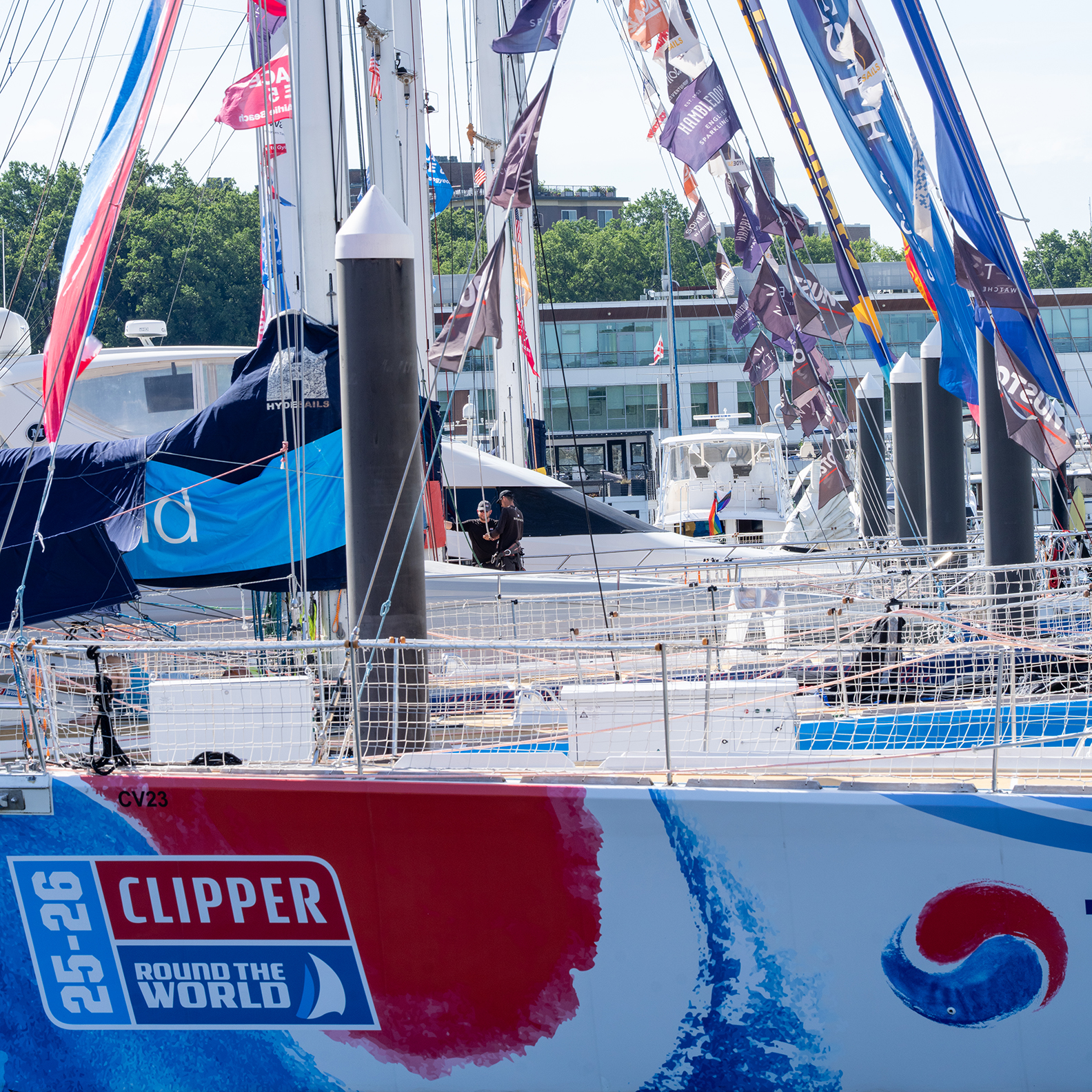
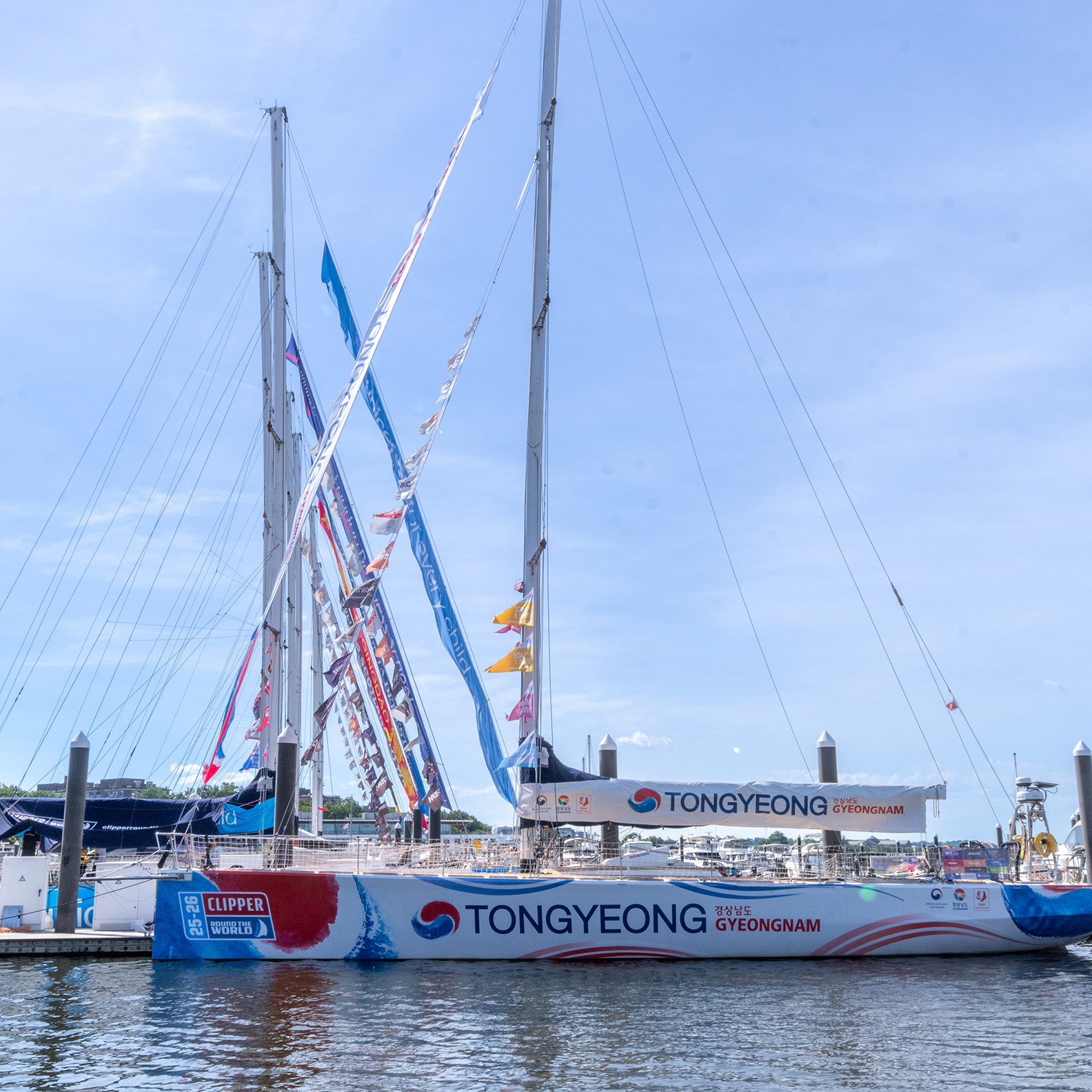
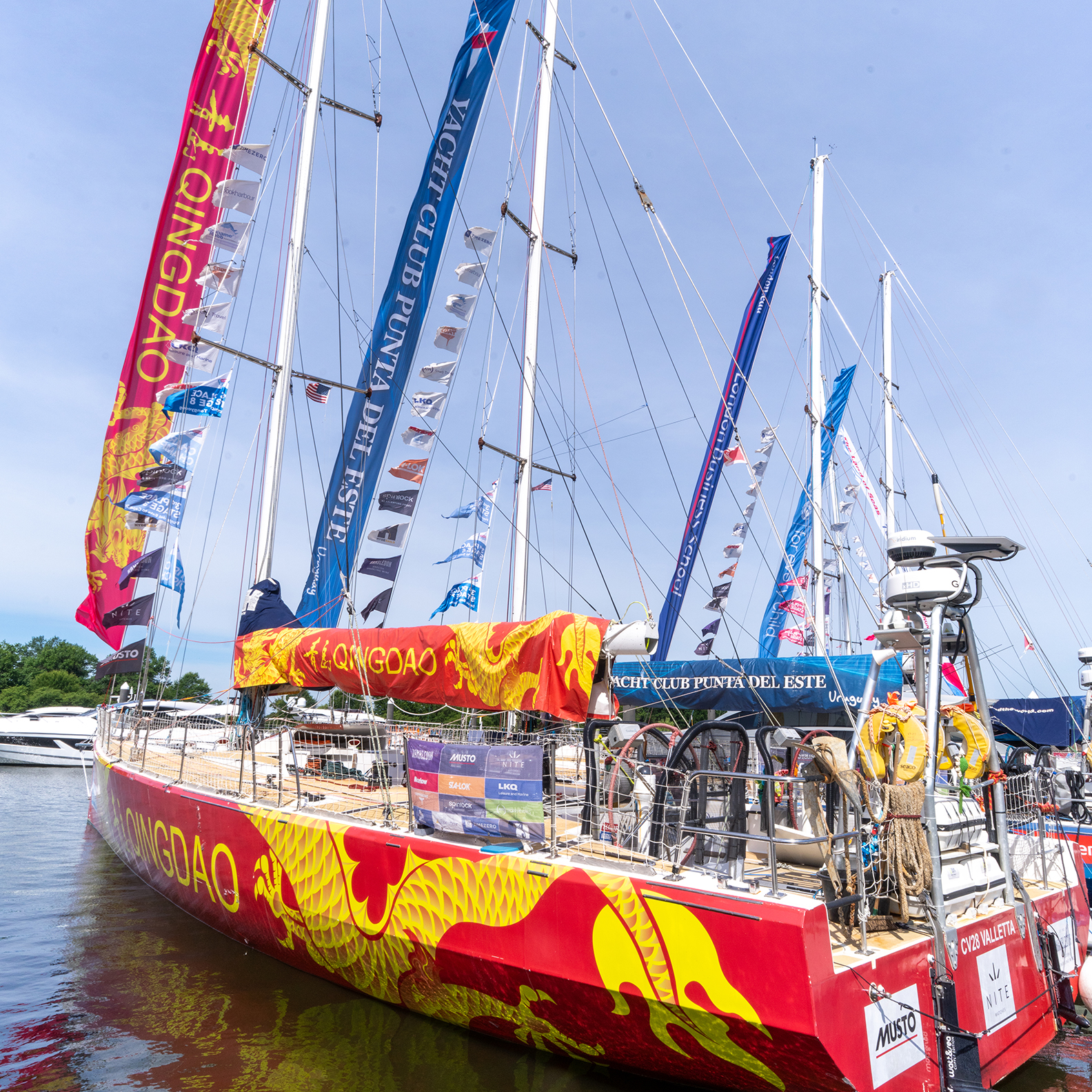
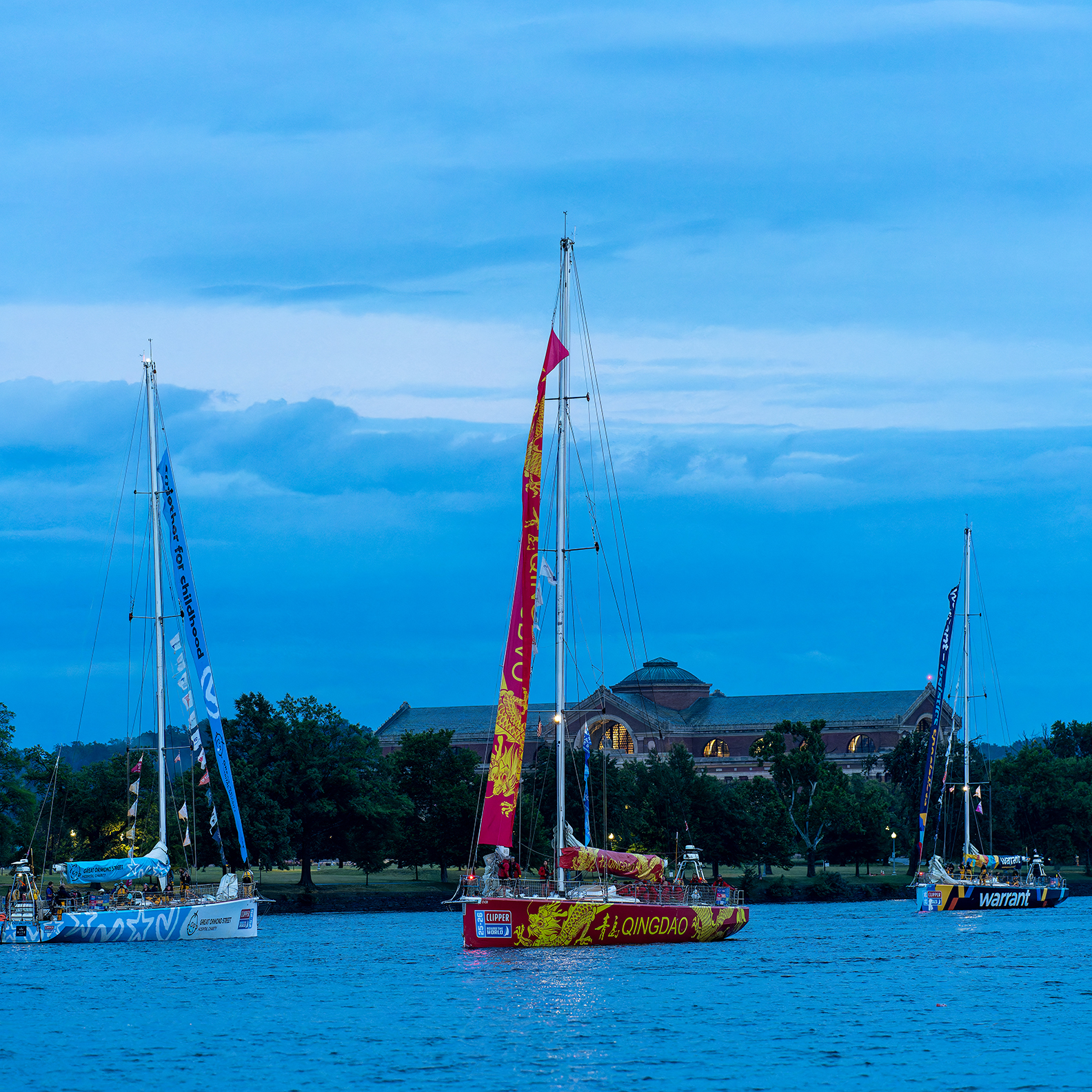
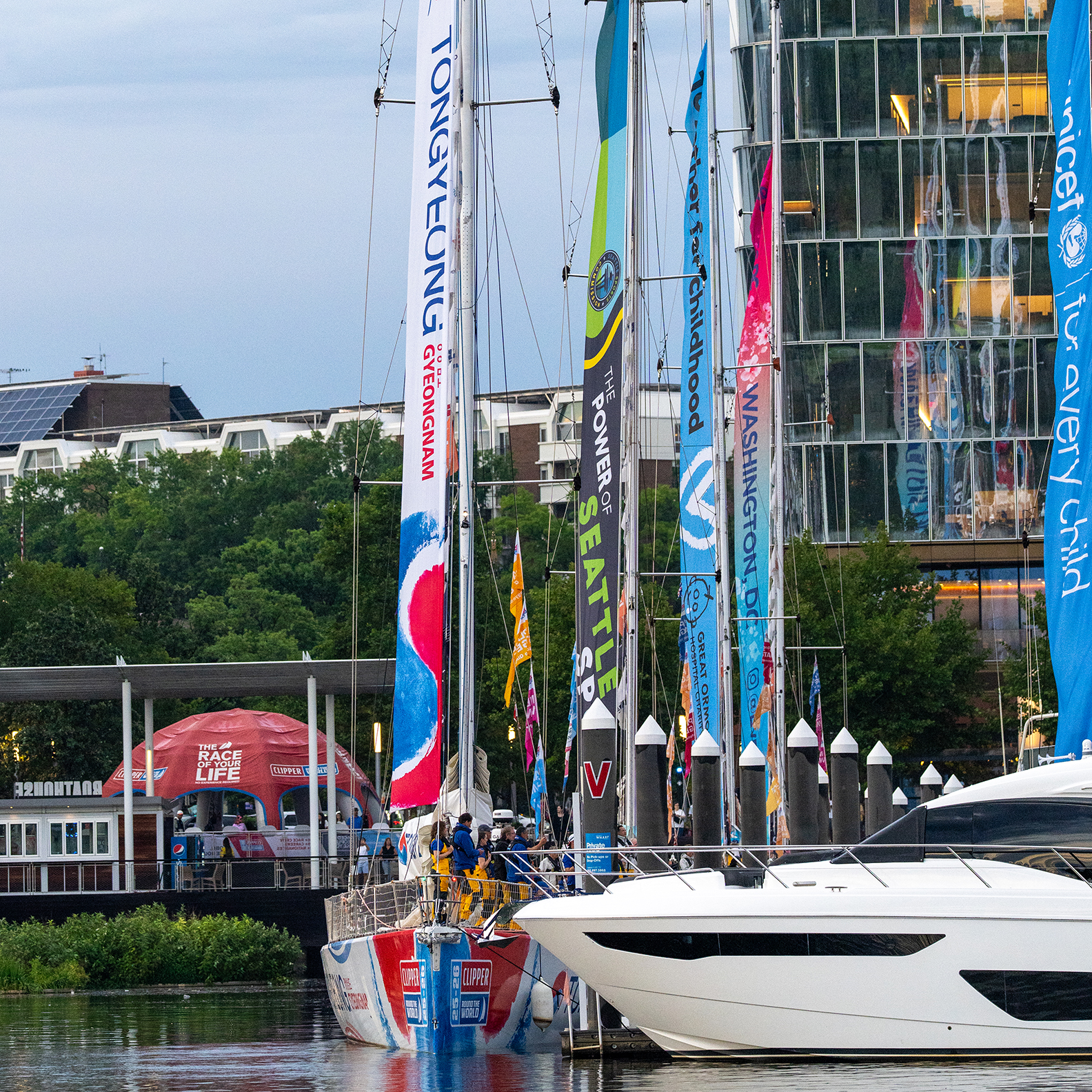
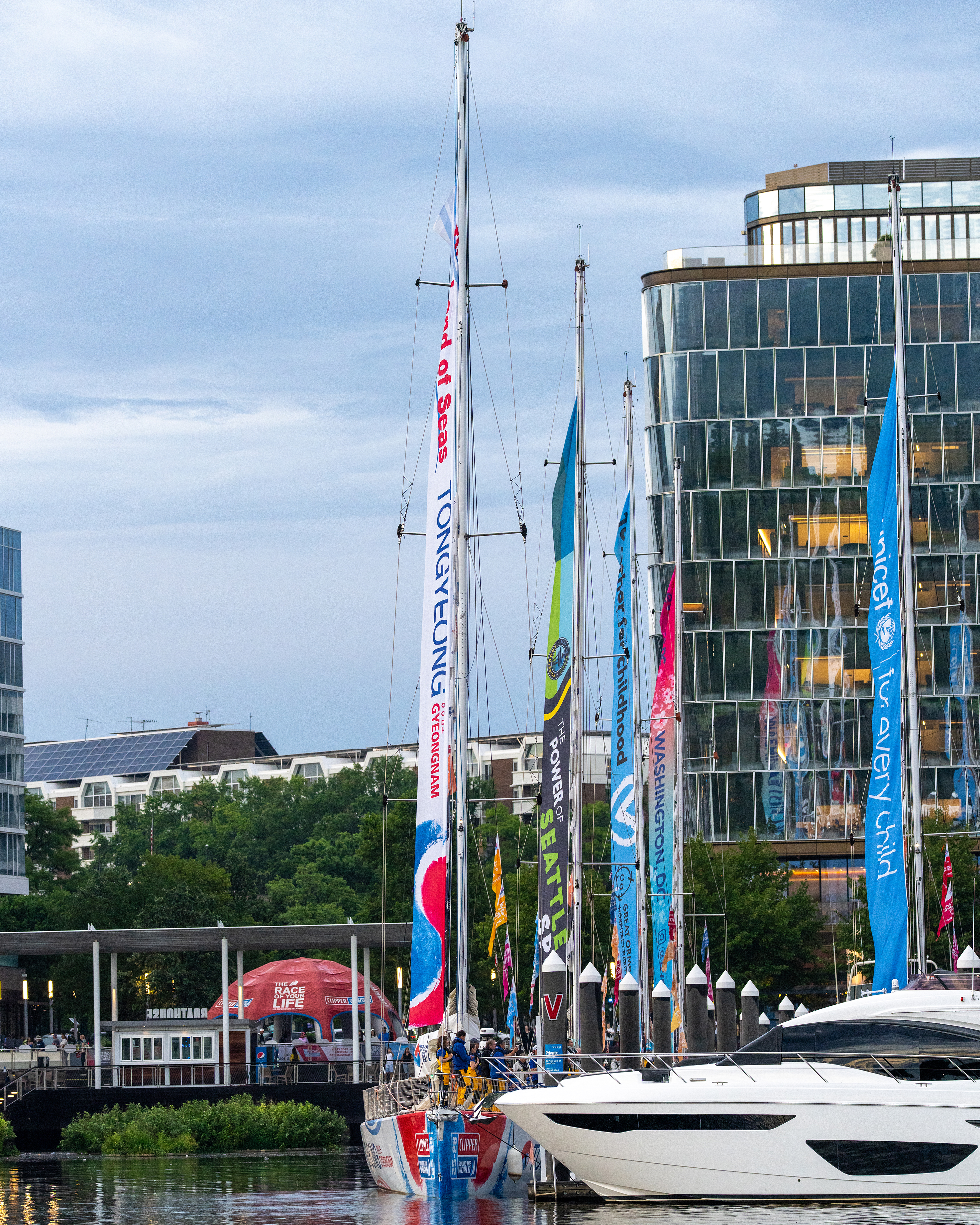
In the early morning on June 16th, one by one, the 70-foot ocean-racing yachts made their way into the Washington Channel and approached The Wharf, their tall masts rising above the waterfront long before the details of their hulls could be clearly seen. After weeks of racing north from Panama and thousands of miles already completed around the world, the fleet’s entrance into the nation’s capital brought a distinctly international presence to Southwest Washington.
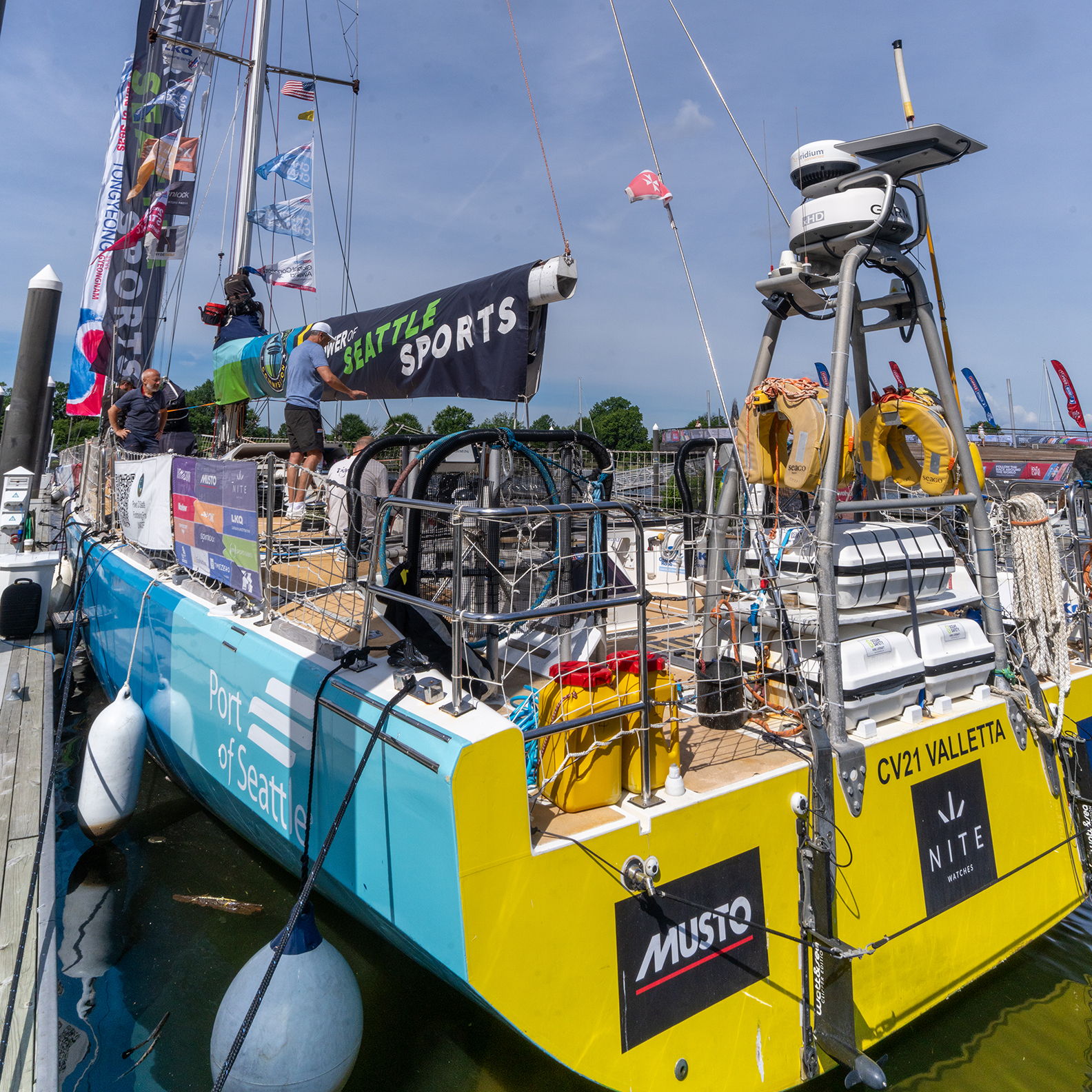
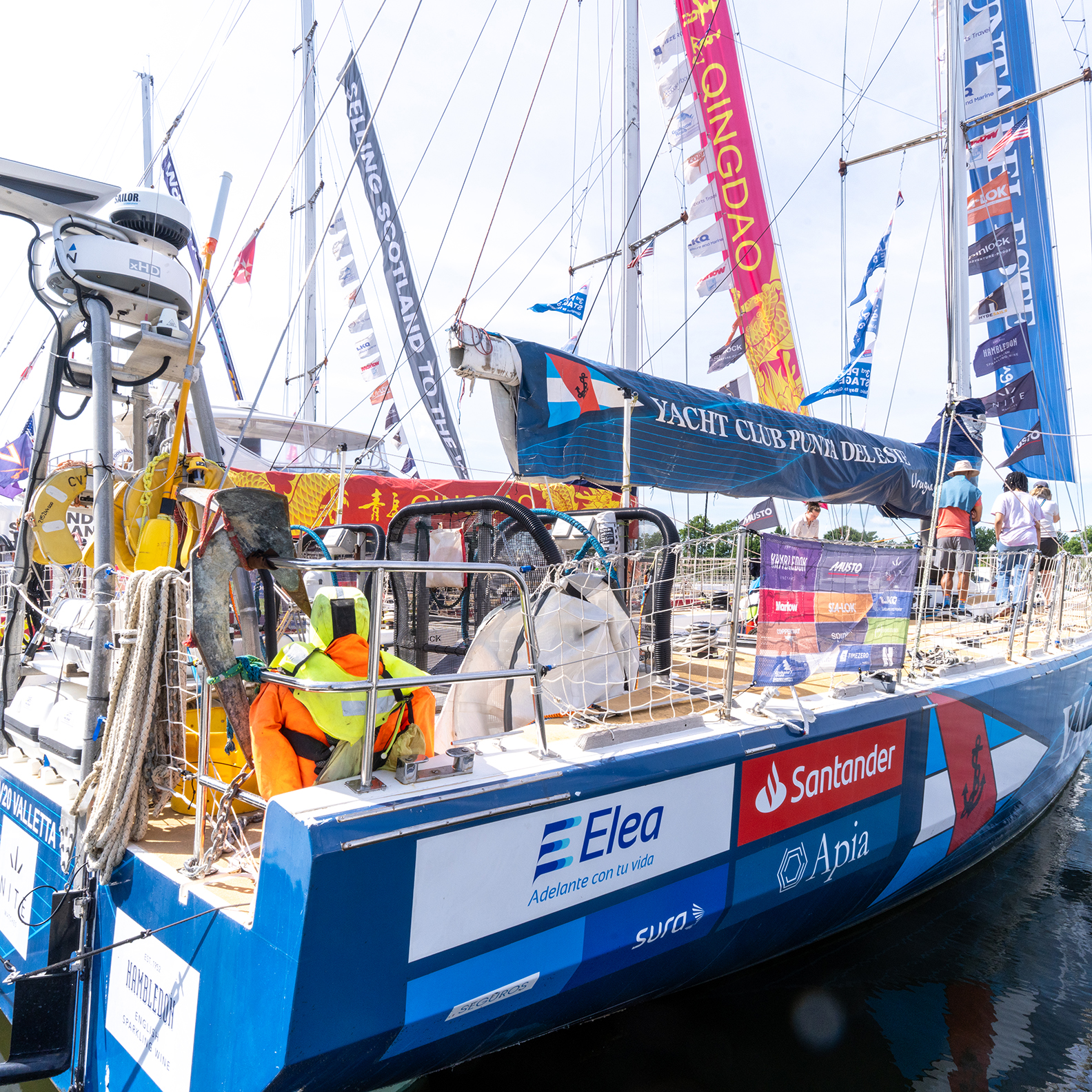
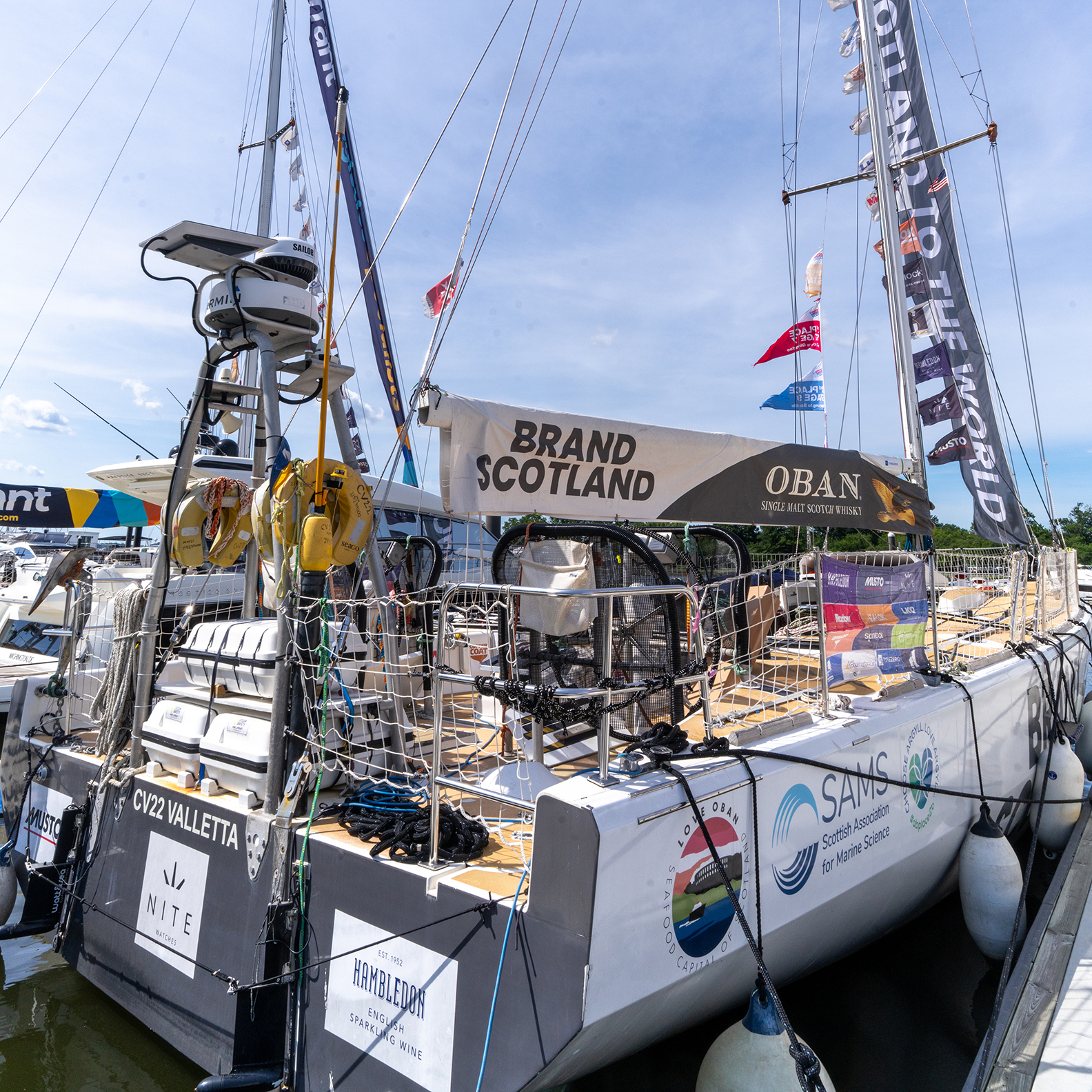
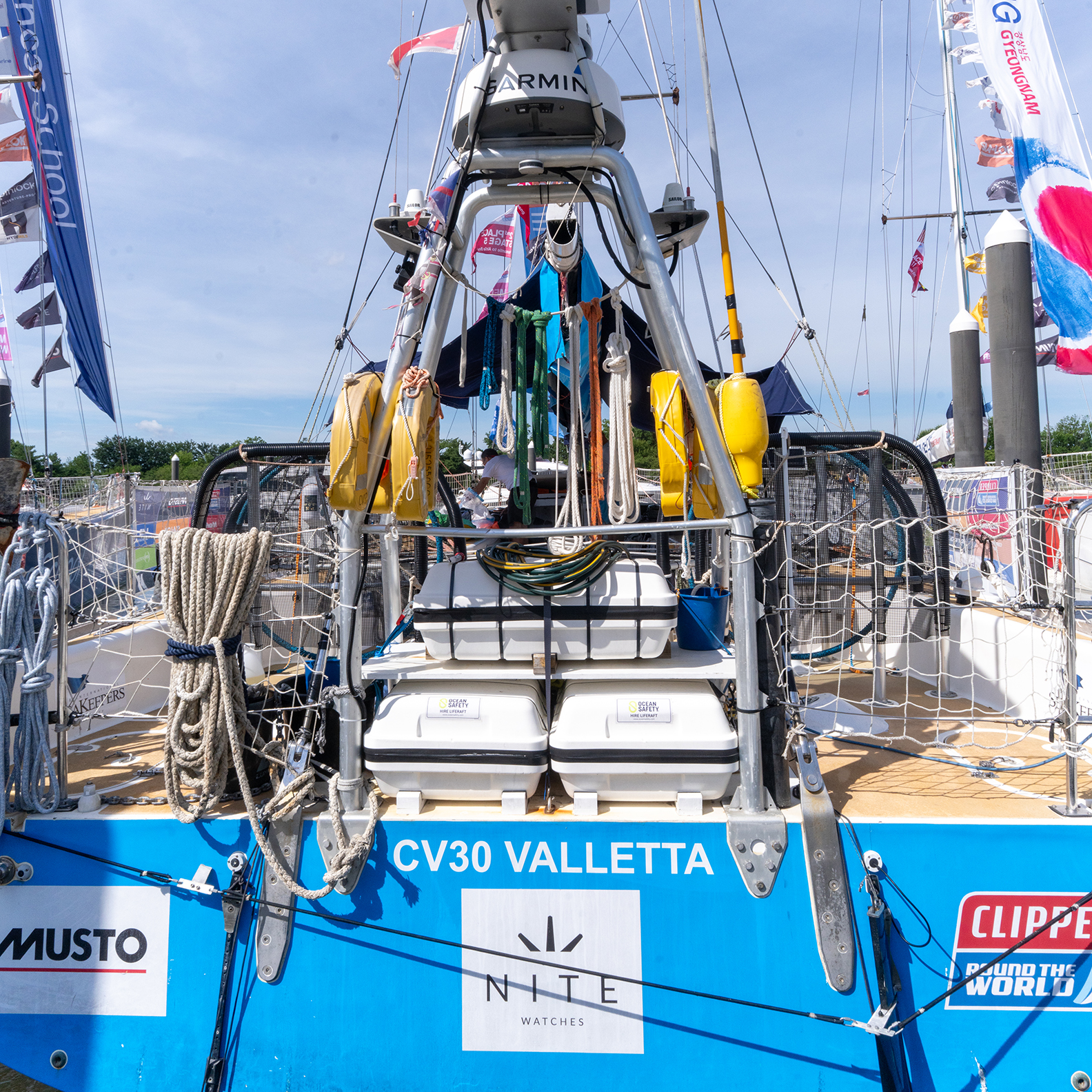
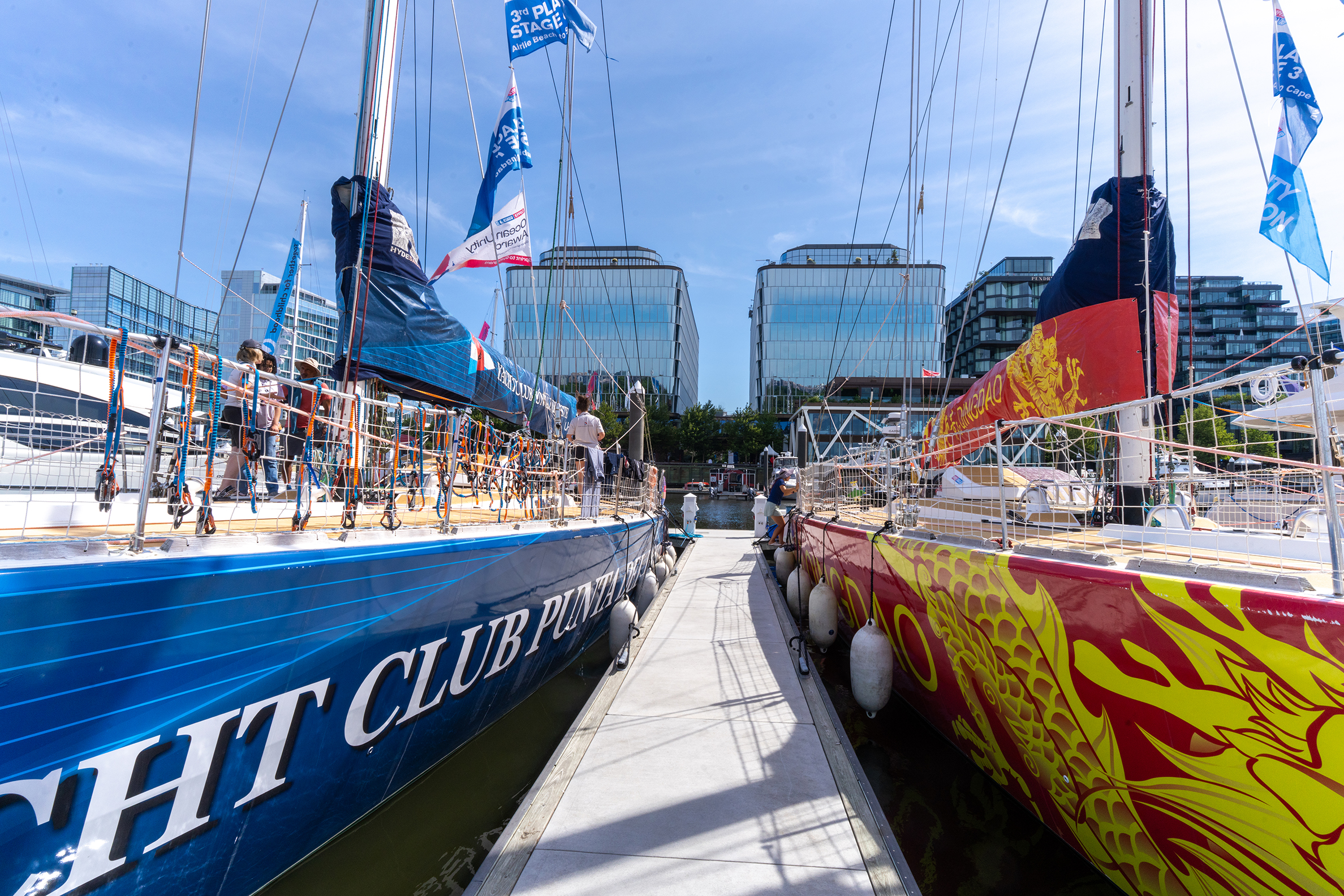
Spectators gathered along the waterfront to watch the boats arrive, photograph the crews and welcome the sailors into port. The yachts looked striking against The Wharf’s restaurants, residences and promenades, but their weathered decks and working equipment told a deeper story. These were not polished display boats arriving for a conventional boat show. They were active racing machines carrying crews who had crossed oceans, endured punishing watches and adapted to constantly changing conditions at sea.
For the sailors, the Washington stopover offered a temporary pause from the relentless demands of the race. For visitors, it created a rare opportunity to see the vessels up close and meet the people who live and work aboard them. The arrival transformed The Wharf into an international sailing village, with teams, supporters, race officials and curious spectators converging around the marina.
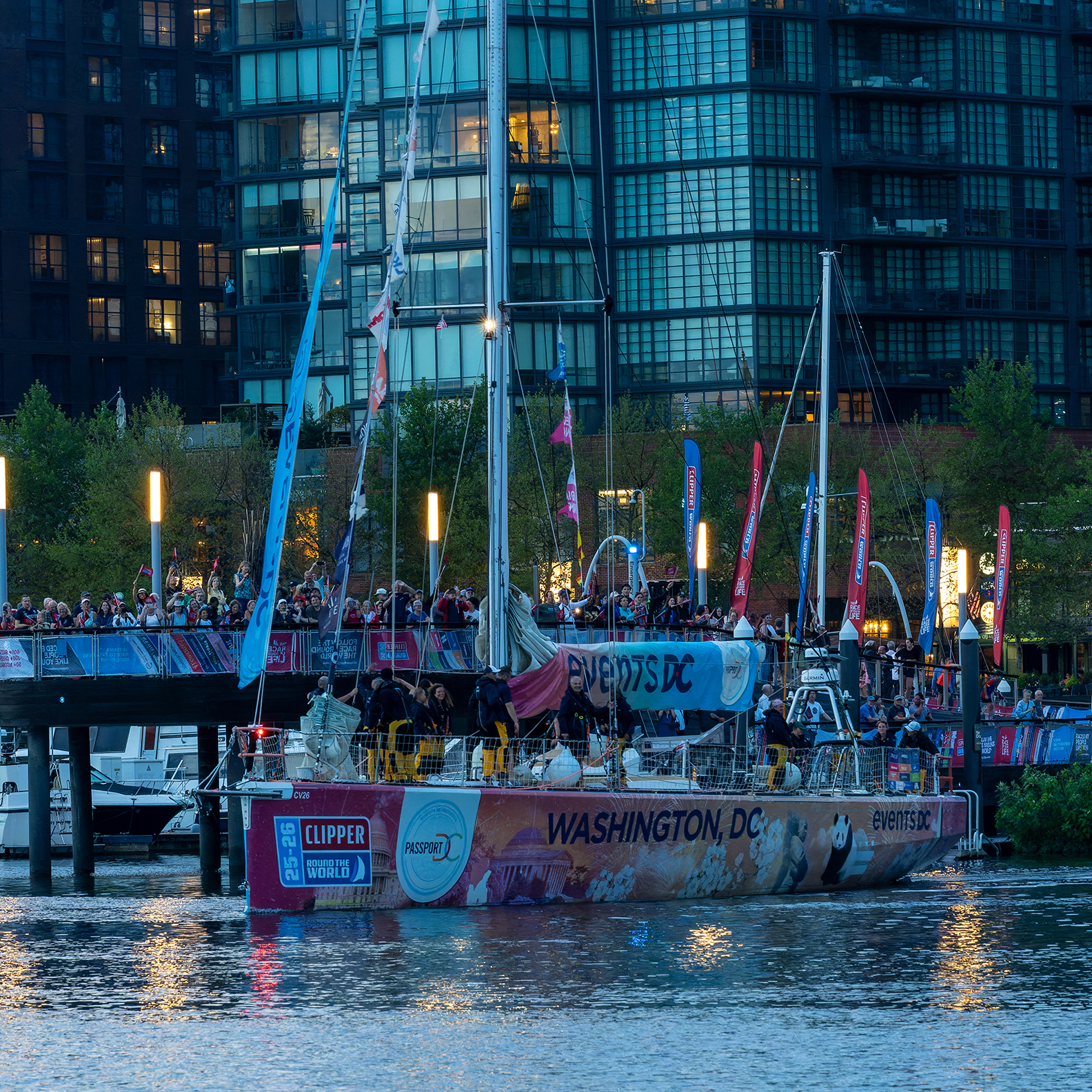
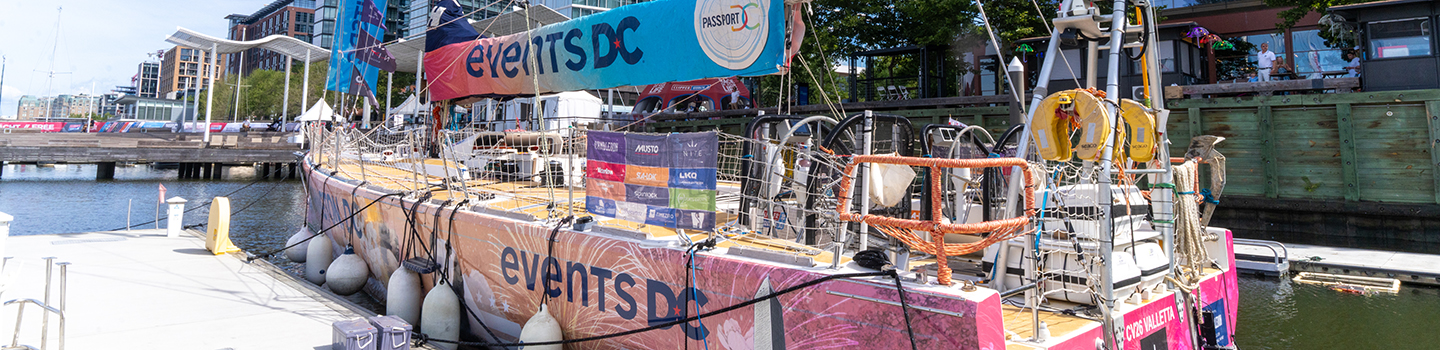
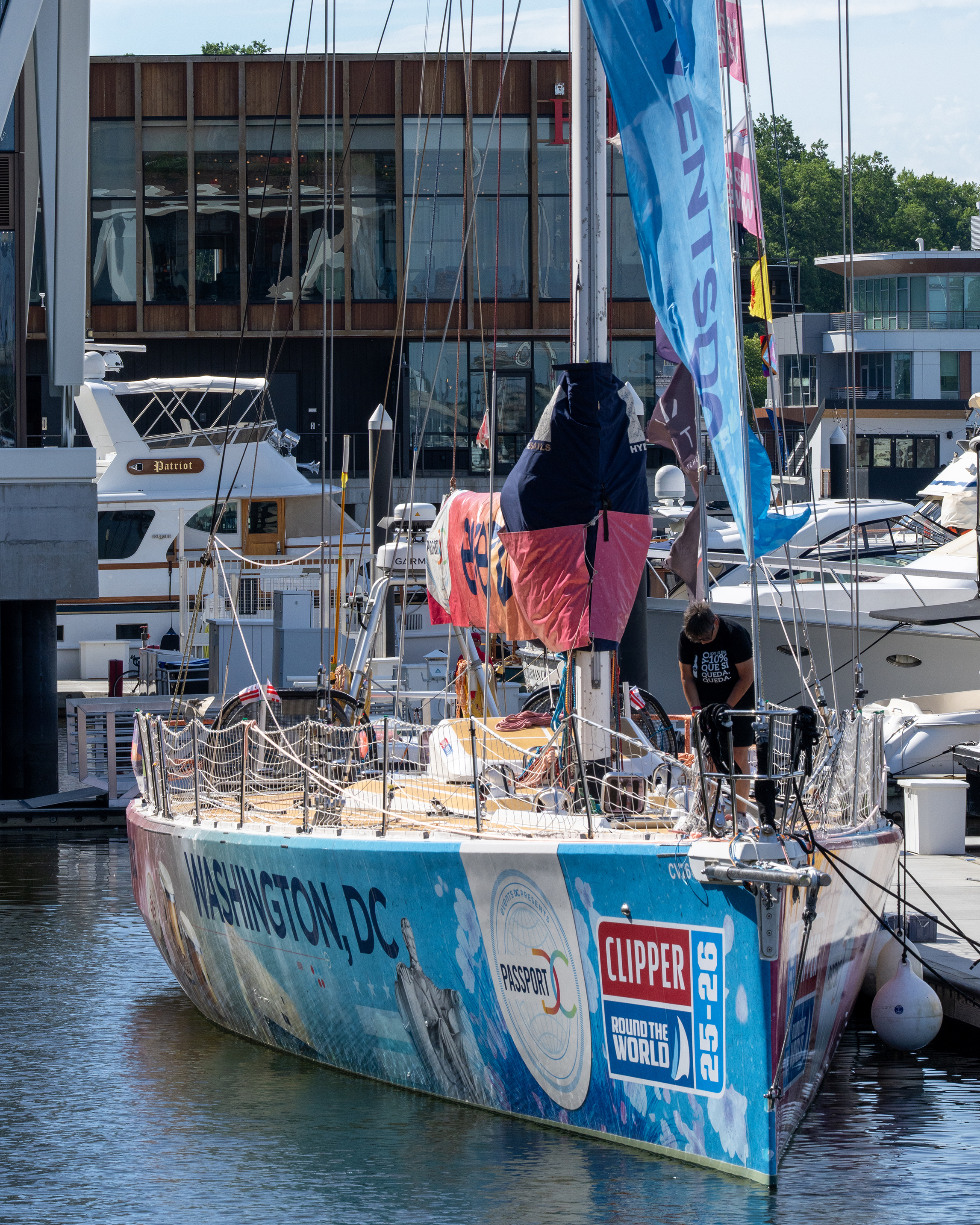
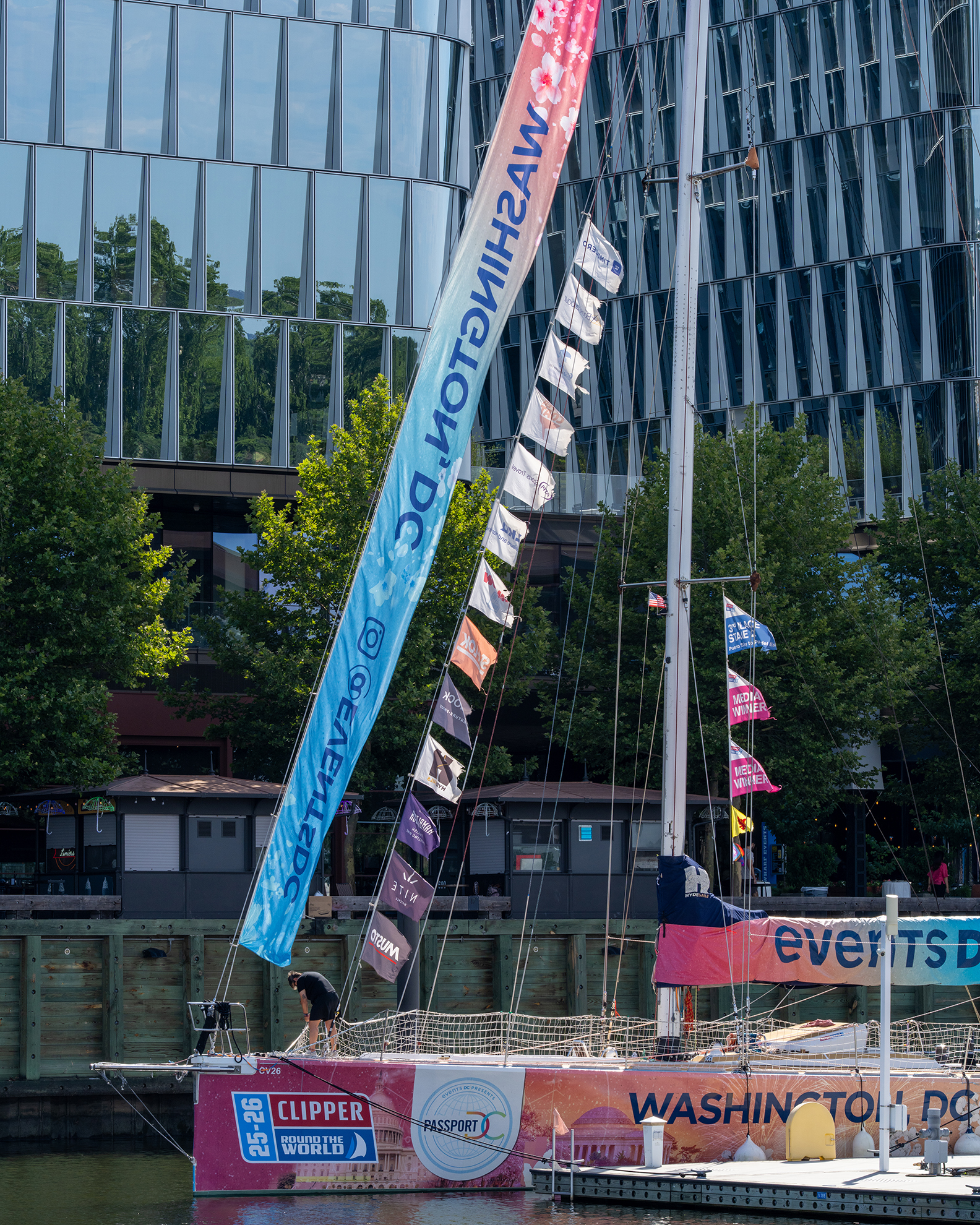
The Events DC yacht naturally commanded special attention. Carrying the city’s name around the world, the boat entered its sponsor port not simply as another member of the fleet, but as Washington’s representative in a global endurance race. Its arrival gave local spectators the chance to welcome home a team they had followed from a distance and to connect the name painted across the hull with the sailors responsible for moving it across the world’s oceans.
That arrival began nearly a week of yacht tours, public talks, entertainment and direct interaction between the crews and the Washington community. Visitors stepped aboard the boats, examined the compact living conditions below deck and heard firsthand accounts of life in a race where sleep, comfort and privacy are secondary to performance and teamwork.
Overview, Stage 1–11 Highlights, Scoring, Rules and Penalties
The 2025–26 Clipper Round the World Yacht Race began from Portsmouth, England, on August 31, 2025. It is the event’s 14th edition and sends ten teams approximately 40,000 nautical miles across five oceans in eight legs and 13 competitive stages. After Stage 11, the fleet is in Washington, DC, with two stages remaining: Washington to Oban, Scotland, and Oban to Portsmouth.
The Clipper Race is unusual because it is not restricted to established professional sailors. Each 70-foot yacht is led by professional sailing personnel, but most crew members are ordinary people who undergo the race’s intensive training program—many having had little or no previous sailing experience. The yachts are effectively identical, so results depend heavily on crew performance, tactical decisions, weather interpretation, sail management and avoiding mistakes.
The Major Story through Stage 11
The dominant team has been Great Ormond Street Hospital, or GOSH. Following Stage 11, GOSH leads with 136 points—48 points ahead of Power of Seattle Sports. GOSH has combined stage victories with an exceptional 22 Ocean Sprint points and 12 Scoring Gate points.
That lead is mathematically unassailable. Even if the second-place team won both remaining stages, captured every available Scoring Gate and Ocean Sprint point and used a Joker to double one stage’s finishing points, it could add no more than 42 points. GOSH has therefore secured the 2025–26 overall title before the final two stages, based on the published standings and scoring rules.
Stage-by-Stage Overview
Stage 1: Portsmouth to Puerto Sherry
Battle Over Biscay
The opening stage was approximately 500 nautical miles from England to southern Spain. It immediately tested the newly assembled crews with English Channel traffic, the Bay of Biscay and the transition from training into genuine ocean competition.
Scotland won the stage, while Power of Seattle Sports, GOSH and UNICEF collected the Scoring Gate points. GOSH won the Ocean Sprint, followed by Tongyeong and Washington, DC.
The first major rules controversy arrived almost immediately. UNICEF entered a designated orca exclusion zone and received an eight-hour penalty based on the distance travelled and time spent inside the restricted area. The incident established an important theme: exclusion zones were not suggestions. They were enforceable boundaries carrying potentially race-changing consequences.
Stage 2: Puerto Sherry to Punta del Este
The first major Atlantic crossing
Stage 2 covered more than 5,500 nautical miles from Spain to Uruguay, taking the fleet across the Equator, through the Doldrums and into the South Atlantic.
GOSH won, with London Business School second. Qingdao initially crossed in third but received a six-hour penalty for entering a three-nautical-mile coastline exclusion zone by approximately 0.1 nautical miles. That moved Washington, DC into third place and pushed Qingdao down the standings.
Power of Seattle Sports also received a six-hour penalty after exceeding the compulsory western boundary of the Doldrums Corridor. GOSH collected all three Scoring Gate points and also won the Ocean Sprint, demonstrating its ability to score beyond the normal finish-line points.
Stage 3: Punta del Este to Cape Town
The Musto South Atlantic Challenge
This 3,550-nautical-mile stage introduced crews to the colder, faster conditions of the Southern Ocean and the powerful low-pressure systems associated with the Roaring Forties.
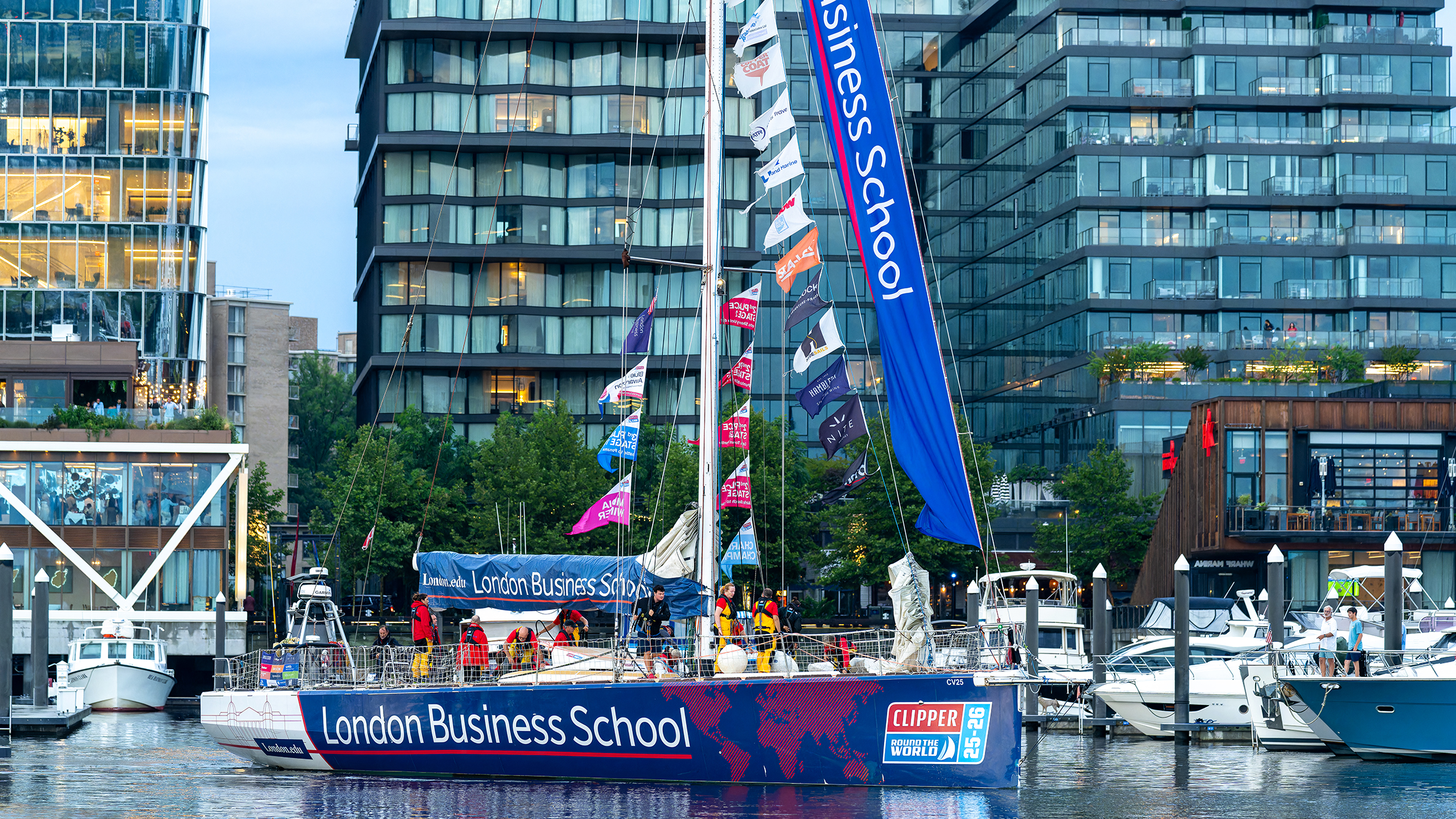
The podium consisted of GOSH, London Business School and Qingdao. Power of Seattle Sports won the Scoring Gate, Scotland was second and UNICEF third.
Washington, DC struck an unidentified object and damaged a rudder. Although the Clipper 70s carry twin rudders, the team needed to keep the wind behind the yacht and use its engine to approach Cape Town safely. It accepted tenth place rather than continue racing under compromised steering. This was not simply punishment—it was a safety-first decision made under the race rules.
Stage 4: Cape Town to Fremantle
Marlow’s Blue Ocean Sleigh Ride
Stage 4 took the fleet approximately 4,800 nautical miles through some of the most isolated and demanding waters in the world.
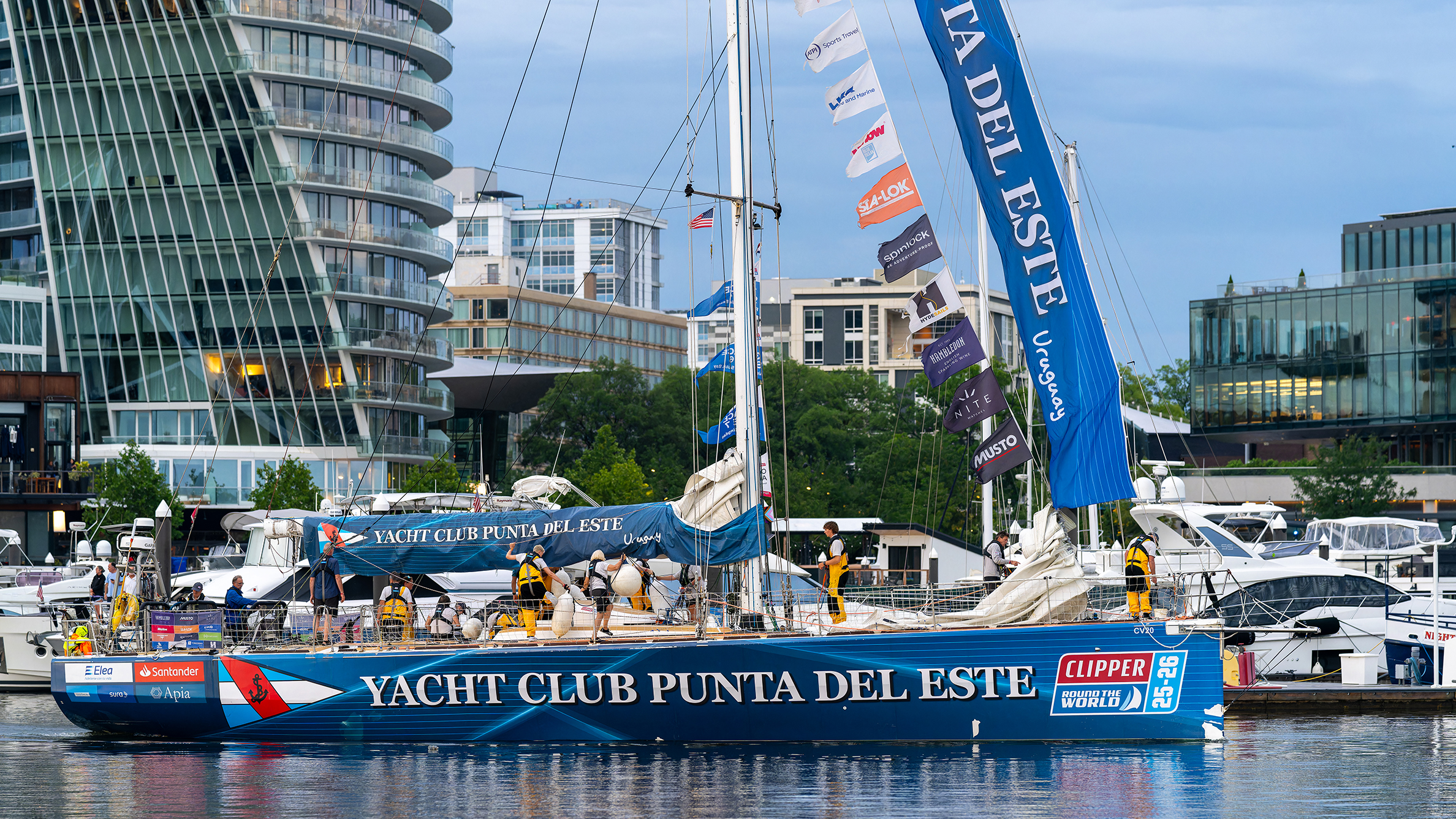
GOSH won again, London Business School finished second and UNICEF was ultimately awarded third. UNICEF had stopped to transfer watermaking equipment to Power of Seattle Sports and received 13 hours, 22 minutes and 14 seconds of redress. That compensated UNICEF for the time lost while assisting another yacht and moved it ahead of Yacht Club Punta del Este.
Washington, DC received another six-hour penalty for breaching the three-nautical-mile coastline exclusion zone near Fremantle. The penalty moved the team from fourth to sixth.
Stage 4 shows both sides of race administration: teams may be penalized for navigational infringements, but they can also receive time back when they sacrifice their own race to provide necessary assistance.
Stage 5: Fremantle to Airlie Beach
The Sta-Lok Endurance Test
The fleet raced around southern Australia, past Tasmania, through Bass Strait and north along Australia’s eastern coast toward the Whitsundays.
Race management ended the competitive stage retrospectively at Virtual Mark Kulow because of a developing tropical system, poor visibility, squalls and safety concerns around the Great Barrier Reef. The resulting podium was GOSH first, UNICEF second and Yacht Club Punta del Este third.
GOSH also won the Ocean Sprint, with Yacht Club Punta del Este second and Scotland third. The stage reinforced that the race director can alter or shorten a course when safety and arrival logistics require it.
Stage 6: Airlie Beach to Subic Bay
London Business School’s Tropical Trade Winds
The fleet headed north through tropical seas toward the Philippines, navigating island groups, changing trade winds, squalls and the challenging Luzon Strait.
Warrant won the stage, with London Business School second and Yacht Club Punta del Este third. Washington, DC, Warrant and London Business School claimed the Scoring Gate points.
London Business School suffered damage to its boom during a manoeuvre and had to lower both the boom and mainsail while carrying out inspections. Despite the problem, the team continued racing and still reached the podium.
The circumnavigating crews also passed the race’s halfway point—20,051 nautical miles—and returned to the Northern Hemisphere for the first time since Leg 1.
Stage 7: Subic Bay to Qingdao
Sailing City–Qingdao Cup
Stage 7 presented a very different challenge: extensive fishing fleets, heavy commercial shipping, fog, cold conditions and complicated navigation through the Bashi Channel, East China Sea and Yellow Sea.
GOSH initially led the fleet into Qingdao but was handed a six-hour penalty for a communications infringement. The adjusted results gave Tongyeong the victory, Scotland second and Yacht Club Punta del Este third, with GOSH falling to fourth.
This was one of the clearest examples of a rule violation changing an entire podium. GOSH was the fastest yacht to the line, but it was not the official stage winner.
Stage 8: Qingdao to Tongyeong
Sprint to Gyeongnam
At roughly 500 nautical miles, Stage 8 was short compared with the ocean crossings, but it was highly tactical. The fleet had to negotiate busy shipping lanes, coastal weather and the island-filled approaches to Tongyeong.
The initial Le Mans start was abandoned because of extremely light winds and strict arrival deadlines. The fleet motored together before restarting. Later, race management established a fixed finish time and calculated positions based on each yacht’s recorded GPS location relative to the remaining course.
Tongyeong won its homecoming stage, joined on the podium by UNICEF and Qingdao. London Business School and Yacht Club Punta del Este earned the available Scoring Gate points.
Stage 9: Stage 9: Tongyeong to Seattle
The Big One
Stage 9 was the race’s North Pacific crossing—a 5,500-nautical-mile endurance test lasting approximately 25 to 29 days.
Crews experienced winds exceeding 77 knots and yacht speeds above 30 knots. At times, the fleet was so isolated that the closest people were reported to be astronauts aboard the International Space Station.
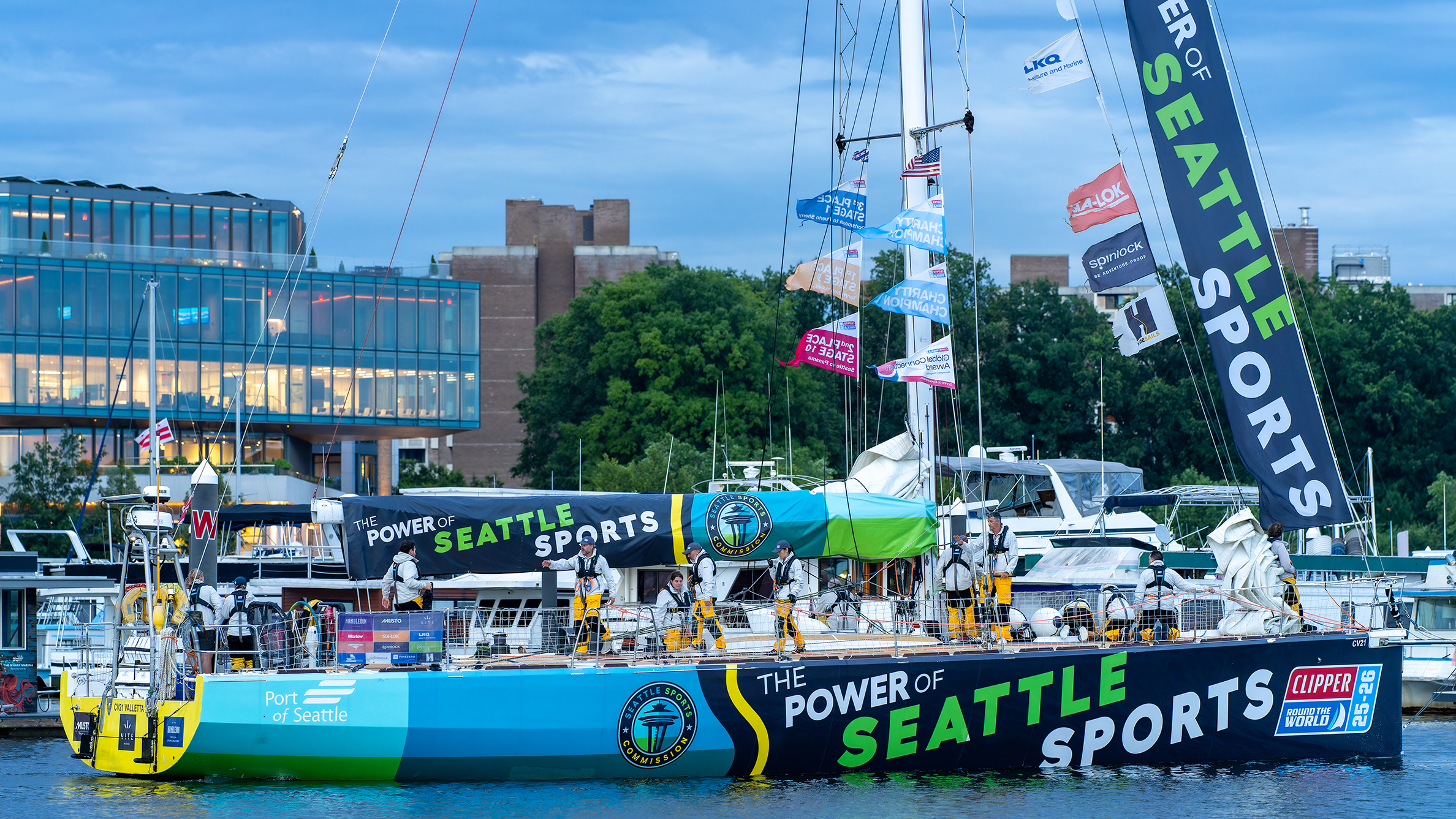
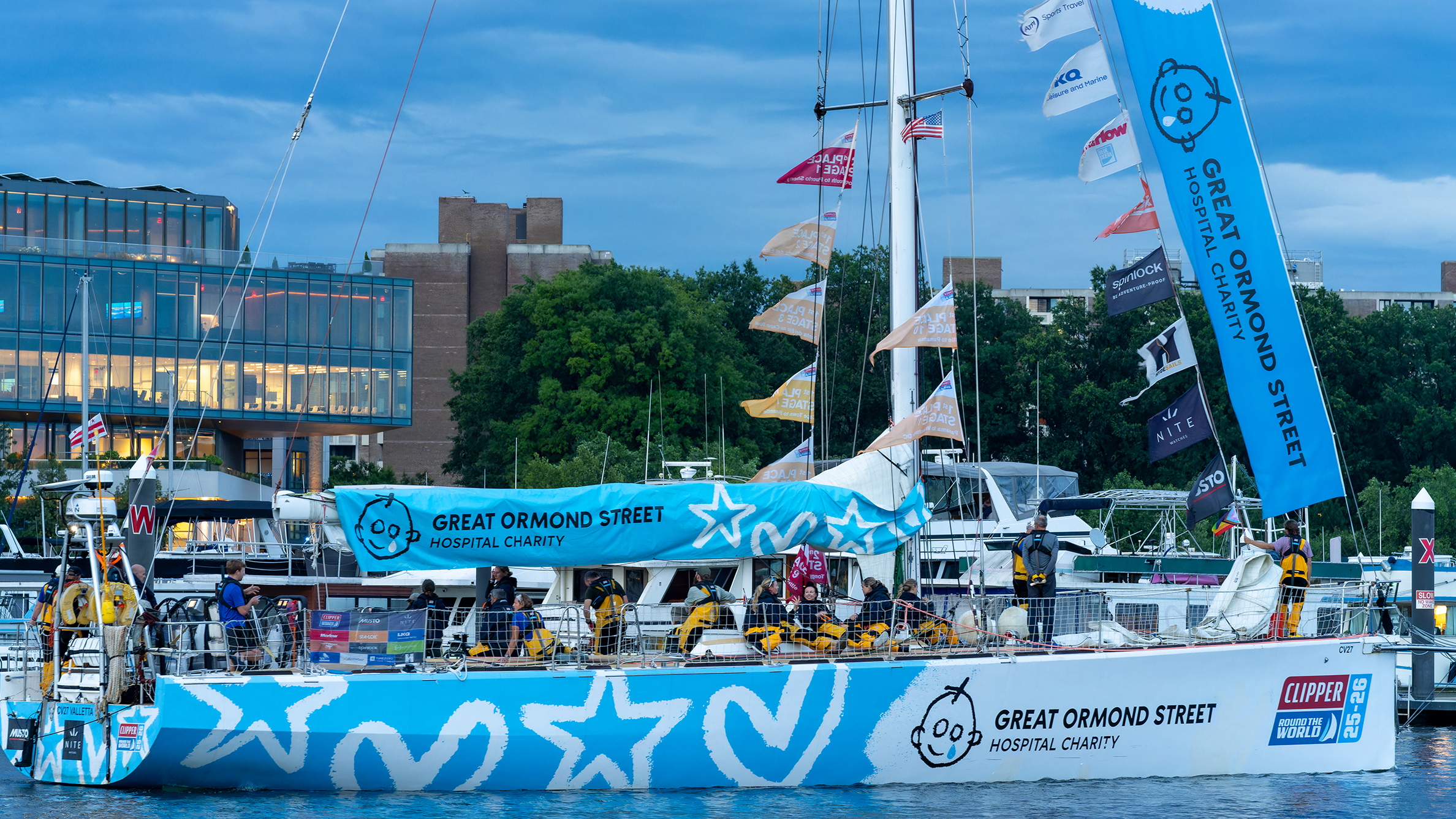
Power of Seattle Sports won its home stage, and had played its Joker, doubling the team’s normal finishing-position points. GOSH finished second but won both the Scoring Gate and Ocean Sprint, collecting six bonus points and maintaining its commanding championship lead.
This was arguably the most physically and psychologically demanding stage through the Washington stopover: prolonged cold, violent weather, enormous waves, equipment stress and almost a month of uninterrupted ocean racing.
Stage 10: Seattle to Panama
Warrant’s West Coast Challenge
The fleet sailed south along the Pacific coast of North and Central America. Conditions gradually shifted from cooler downwind sailing to tropical heat and increasingly light winds.
Because prolonged light conditions threatened the Panama schedule and Canal transit arrangements, the race was finished retrospectively at Mandatory Finish Gate 1. GOSH won, Power of Seattle Sports placed second and London Business School finished third.
UNICEF won the Scoring Gate, followed by Power of Seattle Sports and Tongyeong. Tongyeong won the Ocean Sprint, with Scotland second and London Business School third.
Stage 11: Panama to Washington, DC
The Pan-American Race
Following the Panama Canal transit, the teams raced through the Caribbean, around the islands and up the eastern coast of the United States before entering Chesapeake Bay and the Potomac River.
Washington, DC received a six-hour penalty for breaching the three-nautical-mile coastline and island exclusion zone near the eastern reef of Mayaguana. The penalty dropped the home team from eighth to ninth and promoted Scotland.
Warrant retired from racing because light winds made it impossible to meet critical rendezvous and bridge-opening schedules. The team accepted tenth place and motor-sailed toward Washington.
GOSH’s Stage 11 victory created an insurmountable championship advantage, although the fleet still has Stages 12 and 13 to complete.
What Remains of the 2025–26 Race
Washington was the final stop in the Americas, but it was not the finish line.
The fleet has now begun Stage 12, the transatlantic race from Washington to Oban on Scotland’s west coast. This is the penultimate stage of the 2025–26 competition and the first of two stages contained within Leg 8, the race’s final major leg.
The Atlantic crossing presents a fresh set of tactical and physical demands. Crews must move from the warm conditions encountered farther south into the shifting systems of the North Atlantic. Routing choices, low-pressure systems, ocean currents and the approach to the British Isles could all influence the order of arrival.
After the Oban stopover, the fleet will contest Stage 13 from Oban to Portsmouth. That final run returns the competitors to the English city from which the race began in August 2025, completing the circumnavigation.
This distinction is important. Some promotional descriptions referred to the Washington departure as the beginning of the “final leg to Scotland.” That is broadly correct because Leg 8 is the last leg and Scotland is its first destination. It should not, however, be interpreted to mean that Oban is the overall finish. One more scored stage remains between Scotland and Portsmouth.
The miles may now be fewer than they were at the beginning, but the competition is not over. Mechanical reliability, crew concentration, penalties, tactical choices and the available scoring opportunities can still shape the final standings.
A Waterfront Festival Built Around an Extraordinary Race
Clipper Race Fleet Week ran at The Wharf from June 17 through June 22, bringing one of the world’s most unusual endurance competitions into the center of Washington. The fleet’s stop was its only East Coast visit during the 2025–26 edition and the second time the race had called at the nation’s capital.
The professional skipper and first mate on each boat lead teams made up largely of ordinary people who completed intensive training before entering one or more sections of the race. That model is what separates the Clipper Race from conventional professional sailing. The people stepping across The Wharf’s docks were not simply elite athletes developed through lifelong racing programs. They included professionals, parents, business owners, retirees and adventurers who had chosen to exchange familiar lives for cramped bunks, rotating watches, wet clothing, exhaustion and the relentless movement of an ocean-going yacht.
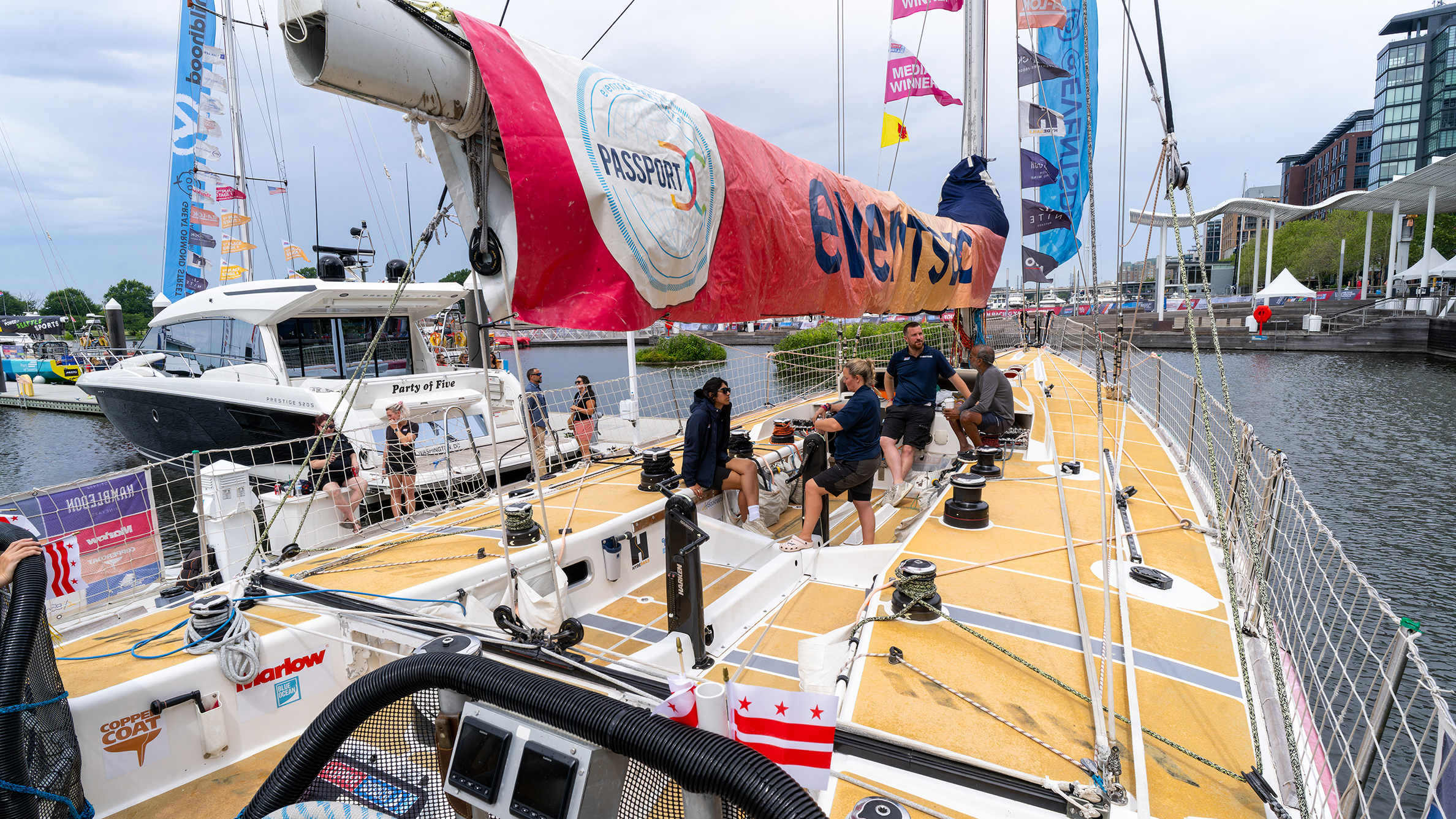
Public tours allowed guests to step aboard the Clipper 70s and examine their helms, winches and sail-control systems before descending into the compact interiors where crew members sleep, eat and work around the clock. The contrast was revealing. From the promenade, the boats appeared elegant and dramatic. Below deck, comfort was clearly secondary to function.
The Race Village and Discovery Zone expanded that introduction through exhibits, conversations and information about the next edition. Discovery Talks brought sailors and race representatives onto the Floating Stage to explain training, teamwork and life offshore. Live entertainment, family activities and cultural programming turned the area around the marina into a broader waterfront celebration rather than a closed sporting compound.
Yet the yachts remained the center of attention. Their scarred surfaces, tightly packed decks and towering rigs carried evidence that this was not a static maritime exhibition. These boats had already crossed much of the planet.
“On Monday night, the boats stopped belonging to the waterfront and belonged to the race again.”
Washington’s Home Boat Returns to Its Namesake City
Among the fleet, the arrival of the Washington DC yacht carried special significance.
Events DC sponsors the team, which is led by British skipper Ella Hebron and first mate Faith Nordbruch. Hebron previously served as first mate aboard the Washington-branded yacht during the 2023–24 race before returning as skipper for the current circumnavigation.
The partnership made the boat more than another competitor at the marina. Its hull effectively became a moving Washington billboard, carrying the city’s name through ports and oceans around the world. Every arrival photograph, race update and fleet gathering extended Washington’s presence far beyond the Potomac.
Washington’s relationship with the race began with the city’s first stopover in 2024. According to Events DC, that inaugural visit established a Clipper Race record for the greatest number of public yacht tours at a single stopover. The 2026 return built upon that success and placed the event within a larger summer of international celebrations surrounding America’s 250th anniversary.
Fleet Week’s Most Important Achievement
The greatest value of Fleet Week was the access. A Clipper 70 has no private staterooms, luxury lounges or cruise-ship comforts. Crew members live in close quarters, work rotating watches and share responsibility for sail changes, navigation support, maintenance, cooking and safety. Sleep can be interrupted by heavy weather or tactical maneuvers. Wet gear and fatigue become part of daily life. Every decision affects the rest of the team.
By opening these boats, Fleet Week replaced the romantic abstraction of “sailing around the world” with something more honest. The race is beautiful, but it is not comfortable. It is adventurous, but it is also repetitive, exhausting and highly disciplined.
A Weather-Changed Farewell: Plan B Before the Boats Departed
Monday’s farewell did not unfold according to the published schedule.
A crew parade had been planned as one of the evening’s central public moments, giving spectators an opportunity to see the sailors together before they returned to their yachts. But as severe weather moved across Washington, the parade was canceled.
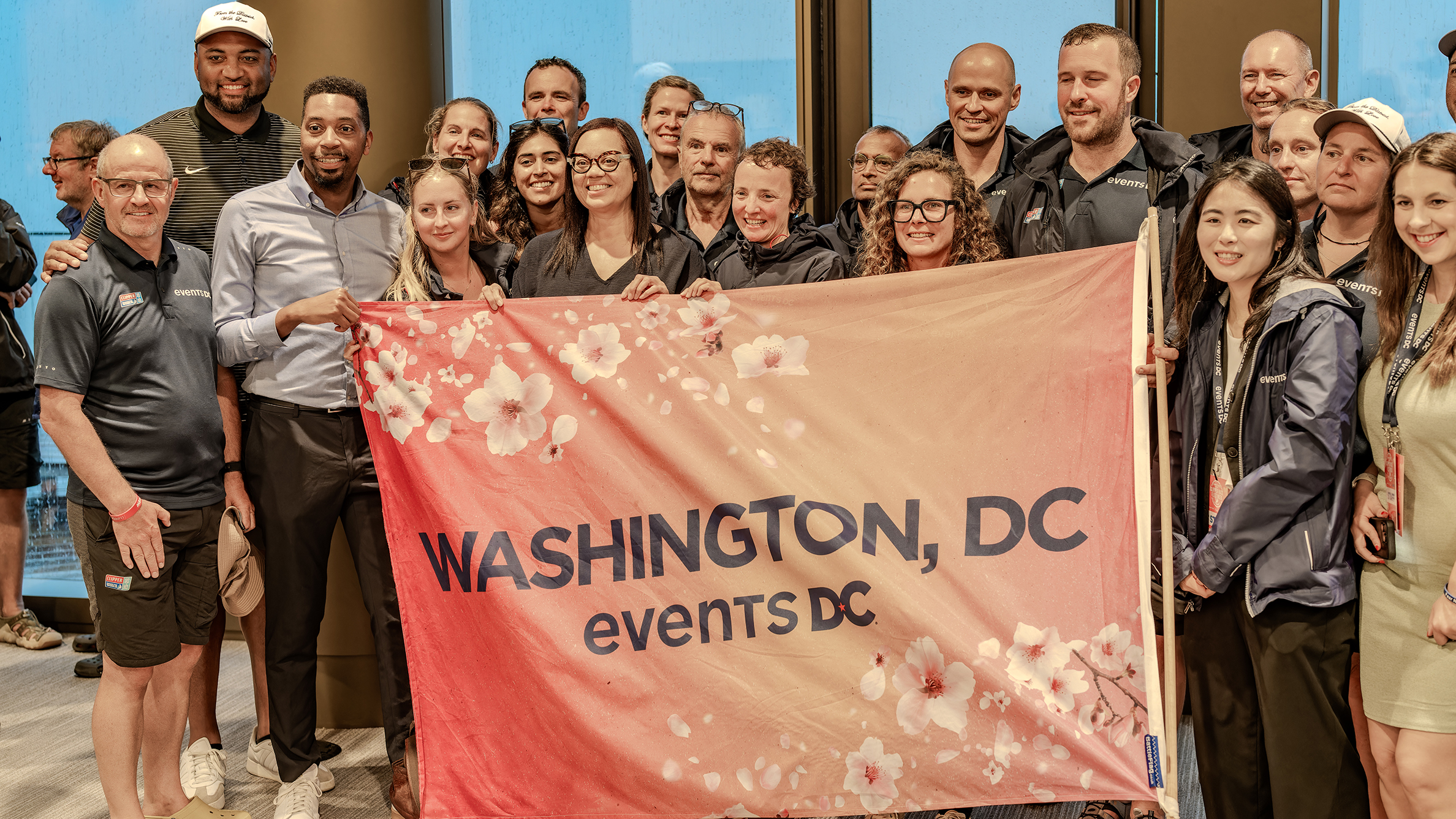
Organizers shifted to a Plan B. Rather than assembling the teams for photographs in the exposed waterfront setting originally envisioned, the crews gathered in a more sheltered location away from the worst of the storm. Team photographs were taken there before the sailors walked to their respective yachts.
It was a quieter and more practical transition than the ceremonial procession that had been scheduled. There was no formal parade through The Wharf and no prolonged public presentation of the crews. Instead, sailors moved through the unsettled evening toward the boats that had carried them around much of the world.
That change gave the farewell a different character.
The final hours were no longer dominated by staged celebration. They became a study in adaptation—the same quality the crews depend upon at sea. Plans changed quickly. Safety took priority. The teams regrouped, completed what could still be accomplished under shelter and then returned to the fleet.
At the marina, preparations shifted back toward the work of departure. Crew members boarded their yachts, checked equipment and took their positions as the boats prepared to release their lines.
What remained was less formal than originally planned, but far from subdued. As the storm passed, the sun returned and the waterfront came back to life. Spectators gathered along The Wharf, cheering as the crews boarded their yachts and prepared to leave. Calls of “don’t go” and “bye” carried across the water while sailors waved from the decks, answering the crowd as the lines were released. One by one, the boats moved away from Washington, turning a weather-disrupted farewell into a warm and unmistakably human sendoff before returning to the race.
Will the Clipper Race Return to Washington in 2028?
The success of the 2024 and 2026 events naturally raises the question of another Washington stop during the 2027–28 edition.
At the time of publication, no official Clipper Race or Events DC announcement located by Discover DC Now confirms Washington as a host port for 2028. The city has now hosted two consecutive editions and has demonstrated that The Wharf can accommodate the fleet, support large public-tour numbers and create a strong departure spectacle. That does make a return plausible.
A New Generation of Clipper Yachts Is Coming
The current Clipper 70s are expected to give way to an entirely new matched fleet for the 2027–28 race.
Clipper Ventures has announced the Clipper RX, a next-generation 72-foot ocean racer developed using three decades of race experience and feedback from more than 7,000 previous crew members. Twelve identical yachts are under construction, with the goal of bringing the fleet into service for the 2027–28 edition.
The new design includes a distinctive bow, wider foredeck, twin helms, two watertight companionways and protected “cuddies” intended to give crew members greater shelter from extreme conditions. Designers are also seeking improved performance both upwind and downwind while maintaining the durability and safety required for a global race.
The change is significant. The Clipper RX will not merely update the interior or branding of the present boats. It represents the next generation of the race’s central platform—slightly larger, newly engineered and informed by thousands of crew experiences accumulated across multiple circumnavigations.
If Washington is a host port in 2028, local spectators would be welcoming those new 72-foot yachts rather than the Clipper 70s that visited in 2024 and 2026.
More Than a Stopover
For Washington, the Clipper Race has become more than an unusual collection of boats passing through town. It gives the city a rare connection to a truly global sporting route. It introduces residents to offshore sailing in an accessible way. It places international crews within reach of the public and uses The Wharf not merely as an entertainment district, but as a functioning maritime stage.
The event also reveals another side of Washington. The capital is commonly presented through monuments, museums and political institutions. Fleet Week turned attention toward its water—toward the Washington Channel, the Potomac and the city’s ability to receive an ocean-racing fleet in the heart of an urban neighborhood.
For several days, the boats belonged to the waterfront. On Monday night, they belonged to the race again.
Final Word
The most powerful moment of Clipper Fleet Week was not when the fleet arrived. It was when the yachts left. Arrival offered relief, celebration and access. Departure restored uncertainty. Beneath unstable skies, the crews released their lines, passed through the Washington Channel and began the long journey toward open water.
Washington gave the sailors a memorable stopover. The sailors gave Washington something equally valuable: a close look at courage without polish, adventure without comfort and teamwork tested far beyond the shoreline. The masts have disappeared from The Wharf, but the race continues.