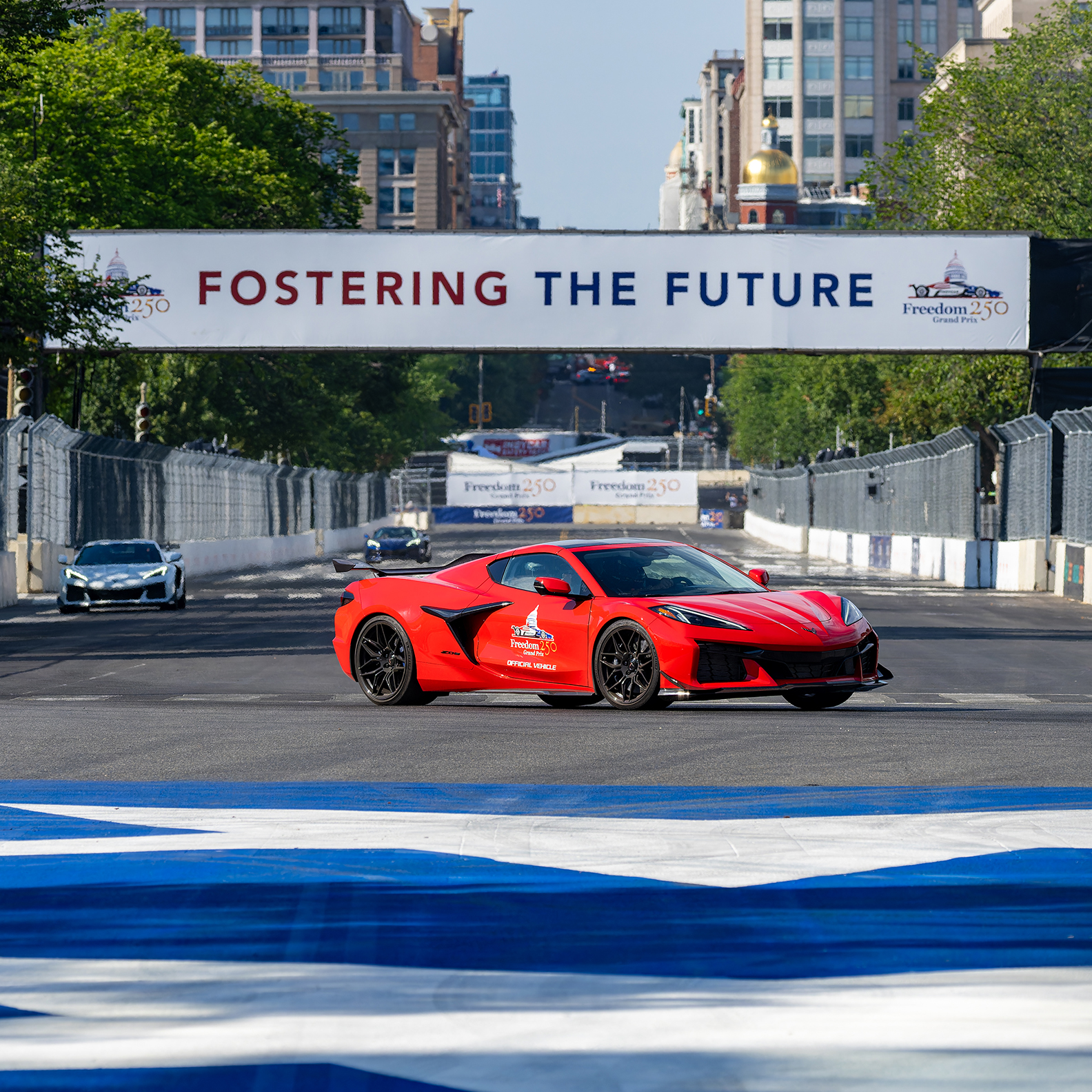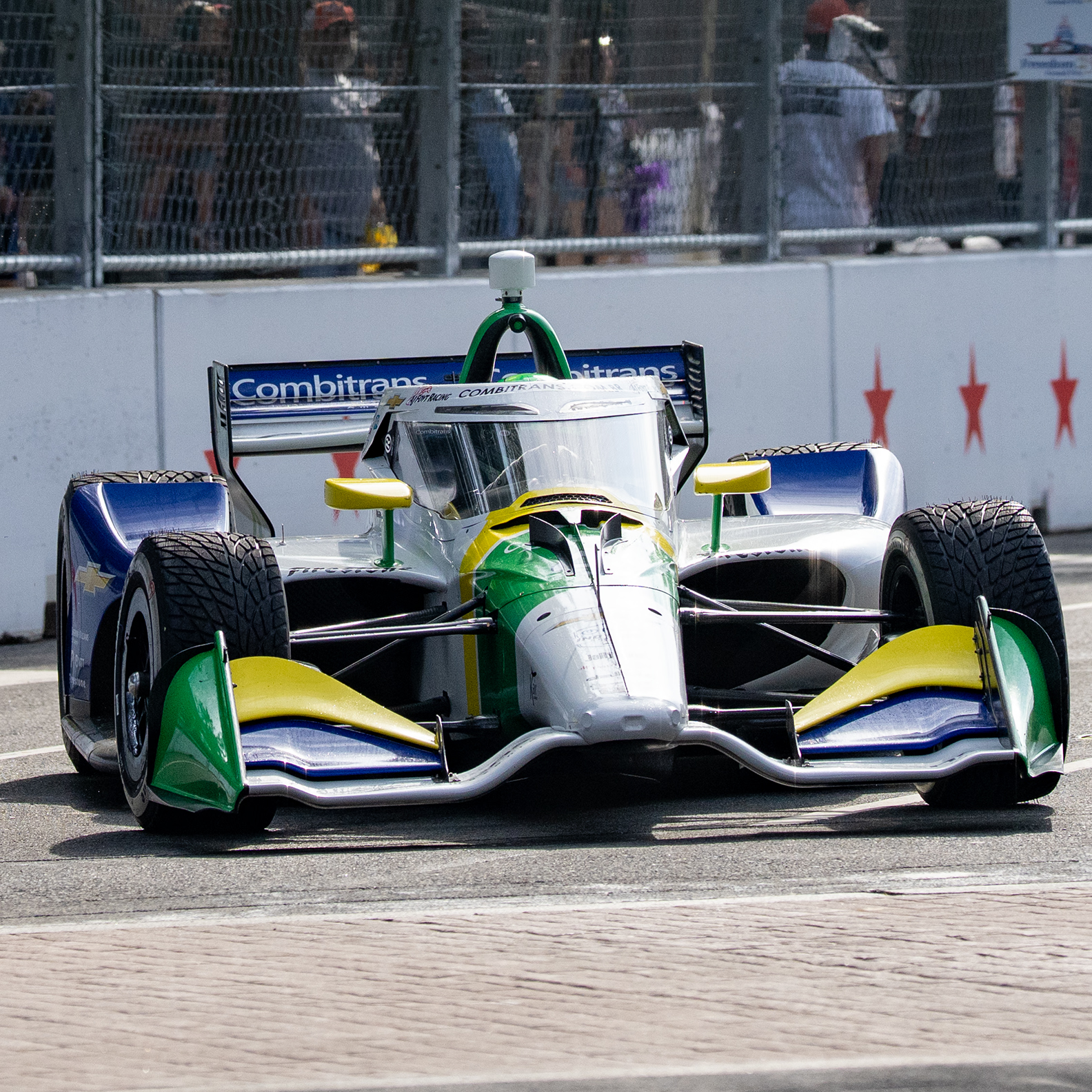
For one extraordinary August weekend, the familiar sounds of Washington changed.
The ceremonial quiet surrounding the National Mall gave way to the sharp acceleration of INDYCAR engines. Temporary barriers traced a racing circuit past museums, government buildings and some of the nation’s most recognizable monuments. Pennsylvania Avenue—normally associated with motorcades, parades and political processions—became part of a high-speed competition carrying the symbolism of America’s 250th anniversary.
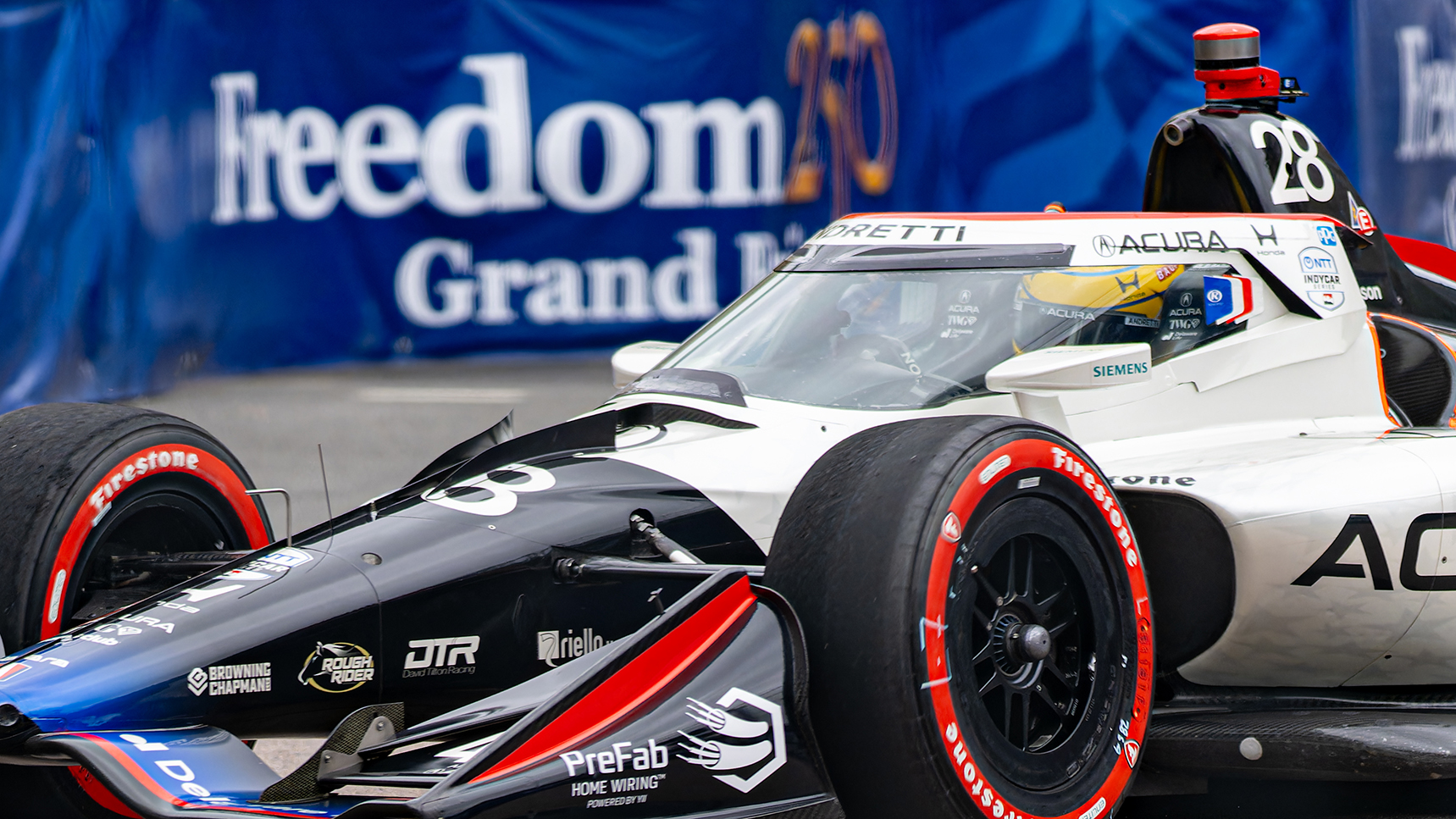
Held August 22–23, 2026, the inaugural Freedom 250 Grand Prix of Washington DC, brought professional motorsports into the monumental heart of the capital for the first time. Saturday introduced drivers and teams to an unfamiliar street circuit while delivering two International Race of Champions exhibitions. Sunday culminated in 147 laps of INDYCAR racing, with American driver Kyle Kirkwood producing a decisive victory for Andretti Global.
The result was more than a new stop on the racing calendar. It was a large-scale Washington spectacle combining competition, national ceremony, military pageantry and the rare sight of race cars charging between landmarks generally seen from tour buses and museum steps.
A Street Circuit Unlike Any Other
Seven Turns, 250 Miles and a Monumental Backdrop
The temporary course measured 1.7 miles and contained seven turns. Drivers completed 147 laps for an official race distance of 249.9 miles—effectively the 250 miles represented in the event’s name. The circuit included a 0.4-mile high-speed section along Pennsylvania Avenue, with sightlines incorporating the Washington Monument and U.S. Capitol.
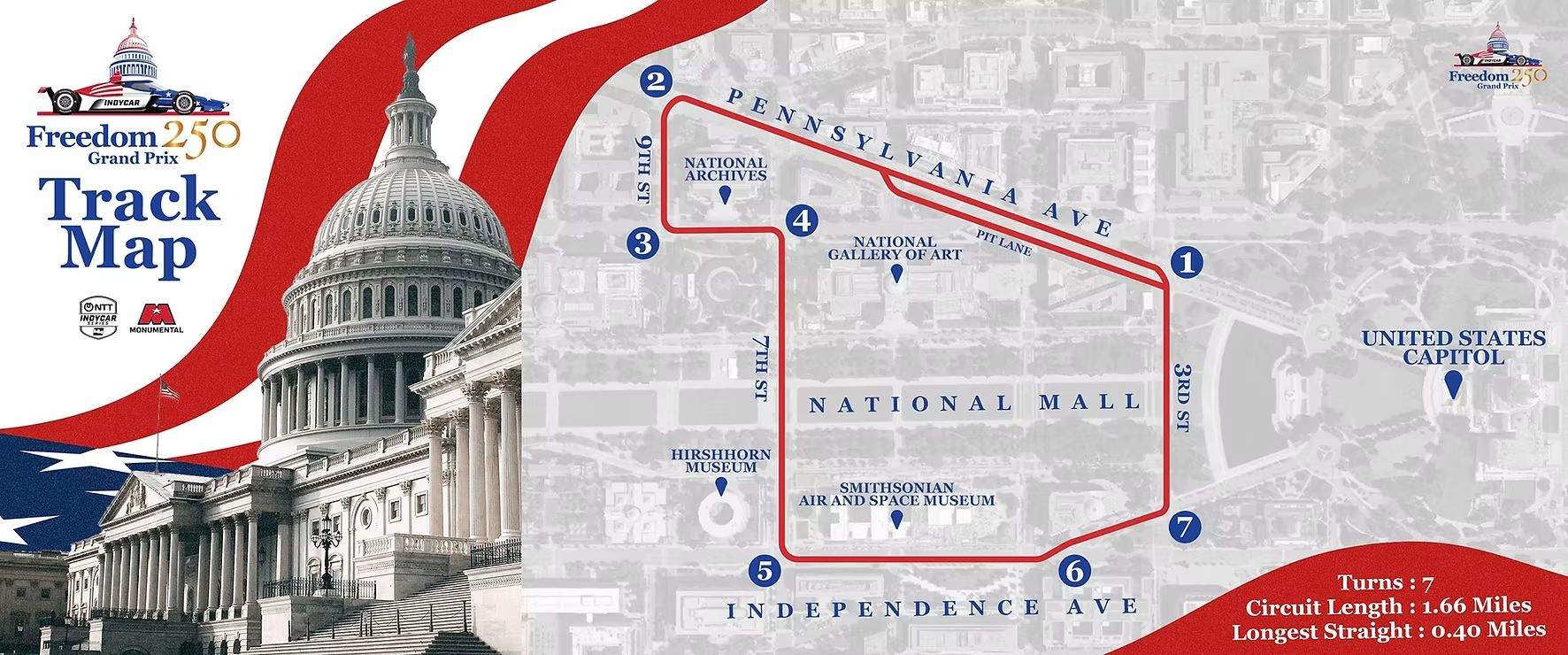
Cars also raced near the Smithsonian National Air and Space Museum, National Gallery of Art and National Archives. The combination gave television viewers and spectators a visual experience that could not be replicated at a permanent racing facility. INDYCAR’s official event information identifies the race as the first INDYCAR event held on the streets surrounding the National Mall.
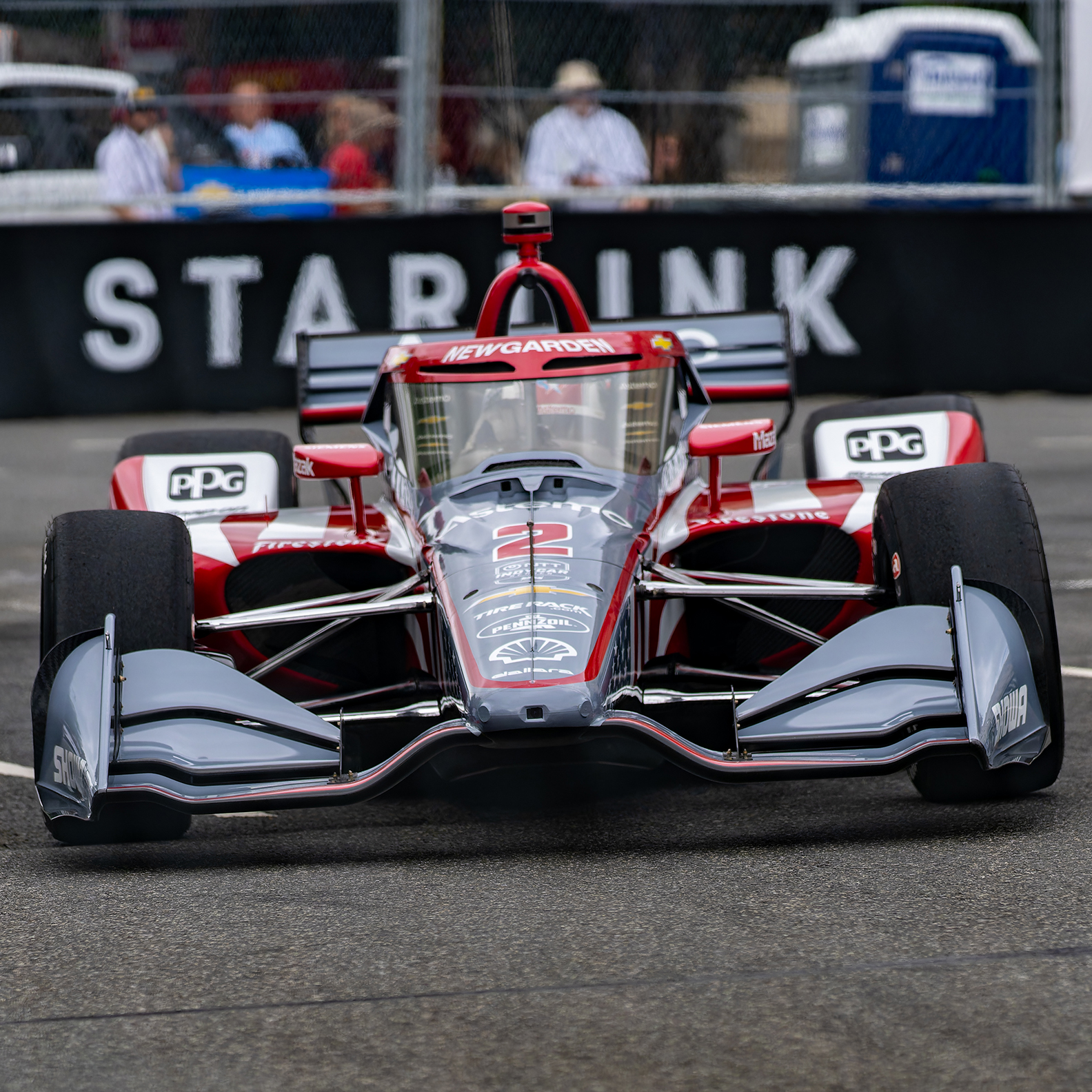
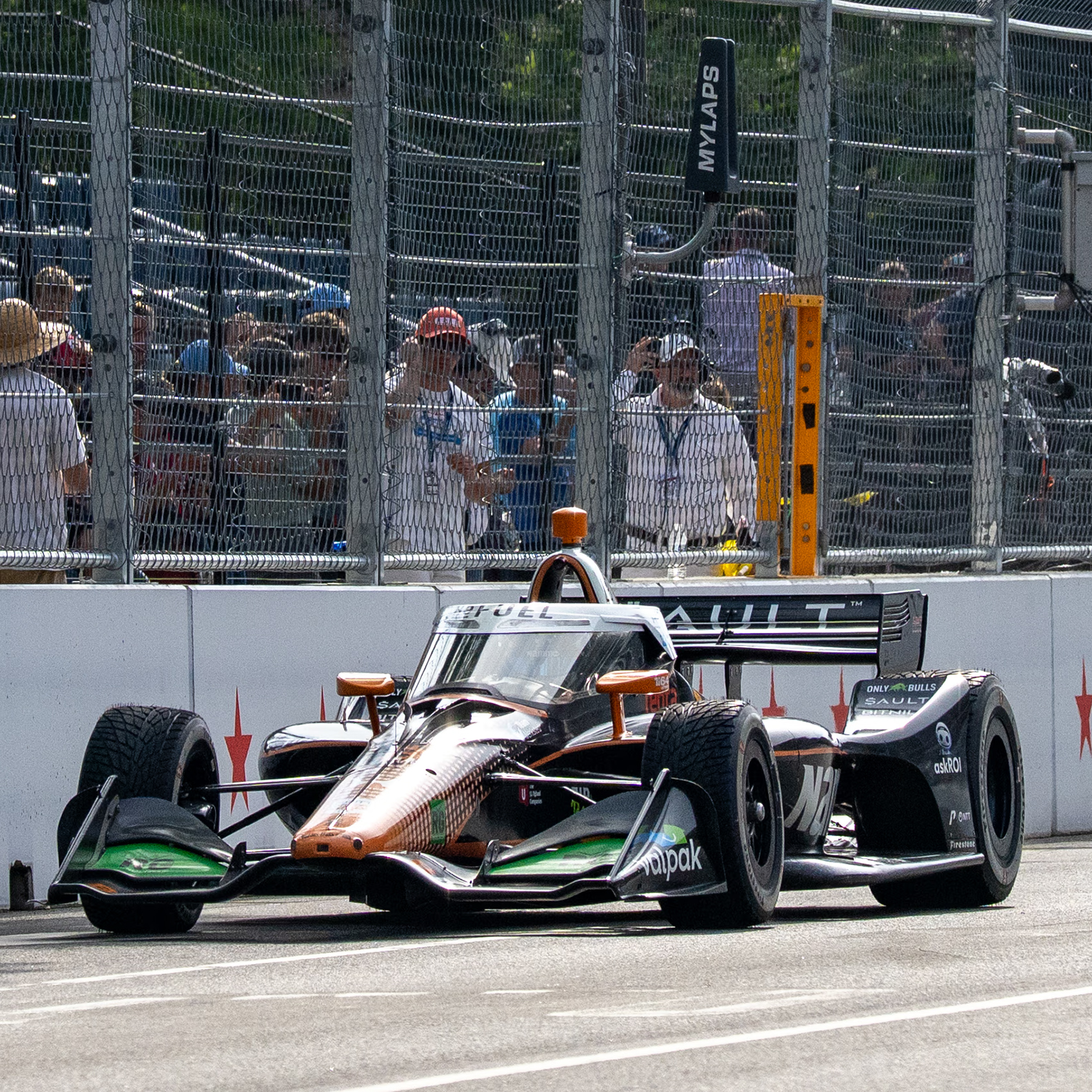
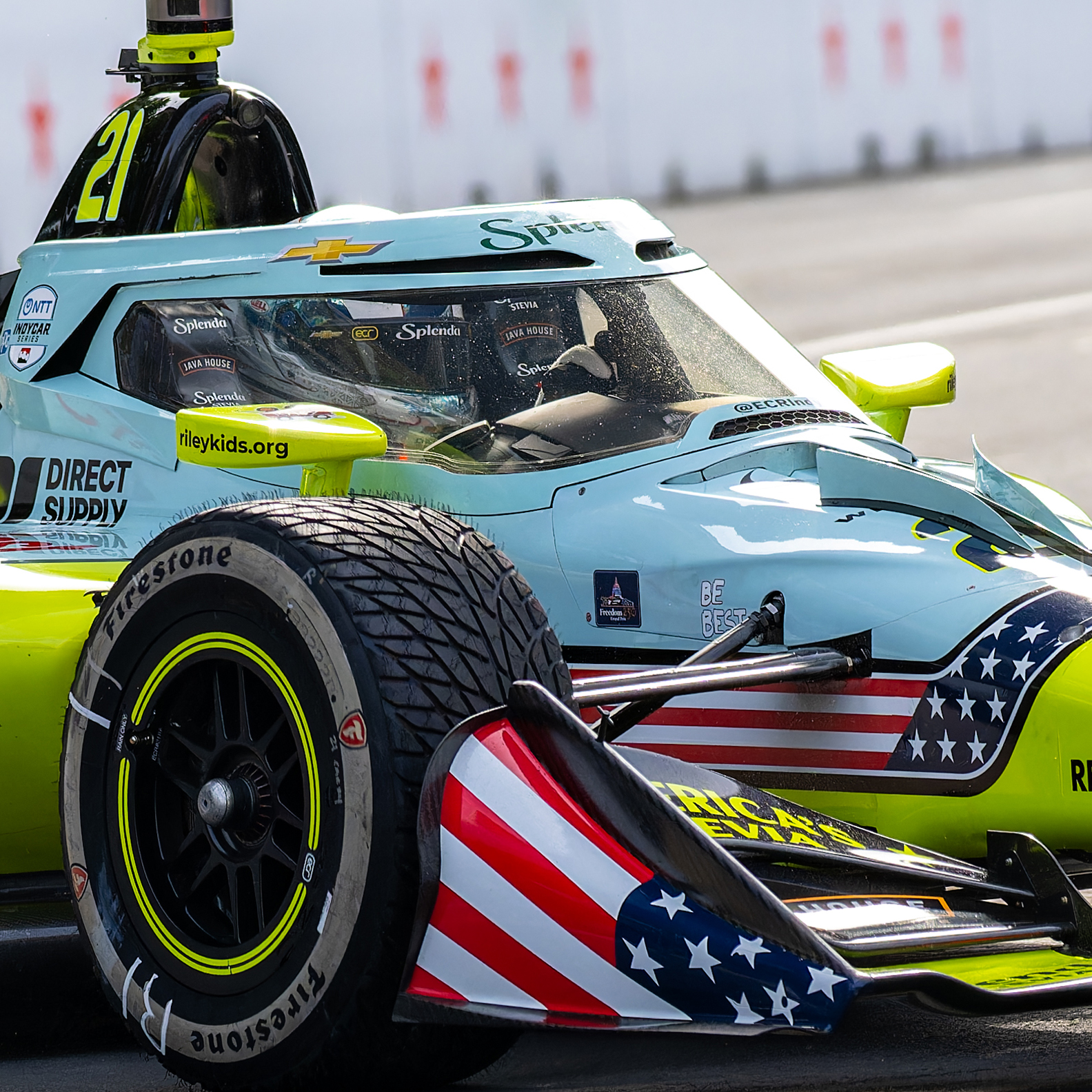
The setting was spectacular, but the course itself demanded precision. Street circuits leave little room for recovery: concrete walls stand where runoff areas would normally provide space, and changing pavement creates variations in grip. Washington added brick crosswalks, surface bumps and heavy braking zones to the equation.
Saturday’s two practice sessions allowed the 25-driver field to learn those characteristics before qualifying. Drivers including Graham Rahal and Louis Foster encountered the walls during practice, demonstrating how quickly the new circuit could punish an error.
Palou Claims the First Washington Pole
Championship leader Alex Palou entered the weekend as the driver to beat and delivered when qualifying reached its decisive one-lap round.
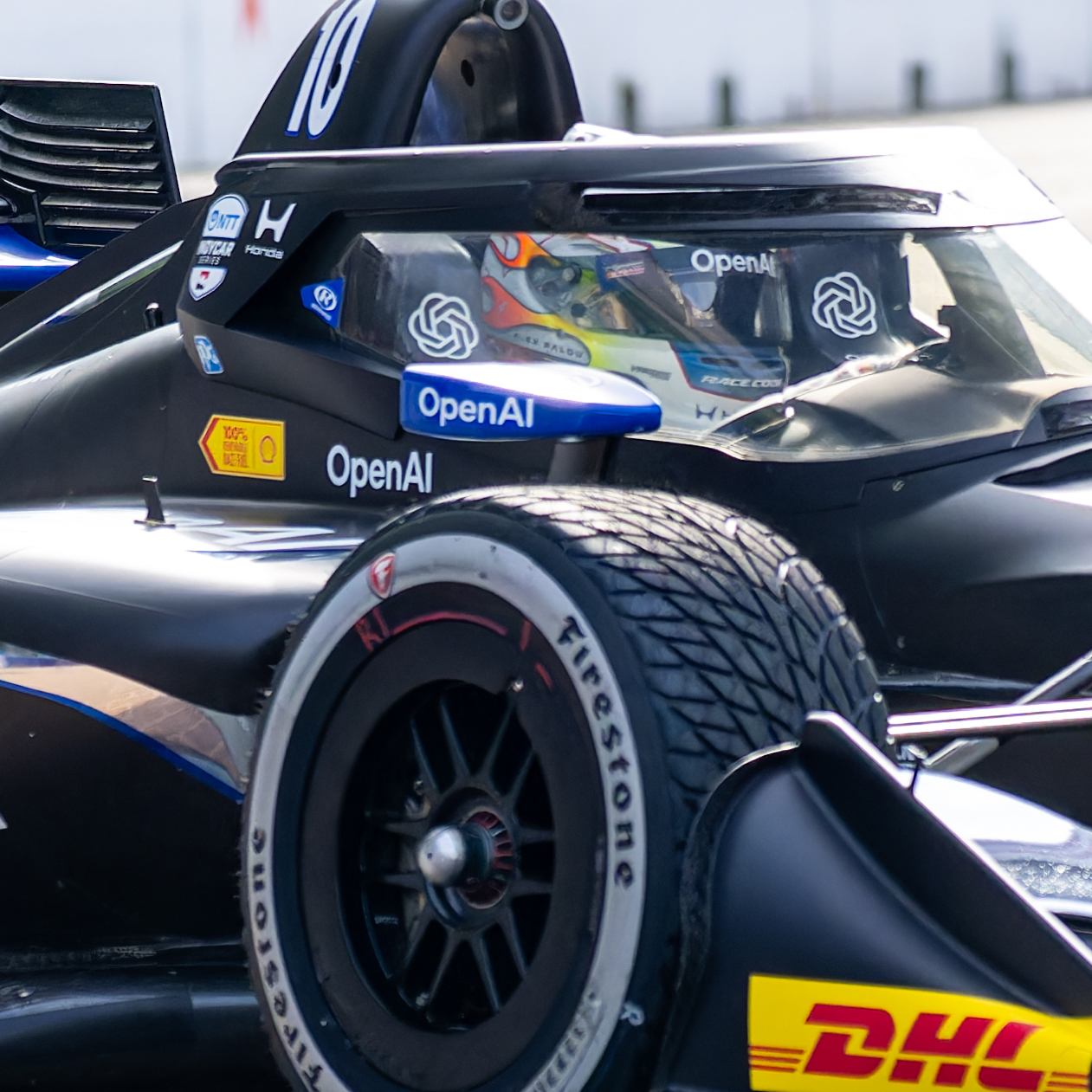
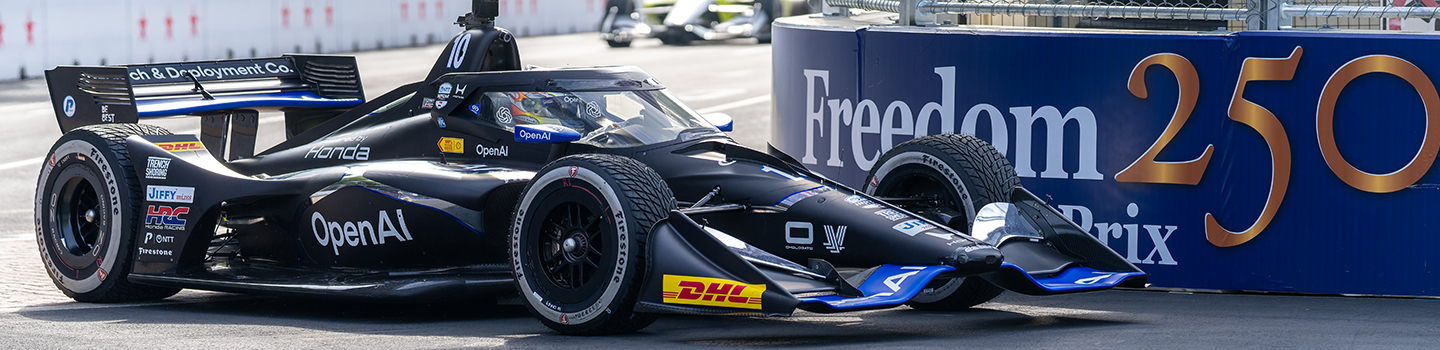
Palou recorded a 56.8993-second lap in his No. 10 Chip Ganassi Racing Honda to earn the first pole position in Freedom 250 history. It was his seventh pole of the 2026 season and the 19th of his INDYCAR career. Kirkwood qualified second after leading the opening rounds, while Scott McLaughlin placed third as the fastest Chevrolet-powered driver. Christian Rasmussen, Marcus Armstrong and David Malukas completed the Firestone Fast Six.
Palou’s pole reinforced his position at the top of the championship. Yet the long race ahead—and the unforgiving character of a temporary circuit—meant that Saturday’s speed offered no guarantee of Sunday’s outcome.
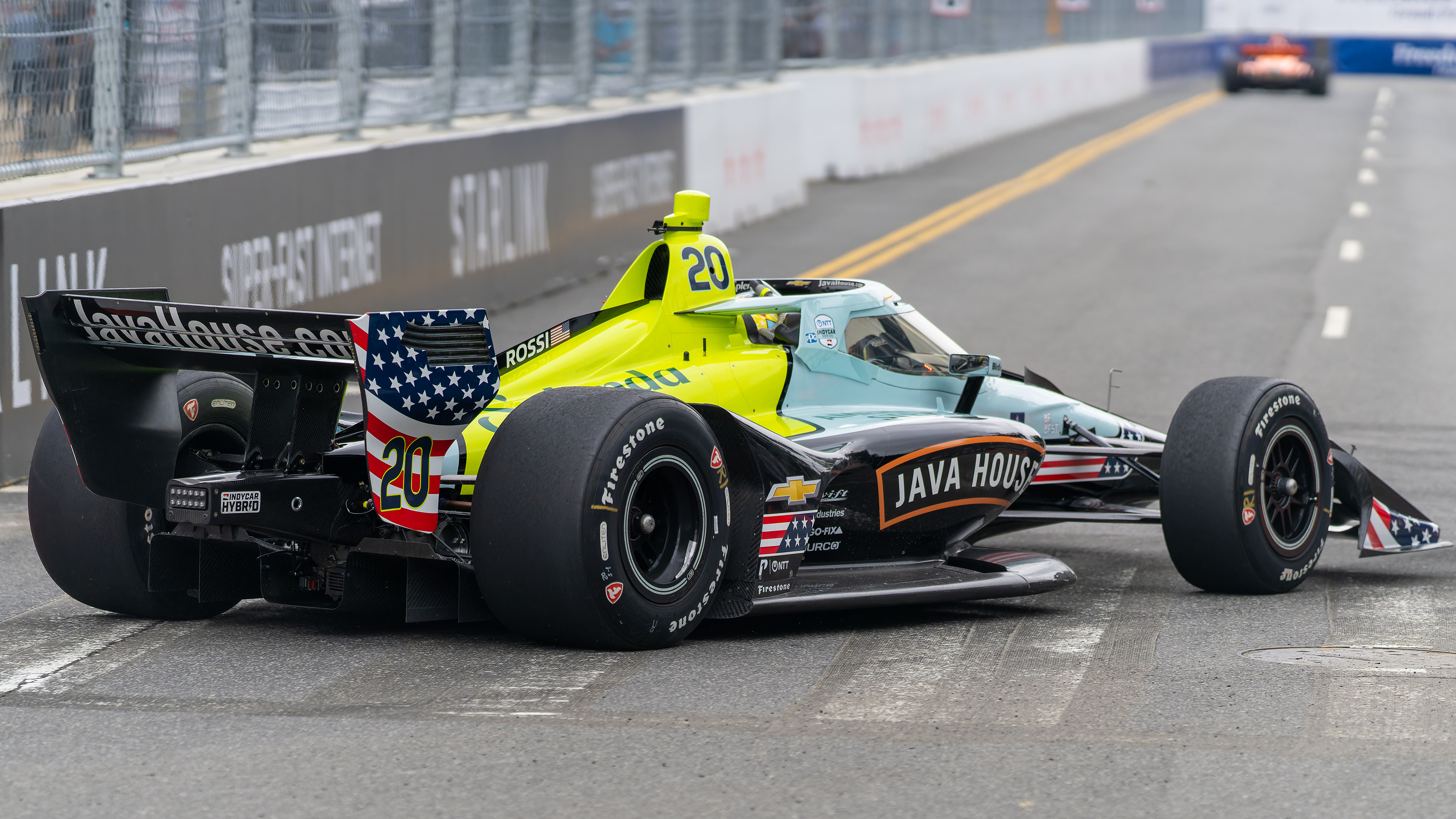
Kyle Kirkwood Seizes the Capital
A Dominant Drive from the Opening Lap
Kirkwood started alongside Palou on the front row but did not remain behind him for long. The Andretti Global driver challenged the polesitter through the opening corners and took the lead in Turn 2 on Lap 1.
From that point forward, the race largely belonged to Kirkwood.
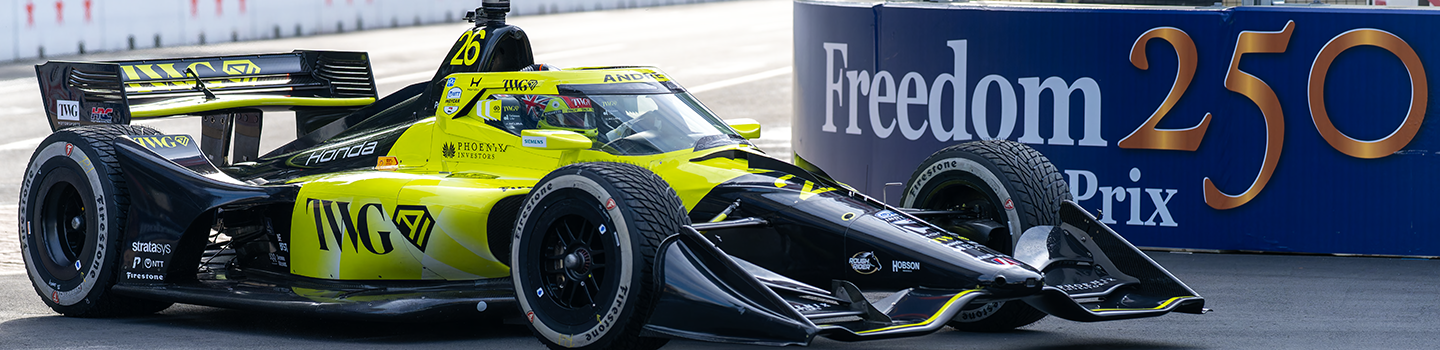
Driving the No. 27 Honda, he led 128 of the 147 laps and surrendered first place primarily during pit-stop sequences. At one point, he had built an advantage of approximately 16 seconds. Neither alternate tire choices nor fuel strategy produced a sustained threat to his control of the race.
The late stages nevertheless demanded composure. Caution periods erased Kirkwood’s advantage and produced two restarts between Laps 128 and 134. On the first, McLaughlin attempted to take the lead with an aggressive move into Turn 1. He briefly moved alongside Kirkwood but carried too much speed into the corner and struck a tire barrier, ending his challenge.
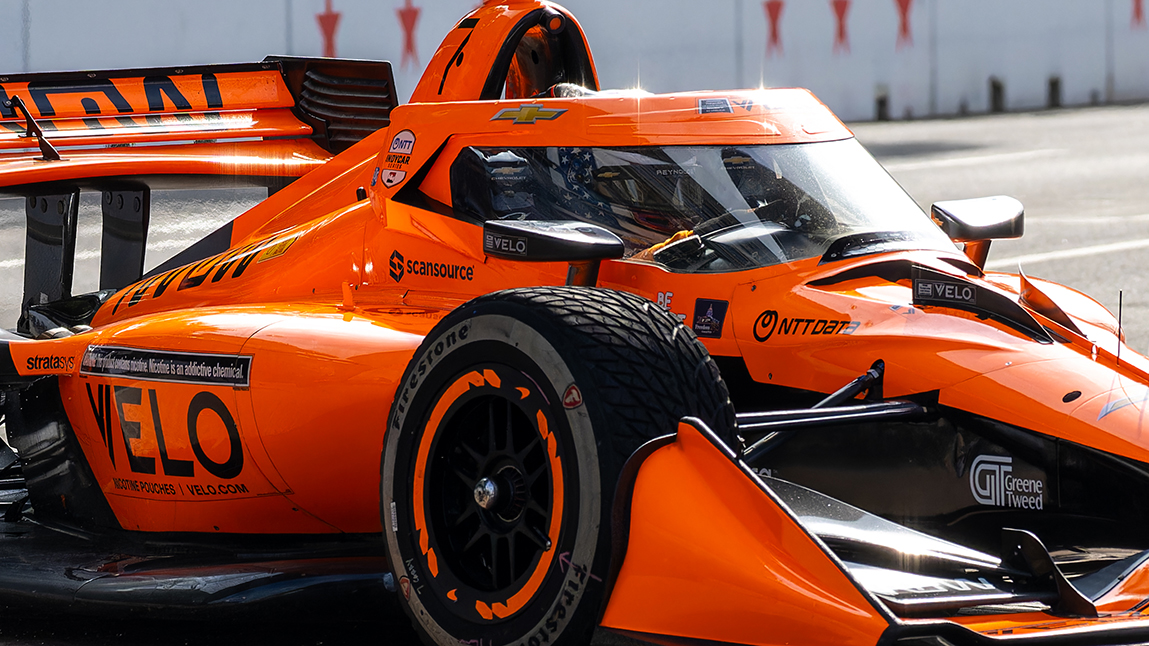
Kirkwood controlled the final restart on Lap 134 and rebuilt enough of a margin to win by 3.0906 seconds over Christian Lundgaard of Arrow McLaren. Will Power finished third and Marcus Ericsson fourth, giving Andretti Global three of the first four positions. Kyffin Simpson completed the top five for Chip Ganassi Racing.
The victory was Kirkwood’s second of the season and seventh of his INDYCAR career. Six of those seven wins have come on temporary street circuits, underscoring his ability to work within the narrow margins and changing conditions of urban racing.
“This is a big moment for us, a big moment for America here with the 250.”Kyle Kirkwood, Freedom 250 Grand Prix champion
A Difficult Sunday for the Championship Leader
While Kirkwood experienced an almost ideal afternoon, Palou endured one of his most difficult races of the season.
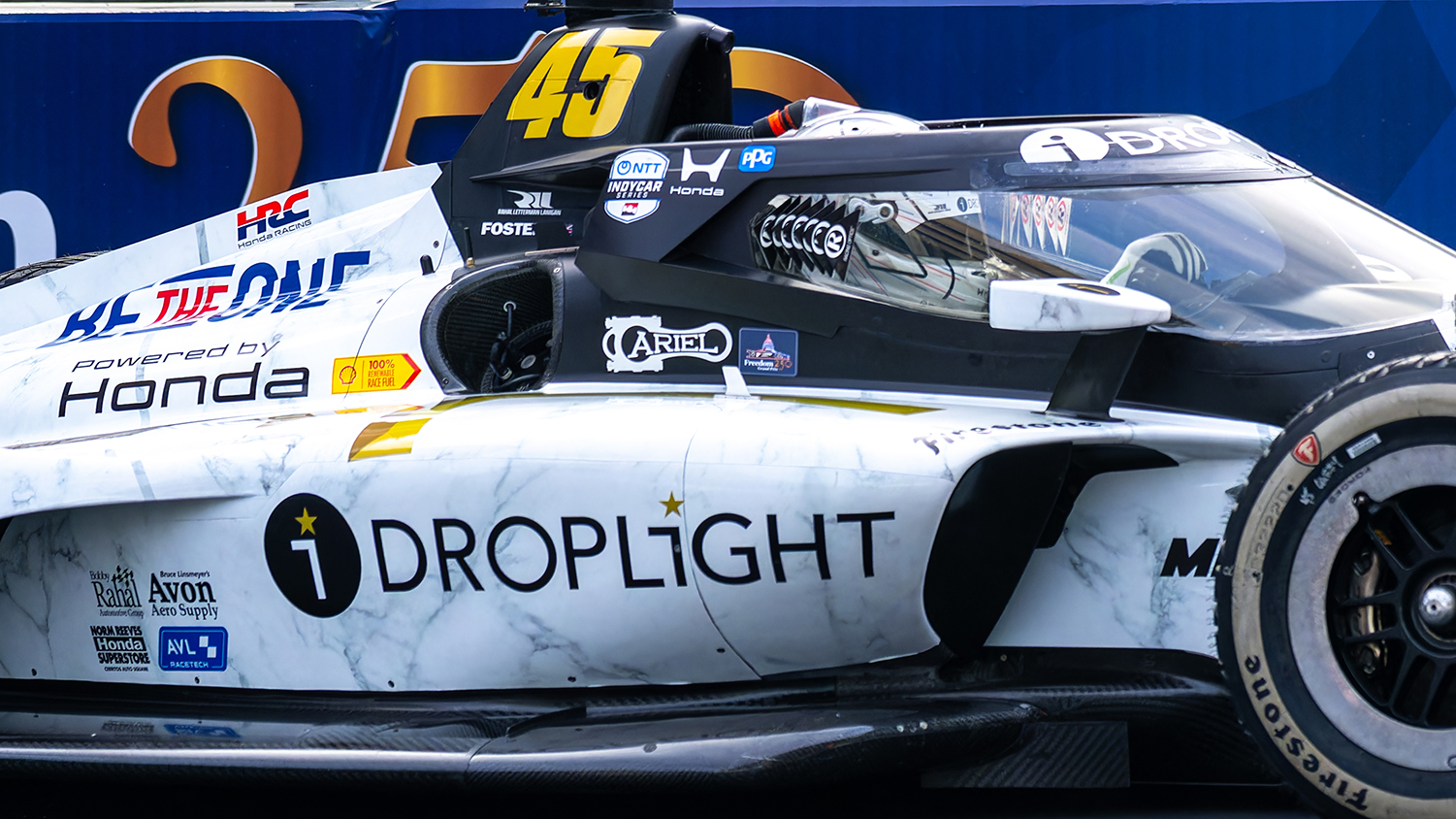
During the first round of pit stops, Palou struck a tire positioned in another team’s pit box. Officials assessed a drive-through penalty, dropping him deep into the field. A later problem securing a wheel during another stop cost additional time. His race ultimately ended after earlier contact with a concrete barrier damaged the car’s suspension, resulting in a spin at Turn 4 on Lap 123.
Palou finished 20th. His championship advantage over Kirkwood, which stood at 133 points entering the weekend, fell to 91 points with three races remaining.
The contrast defined the competitive story of the Freedom 250: the championship leader started from pole but encountered a succession of costly problems, while his closest challenger delivered one of the most complete performances of the season.
“IROC connected the weekend to racing’s past while INDYCAR introduced a new chapter on the streets of the capital.”
IROC Brings Racing Royalty Back to Washington
Jeff Gordon Sweeps the Saturday Doubleheader
The Freedom 250 weekend was not limited to the current INDYCAR field. Saturday also featured the return of the International Race of Champions, better known as IROC, and an unusually concentrated roster of motorsports legends.
The field included former NASCAR Cup Series champions Jeff Gordon, Kurt Busch, Bobby Labonte, Rusty Wallace and Bill Elliott; Indianapolis 500 winners Hélio Castroneves and Tony Kanaan; and sports-car champion Tommy Kendall. They competed in restored Pontiac Firebirds originally used by IROC between 1996 and 2006.
IROC’s historic appeal came from placing successful drivers from different disciplines in equally prepared cars. Washington revived that “champion of champions” concept through two 10-lap races.
Gordon won the opening contest after following Castroneves through the early laps and passing him for the lead on Lap 6. The format required the entire starting order to be inverted for Race 2, sending Gordon to the rear of the field.
He then advanced through the lineup, passed Kanaan for the lead on Lap 5 and held off Kurt Busch during the final lap. By sweeping both races, Gordon secured the 2026 IROC title and earned his first street-course victories. Castroneves recorded the fastest final lap of the second race, but Gordon’s track position and defense decided the outcome.
The appearance of the original-style Firebirds beside contemporary INDYCAR machinery added a valuable layer to the weekend. The Freedom 250 looked forward by introducing a new urban circuit while simultaneously reconnecting fans with a competition remembered for bringing leading drivers together across racing categories.
Beyond the Checkered Flag: The Freedom 250’s Reach
Attendance Exceeds 215,000
The Freedom 250 Grand Prix produced results extending well beyond the competition on the track. In a post-event report released August 28, organizers said more than 215,000 spectators attended across the two-day weekend, filling viewing areas along the National Mall and Pennsylvania Avenue.
General-admission access had been distributed through a free ticket lottery, with spectators assigned to either the STARS or STRIPES viewing area. A limited number of grandstands and viewing platforms were available on a first-come, first-served basis. Premium hospitality areas provided additional views overlooking the circuit.
The attendance total should be identified as an organizer-reported figure because no independent audit was released. Even with that qualification, the turnout placed the inaugural Washington event among the largest-attended INDYCAR weekends in recent years.
The scale was particularly notable for a first-year race built around a temporary course. Unlike a permanent motorsports facility, the Freedom 250 required organizers to create spectator zones, install safety barriers, coordinate entrances and security, establish hospitality areas and convert heavily traveled streets into a working racing venue.
A National Audience for Washington’s Newest Race
The Freedom 250 also delivered one of the strongest television performances in modern INDYCAR history.
According to FOX and INDYCAR, the Sunday broadcast averaged 3.282 million viewers, making it the most-watched INDYCAR race other than the Indianapolis 500 since 1995. The audience peaked at 3.482 million viewers between 2:30 and 2:45 p.m. Eastern time as Kyle Kirkwood moved toward victory.
FOX further estimated that more than nine million people watched at least one minute of the broadcast. According to the network’s audience analysis, approximately 44 percent of those viewers had not watched another INDYCAR race during the 2026 season—an indication that the Washington setting and national-anniversary connection brought new viewers to the series.
The race contributed to a broader increase in INDYCAR television audiences. Through the first 15 races of 2026, FOX reported an average audience of 1.875 million viewers, up 32 percent from the network’s 2025 average.
International distribution extended the event’s reach beyond the United States. INDYCAR programming was available in more than 200 countries and territories, placing images of race cars, the National Mall, Washington Monument and U.S. Capitol before viewers around the world.
Washington Becomes Part of the Broadcast
Racing, Ceremony and Seven Flyovers
The television production devoted substantial time to the ceremonies surrounding the race. Military bands performed on the circuit, service members were recognized before the start and organizers presented seven aerial flyovers, including an appearance by Air Force One.
President Donald Trump and First Lady Melania Trump met the active Indianapolis 500 winners competing in the race before completing a ceremonial lap in the presidential limousine. D.C. Mayor Muriel Bowser called the drivers to their cars, Interior Secretary Doug Burgum gave the command to start engines and President Trump waved the green flag from a suite overlooking Pennsylvania Avenue.
NASA astronaut Reid Wiseman, commander of the Artemis II mission, participated in the pre-race program as a passenger in INDYCAR’s two-seat Fastest Seat in Sports car. Transportation Secretary Sean Duffy later waved the checkered flag as Kirkwood completed the 147th and final lap.
These elements helped distinguish the Freedom 250 from a conventional racing weekend. The National Mall was not simply a recognizable background for the broadcast; its monuments, museums and ceremonial spaces became central parts of the event’s identity.
Worldwide Media and Digital Attention
The race attracted coverage from national and international organizations including Reuters, the BBC, CNN, ABC News, CBS News, NBC News, FOX News, USA Today, The Wall Street Journal, The New York Times and The Washington Post, according to the post-event report.
INDYCAR’s media-monitoring service estimated that Freedom 250 coverage generated more than $1 billion in advertising value equivalency during race week and more than $2 billion between the event’s January announcement and the completion of the race.
Those figures require context. Advertising value equivalency, commonly called AVE, estimates what comparable exposure might have cost if purchased as advertising. It does not represent revenue generated by the race, money paid to Washington or independently calculated economic impact. DDN should therefore describe the figures as INDYCAR’s promotional-media estimates rather than direct financial returns.
Online activity also reflected elevated interest. INDYCAR reported that race day was its second-highest social-media engagement day of 2026, behind only the Indianapolis 500. Traffic to INDYCAR.com was reportedly the highest recorded for any non-Indianapolis 500 weekend during the season.
Competition Completes the Spectacle
The audience numbers and ceremonies would have meant considerably less without compelling racing. Saturday’s IROC doubleheader brought eight celebrated drivers back to competition in equally prepared Pontiac Firebirds. Jeff Gordon won both 10-lap races, overcoming a complete starting-grid inversion in the second contest to secure the 2026 IROC title.
Sunday’s INDYCAR race delivered 147 laps and, according to organizers’ post-event statistics, 155 on-track passes. Kirkwood led 128 laps and survived a succession of late restarts to become the first driver to win an INDYCAR race on the streets of Washington.
Christian Lundgaard finished second, 3.0906 seconds behind Kirkwood, while Will Power and Marcus Ericsson gave Andretti Global three of the first four finishing positions. Kyffin Simpson completed the top five.
Together, the results provided the Freedom 250 with three distinct measures of success: a substantial on-site audience, exceptional national television viewership and a memorable performance by an American driver in the first major automobile race staged around the National Mall.
A First-Year Event with Unusual Impact
Organizers described the Freedom 250 as exceeding their expectations. The available figures support the conclusion that the event generated exceptional attention, although some measurements—including attendance, audience composition, digital engagement and advertising value equivalency—originated with the event, FOX or INDYCAR and were not independently audited.
That distinction does not diminish what could be seen and measured directly. Washington hosted a functioning professional street circuit. More than three million viewers watched the race on average. Kirkwood delivered a dominant victory. Gordon completed an IROC sweep. Images from the weekend circulated internationally.
For a first-year event created and constructed within a matter of months, the Freedom 250 established an unusually large public and media footprint—and gave Washington a motorsports moment unlike any in the city’s history.
Final Word
The inaugural Freedom 250 Grand Prix succeeded because its location was not merely decorative. Washington itself became part of the competition.
The long Pennsylvania Avenue section, unforgiving walls and monumental sightlines gave the race a character distinct from every other stop on the INDYCAR schedule. IROC connected the weekend to motorsports history; military and civic ceremonies connected it to the nation’s 250th anniversary; and Kirkwood’s dominant drive supplied the decisive sporting performance the occasion required.
For two days in August, the National Mall became a racetrack—and Washington witnessed a form of speed, sound and spectacle it had never experienced before.