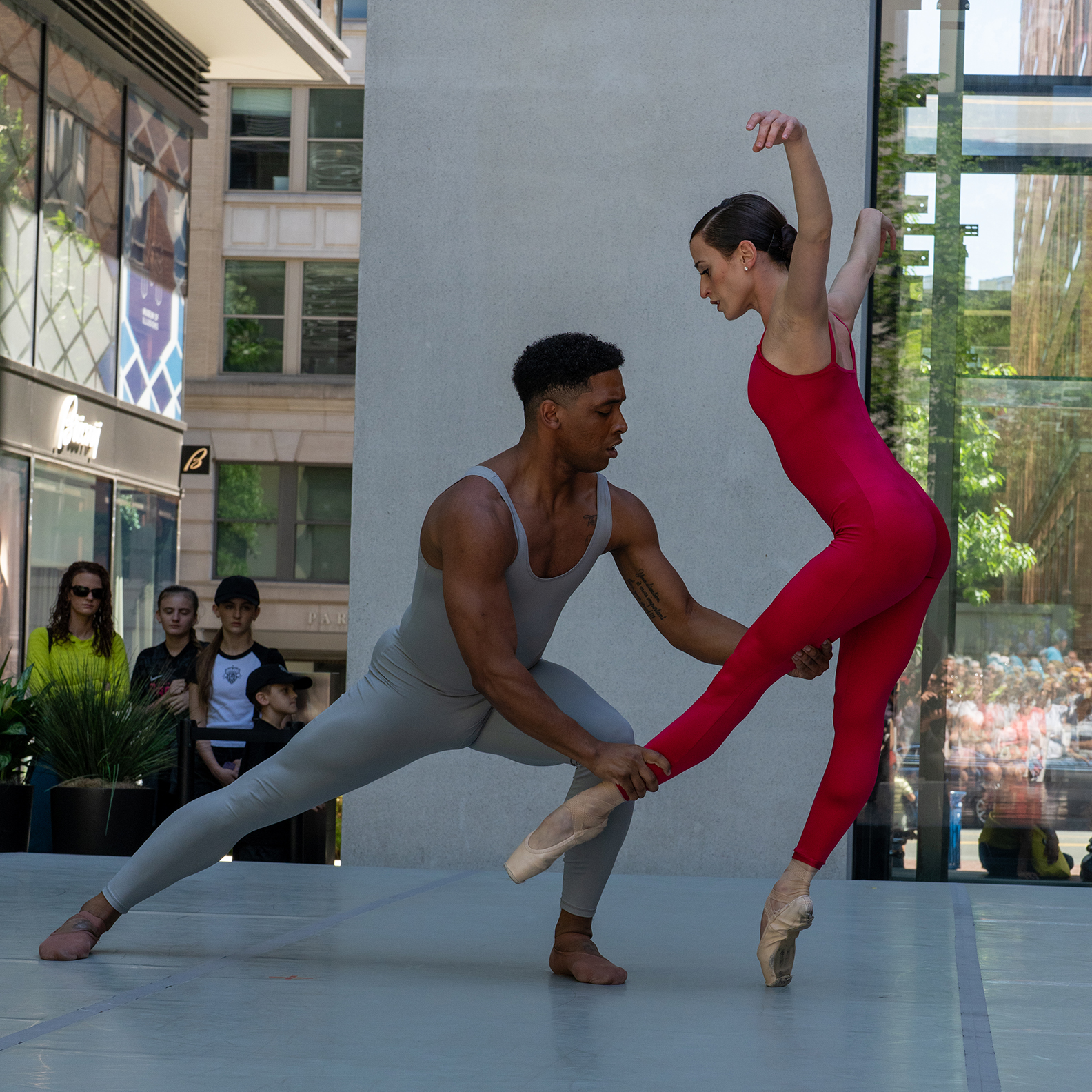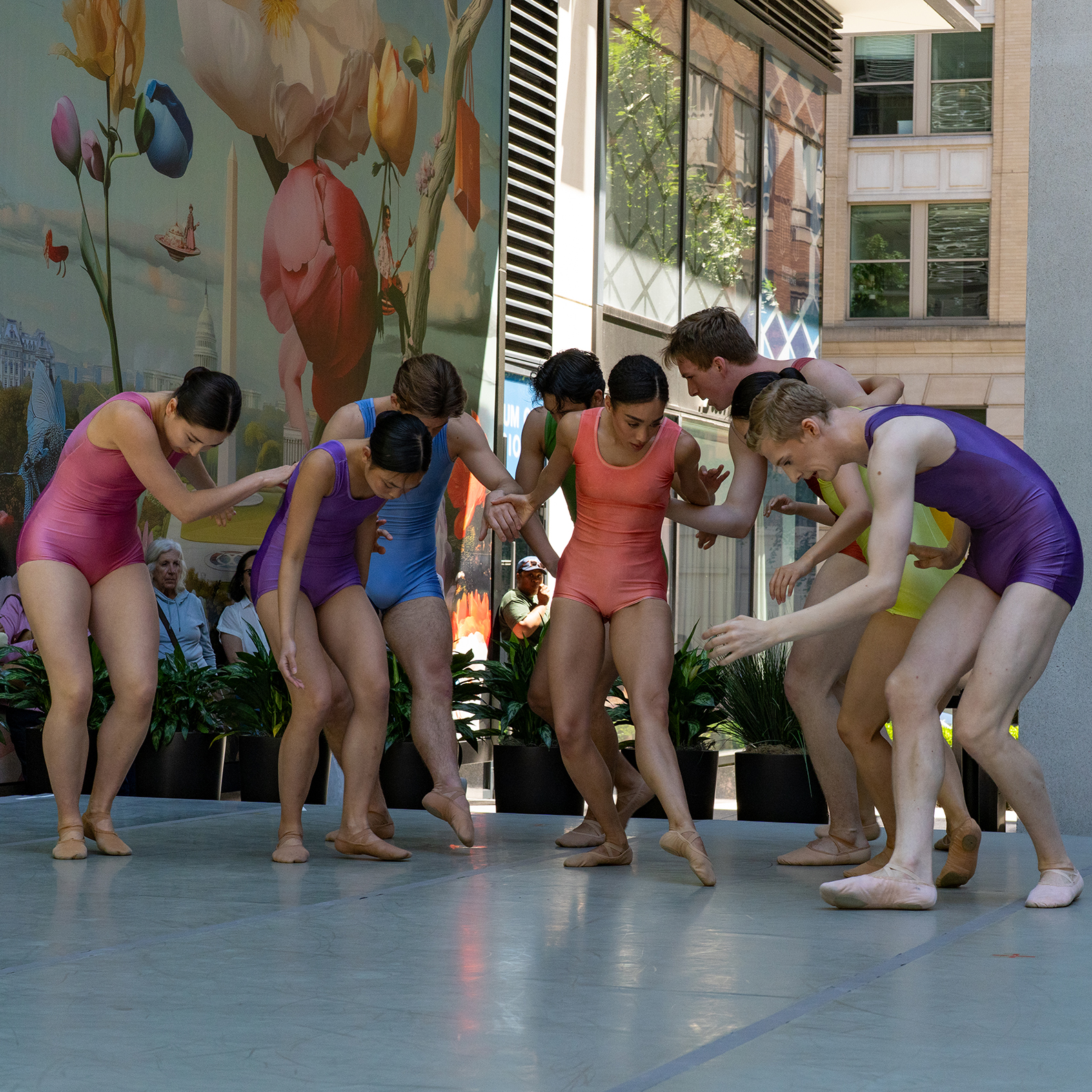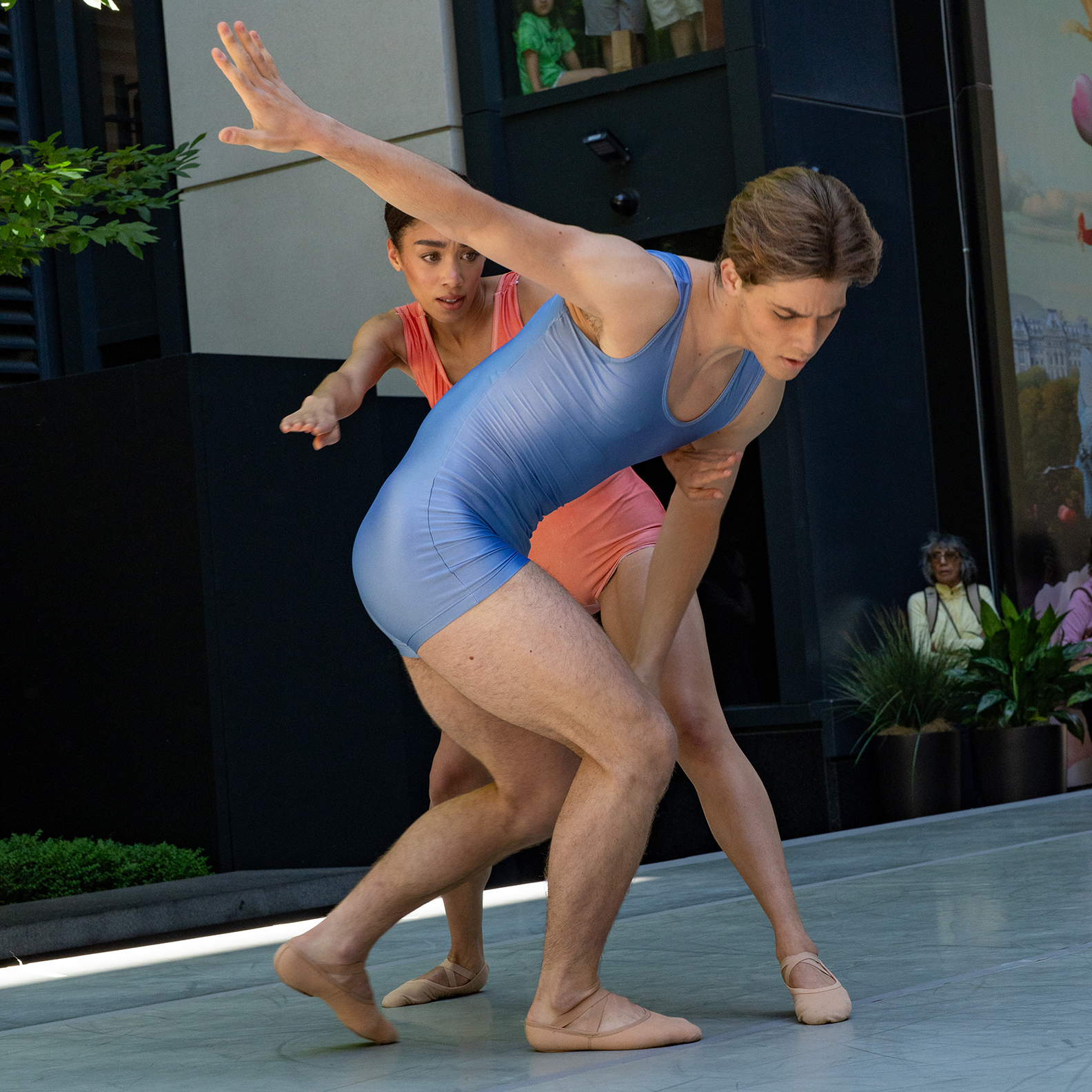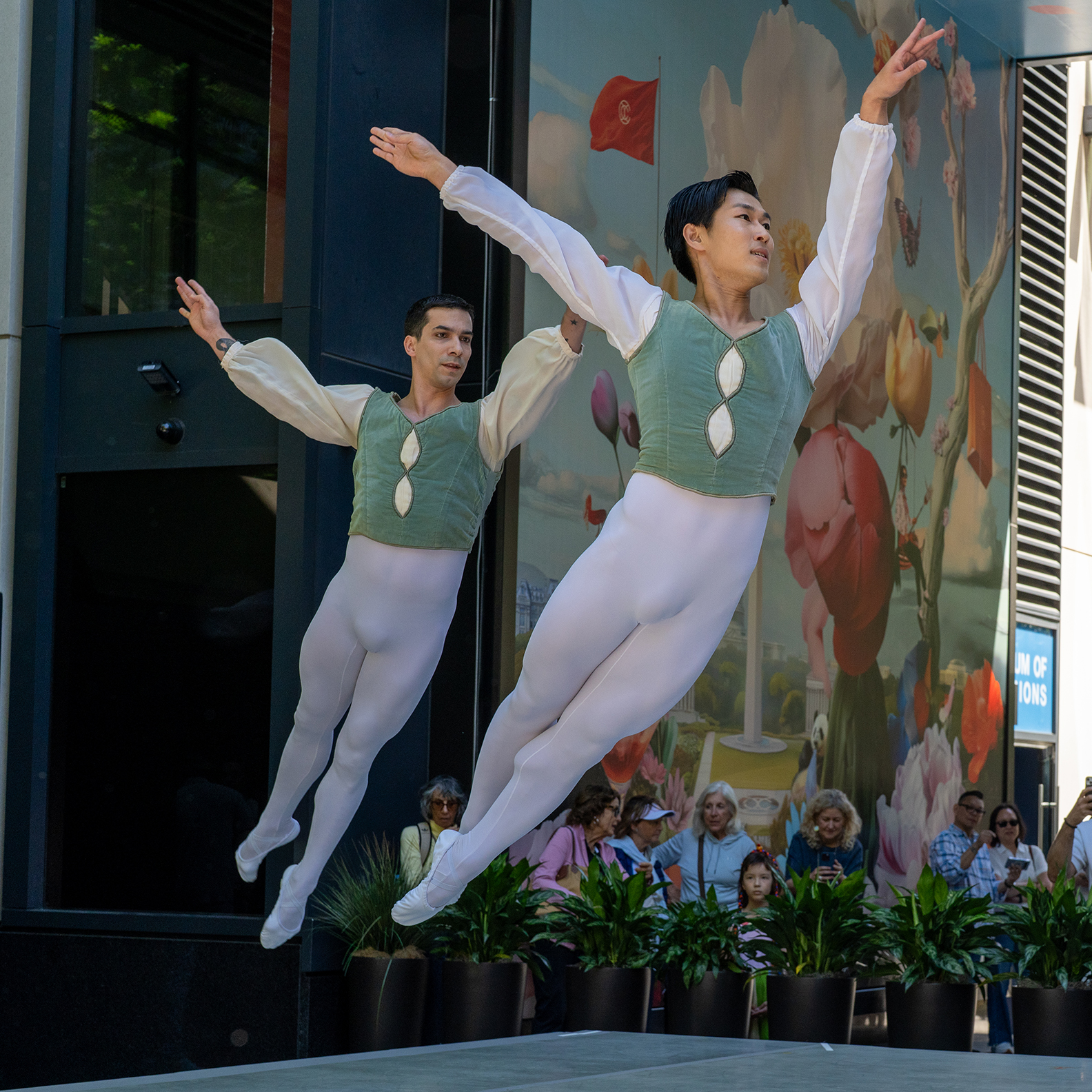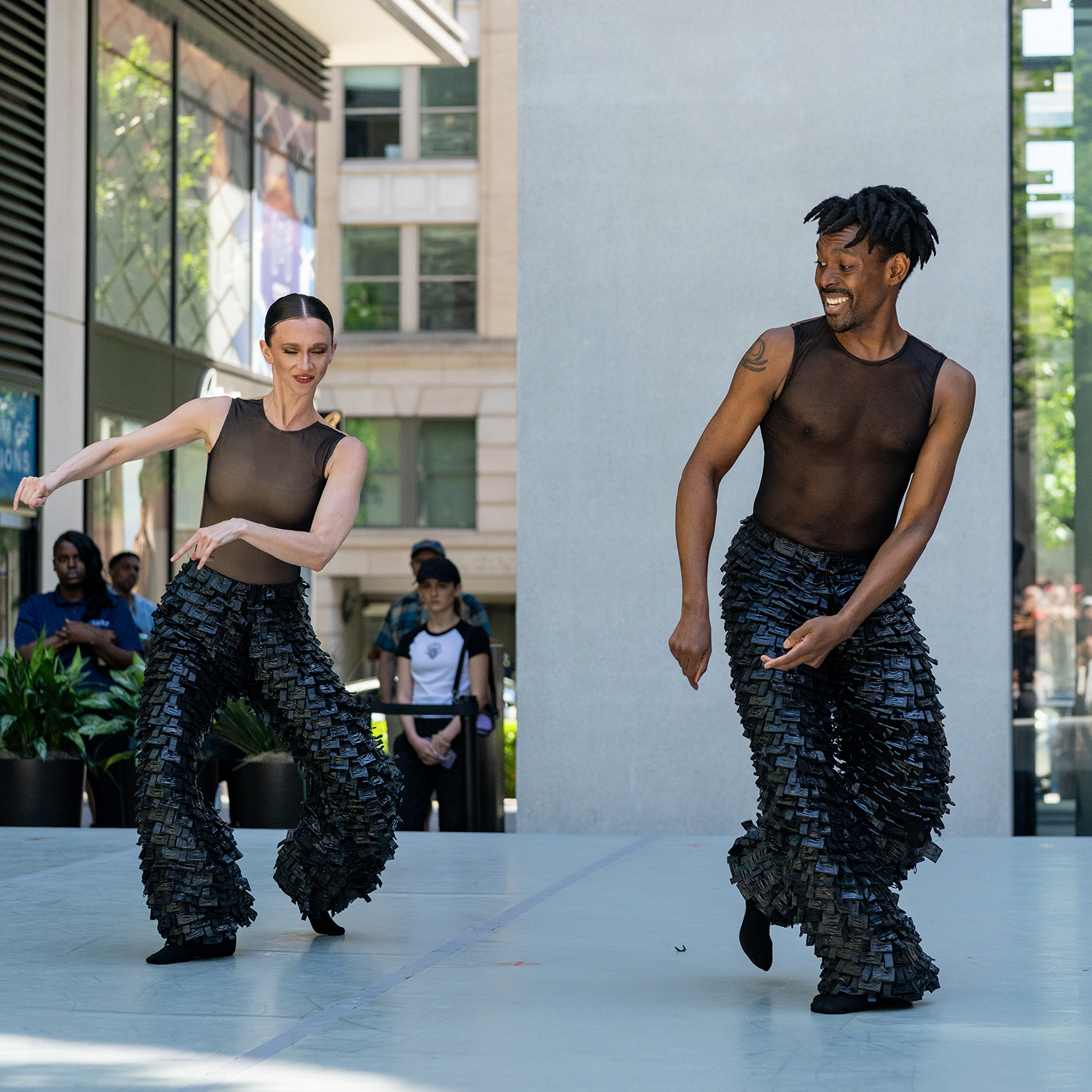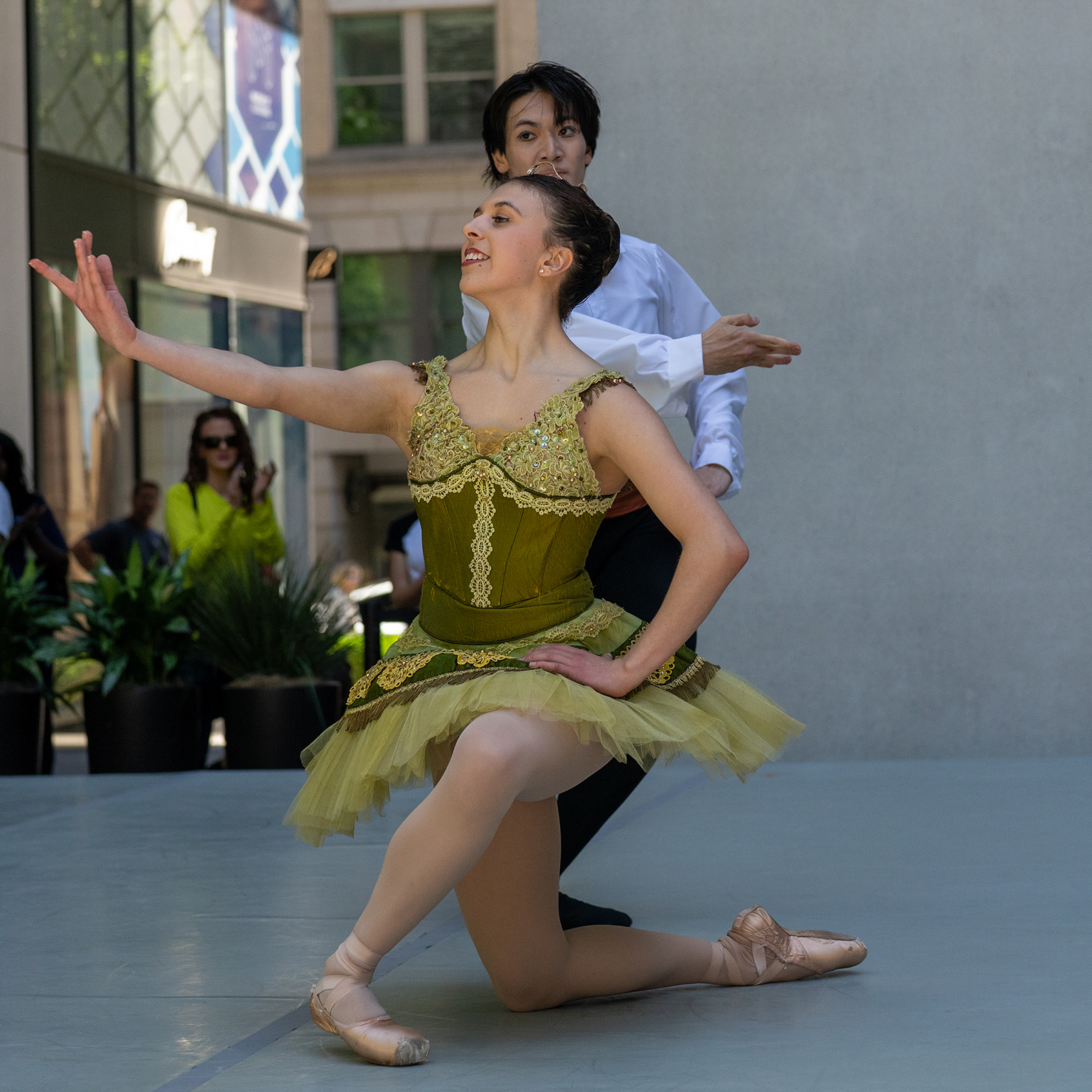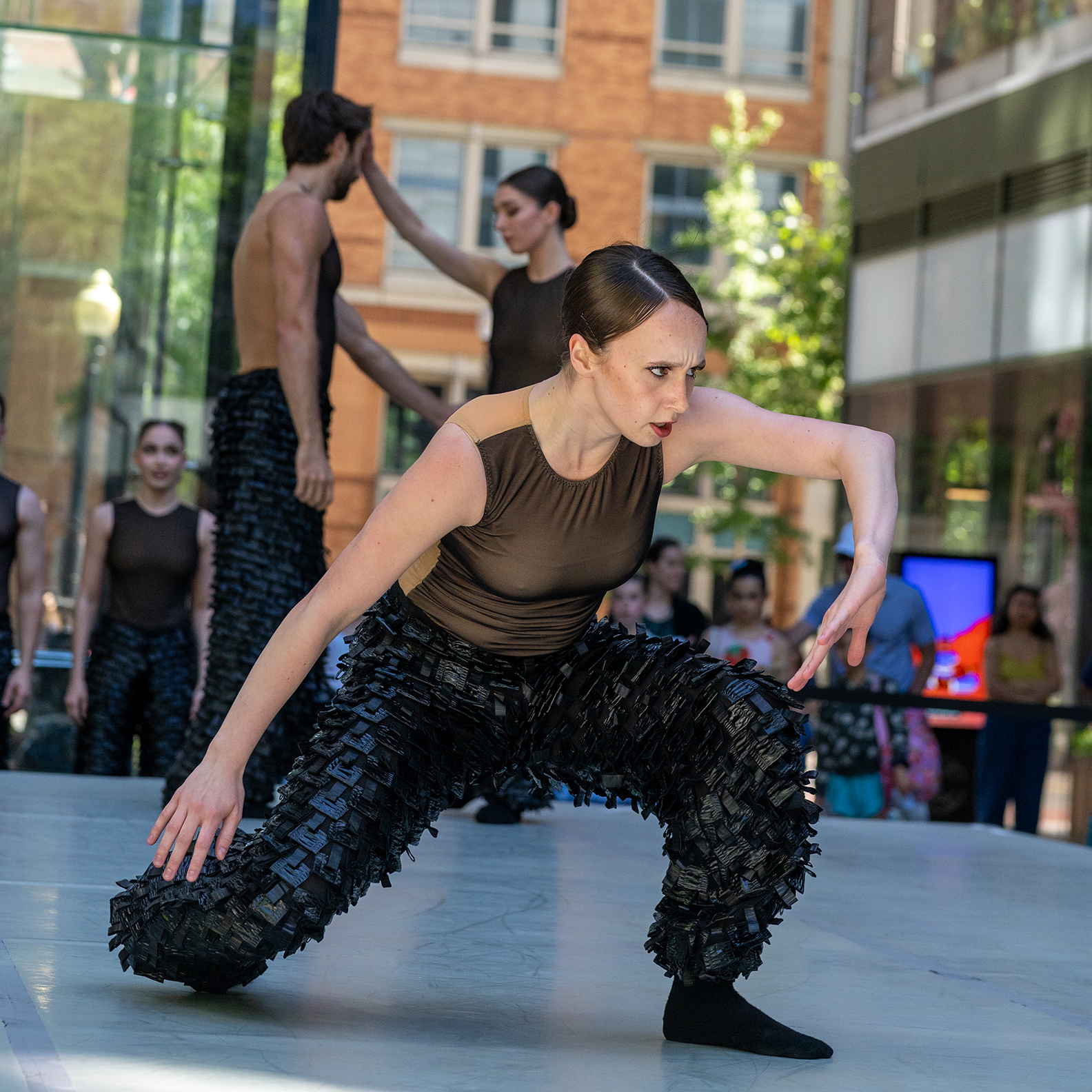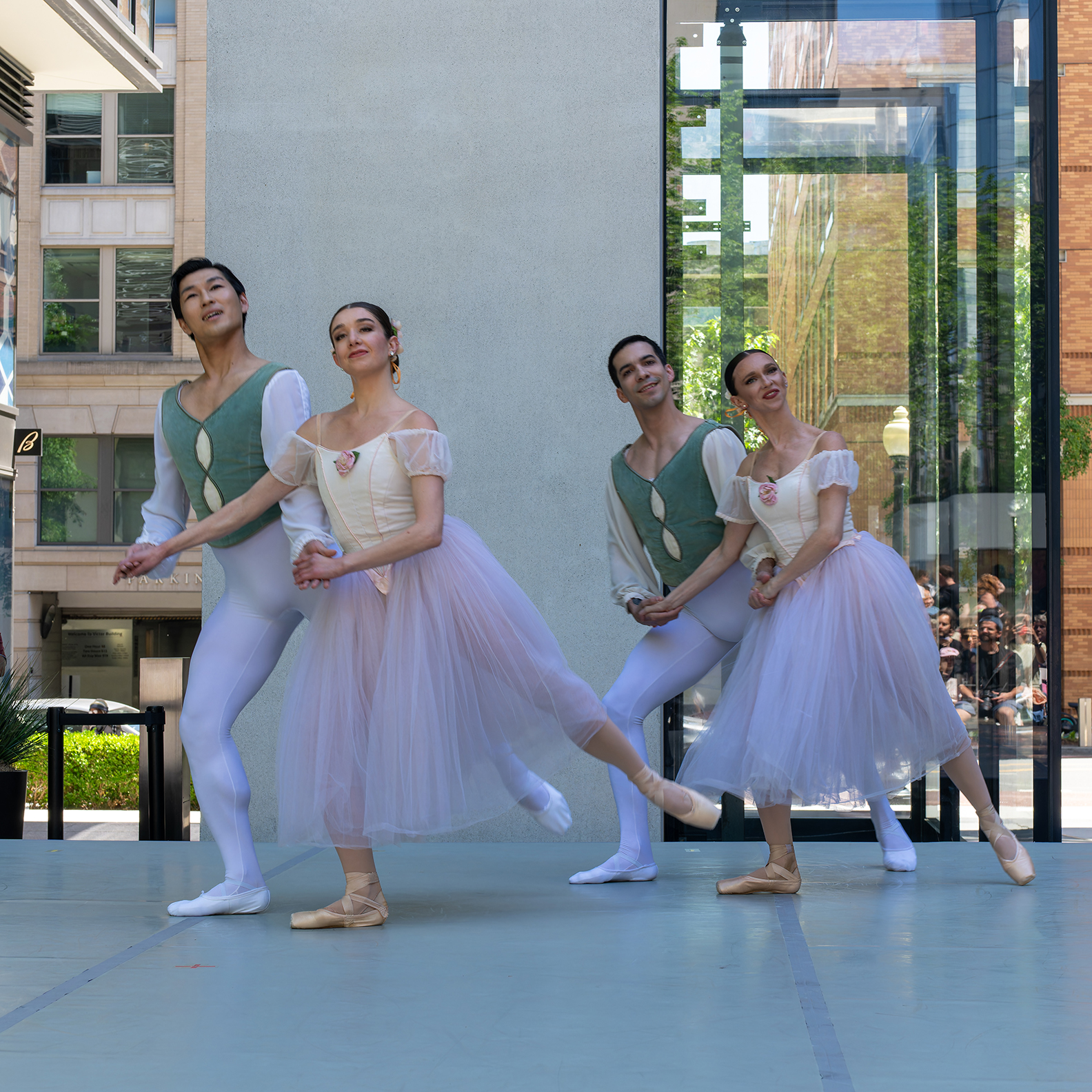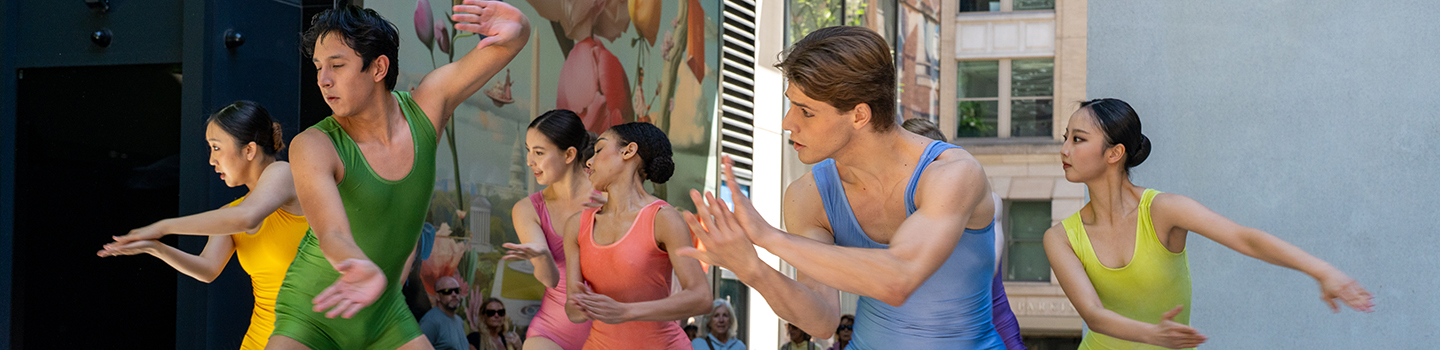
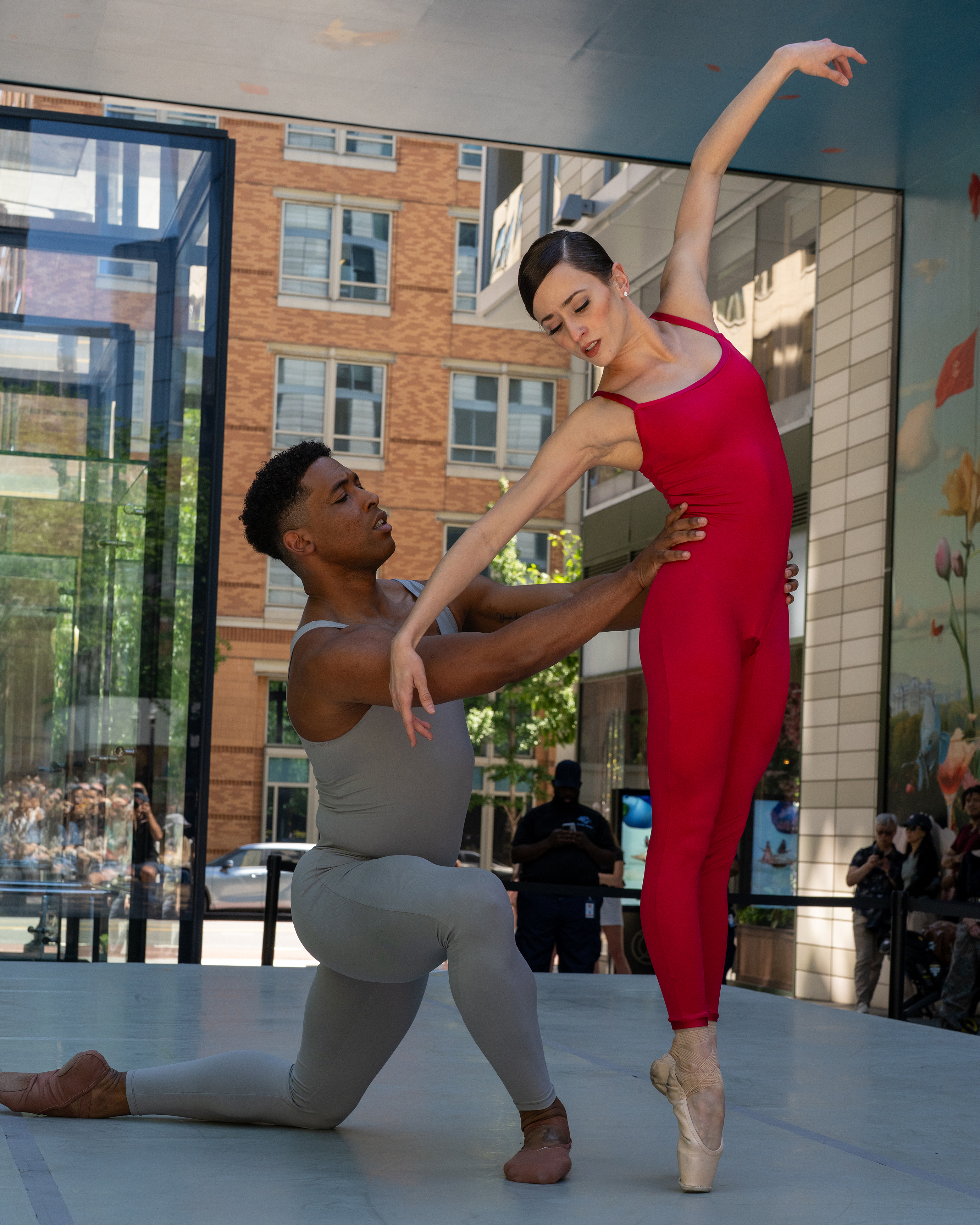
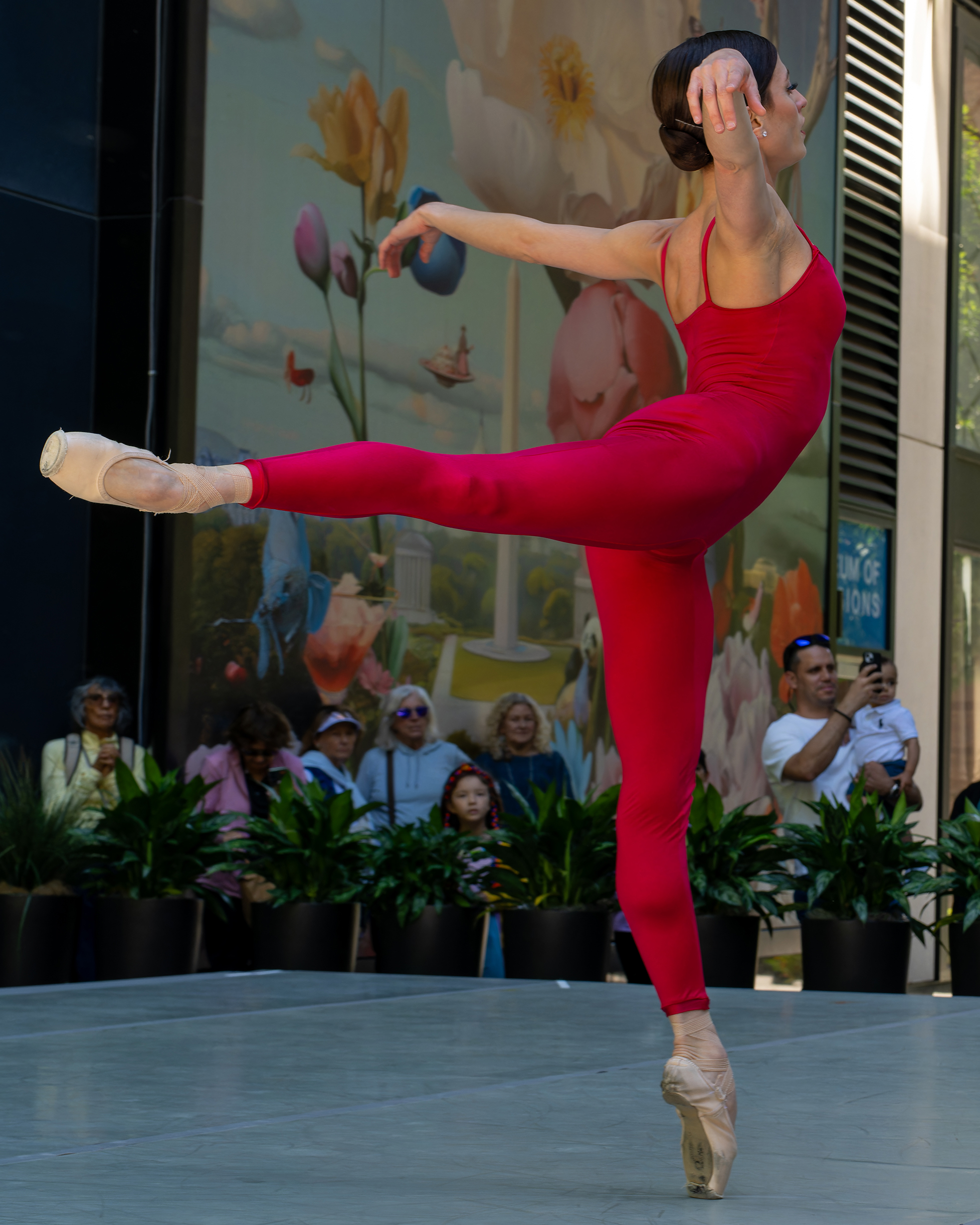
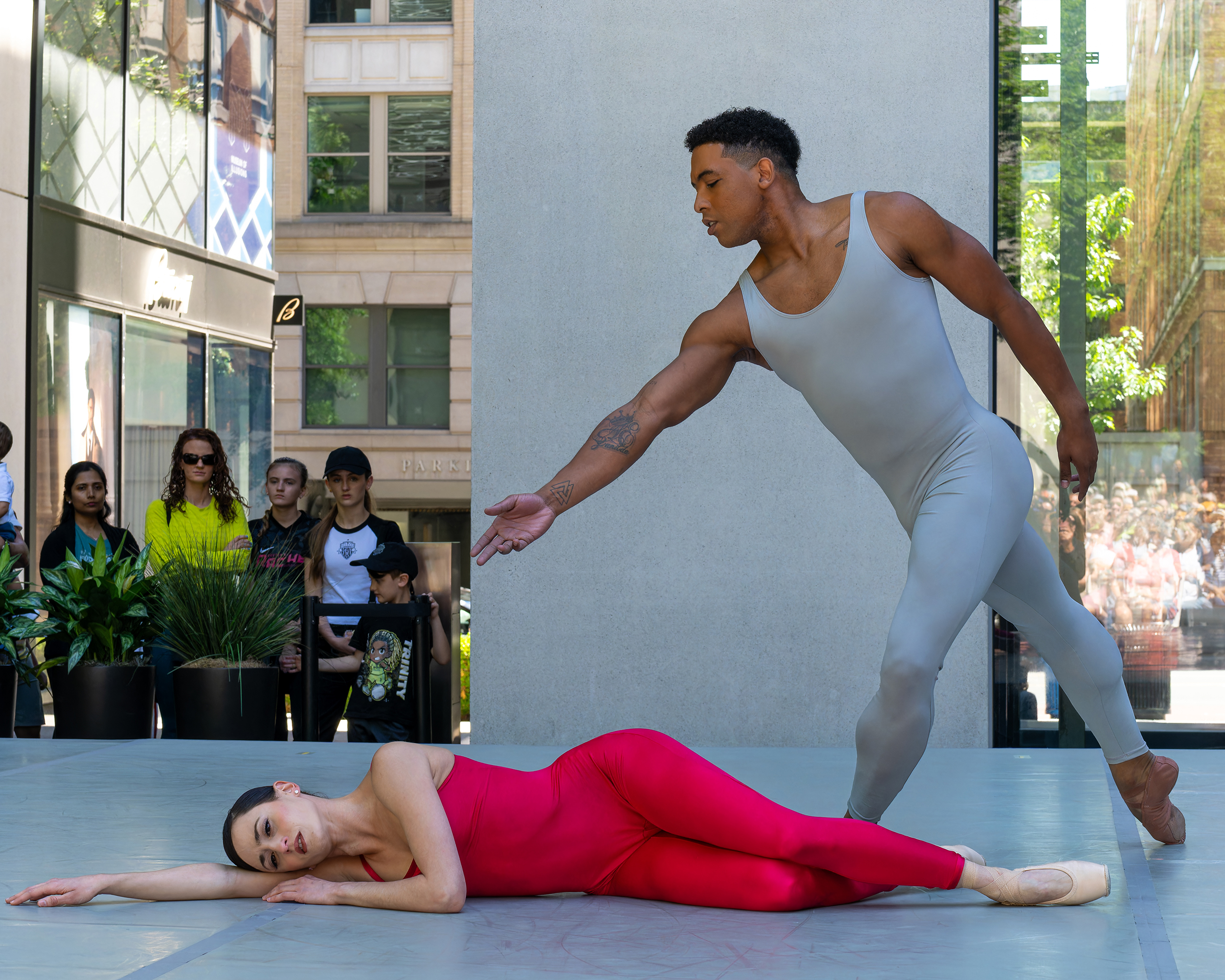
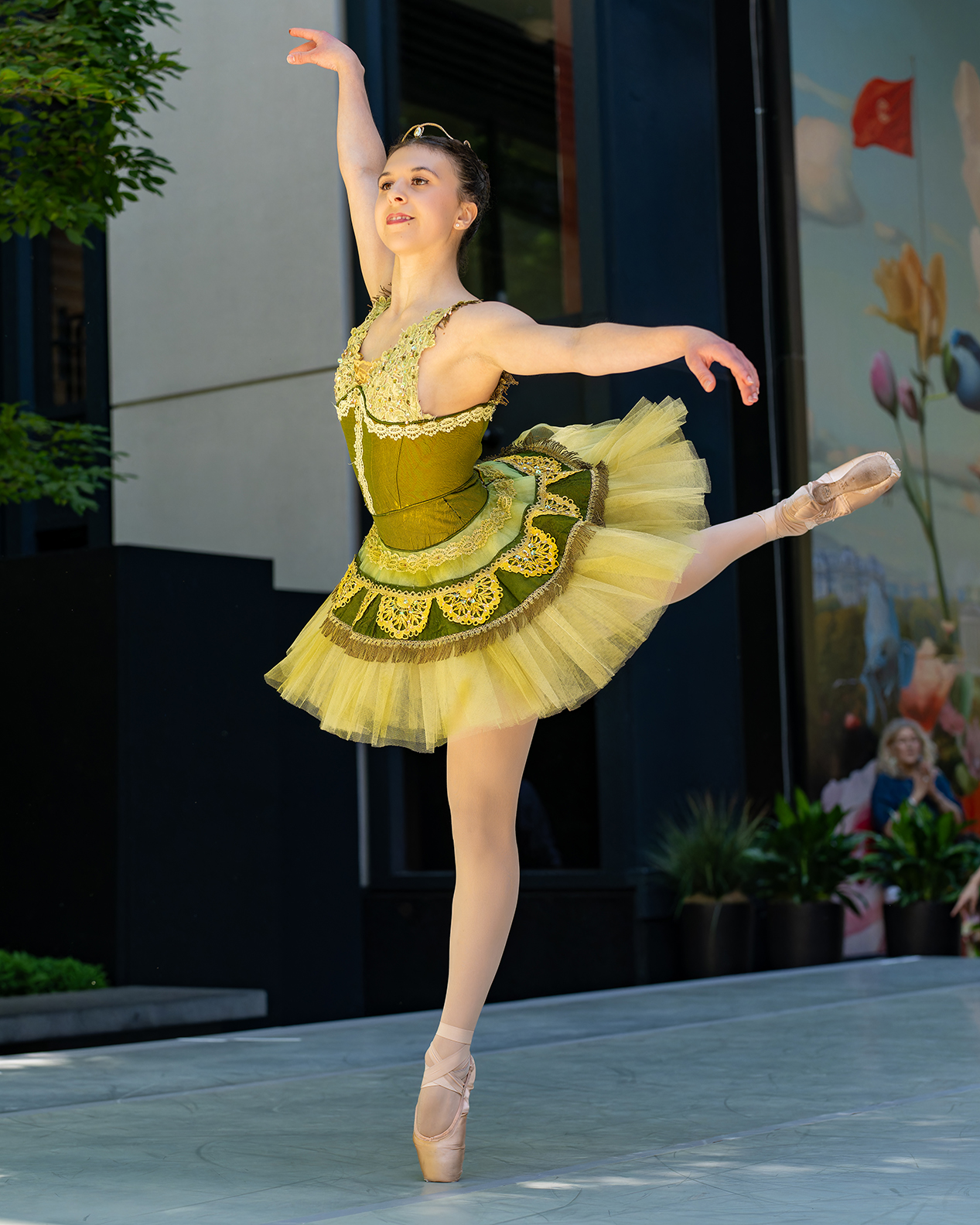
On a warm late-spring evening in downtown Washington DC, The Plaza at CityCenterDC became something more than a luxury shopping corridor, restaurant destination, or after-work meeting place. For two days, May 29 and 30, The Washington Ballet transformed one of the city’s most polished public spaces into an open-air stage, inviting residents, visitors, ballet lovers, curious passersby, and families to stop, sit, and experience dance in the middle of the District.
The performances were part of The Washington Ballet’s Dance For All initiative, a community-minded program designed to bring professional dance outside the traditional theater setting and into neighborhoods across Washington DC. At CityCenterDC, that mission felt especially clear. No velvet curtain. No formal lobby. No ticketed barrier. Just dancers, music, movement, and a public audience gathered in the heart of the city.
The result was one of those distinctly DC cultural moments where the city’s elegance and accessibility meet. People came from dinner reservations, shopping trips, office exits, Metro stops, and nearby apartments. Some knew the repertory. Others simply heard the music and stayed. That is the power of public art when it is done well: it interrupts the ordinary without feeling forced.
A Program Built for Range, Rhythm, and Surprise
The Washington Ballet’s CityCenterDC program was not a single-note evening. It offered a compact but layered look at the company’s artistic range, moving between classical ballet, contemporary energy, student training, and new choreography.
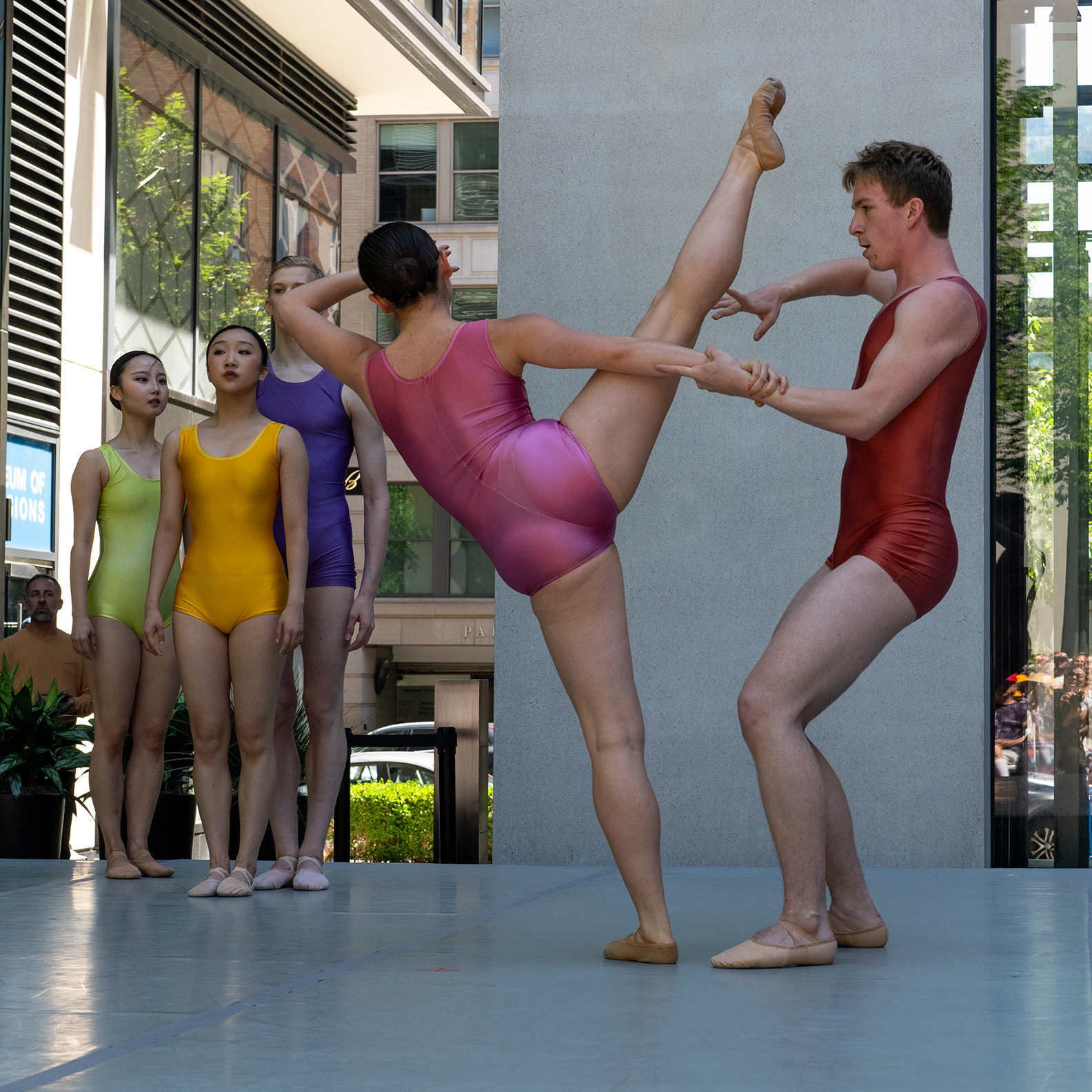
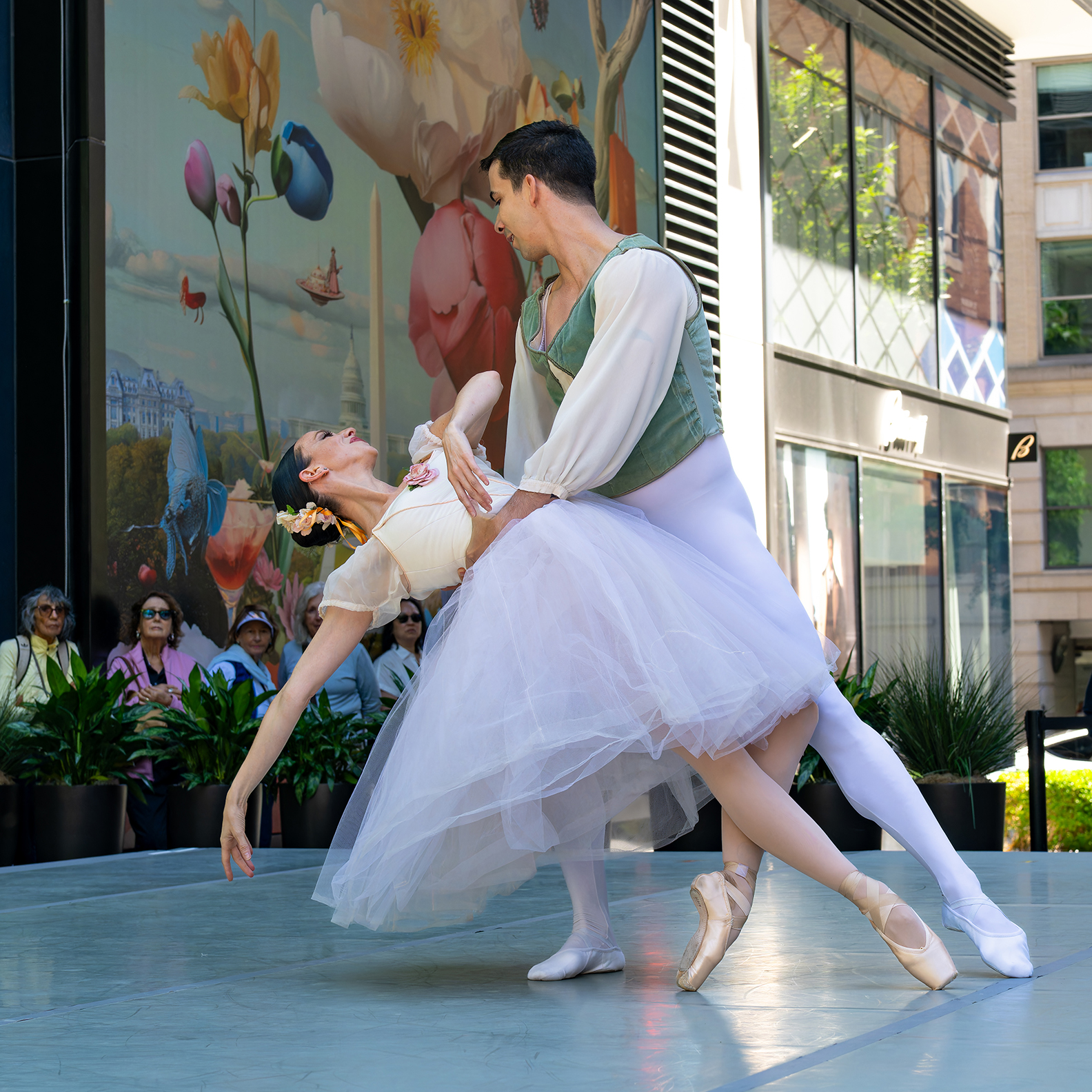
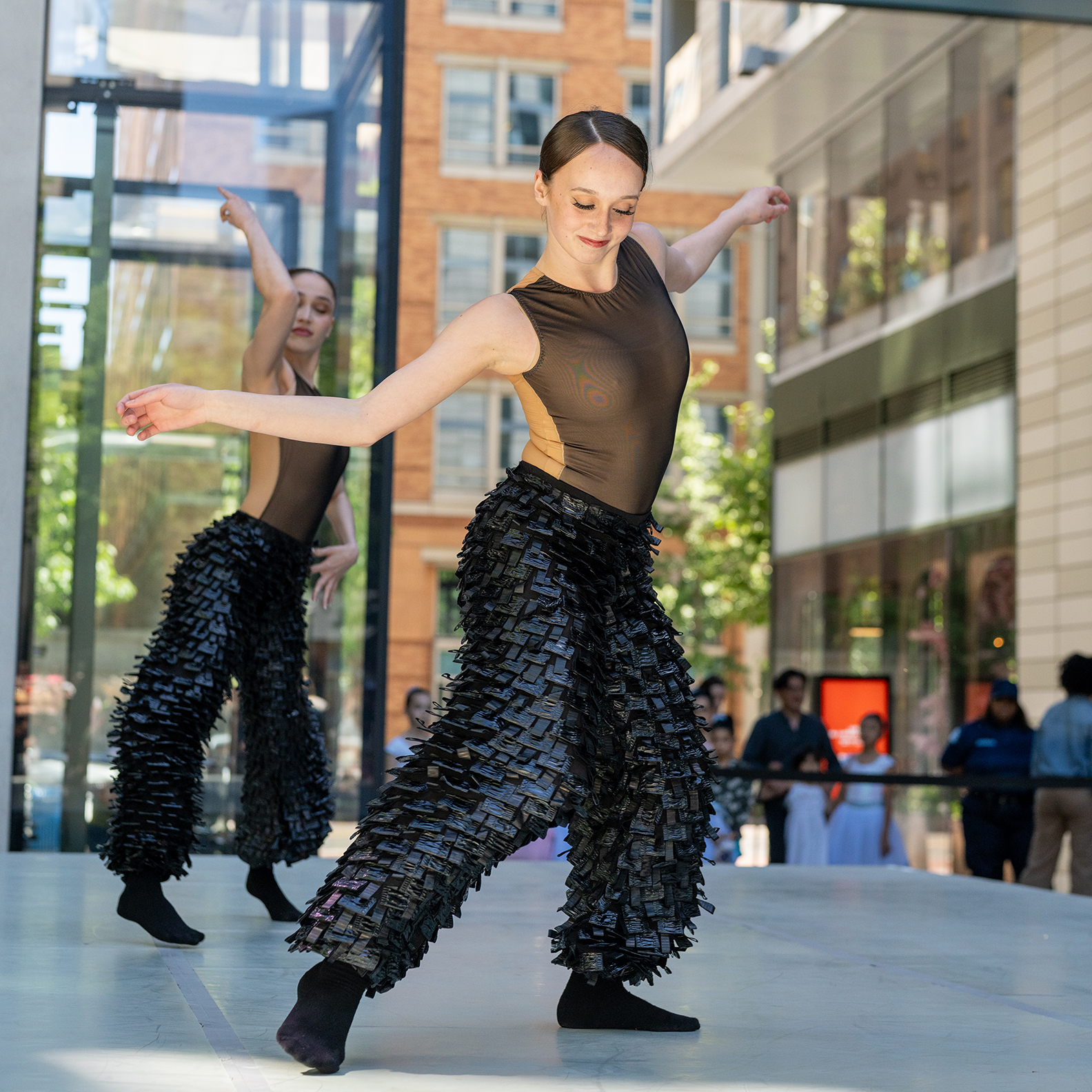
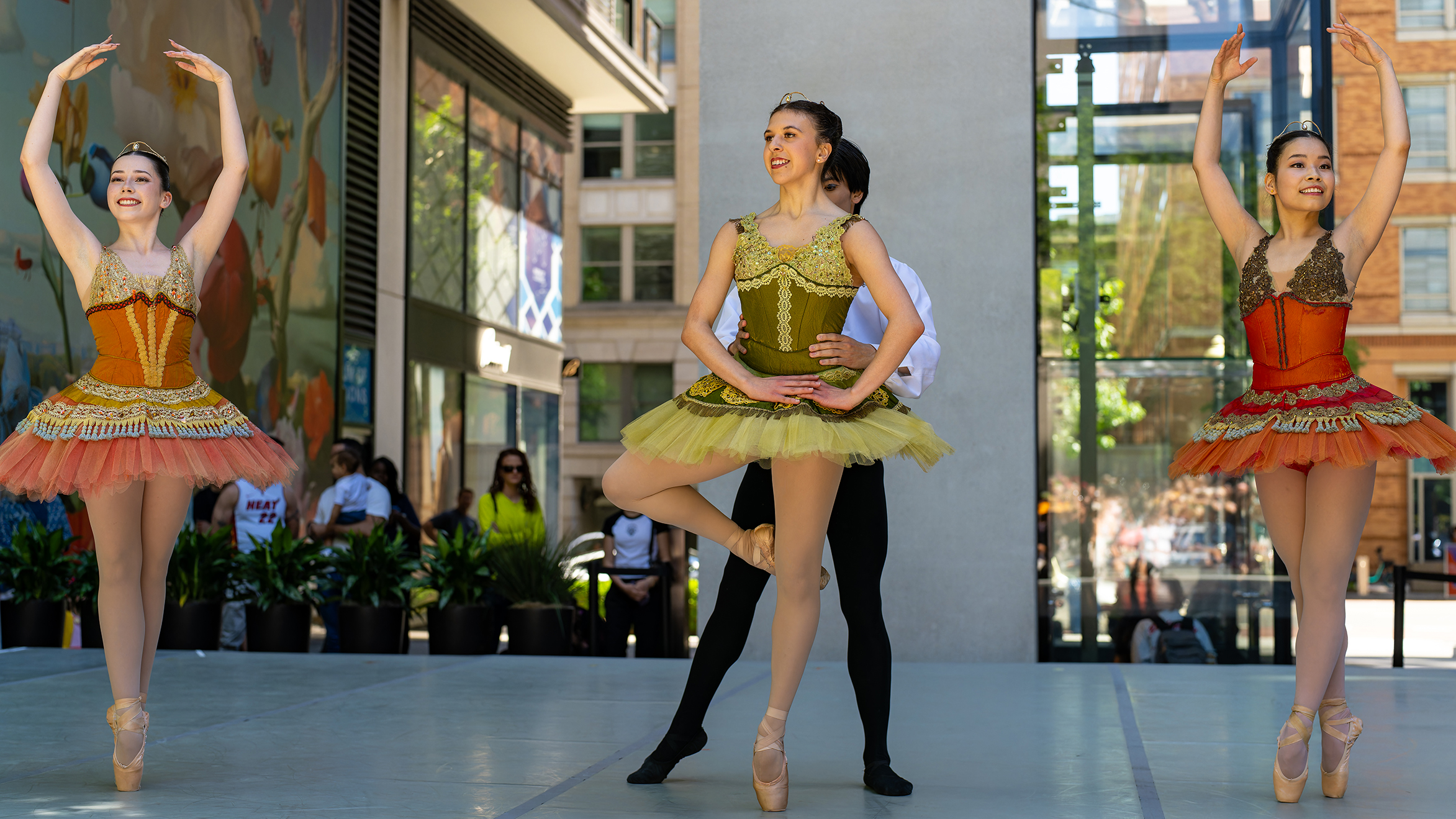
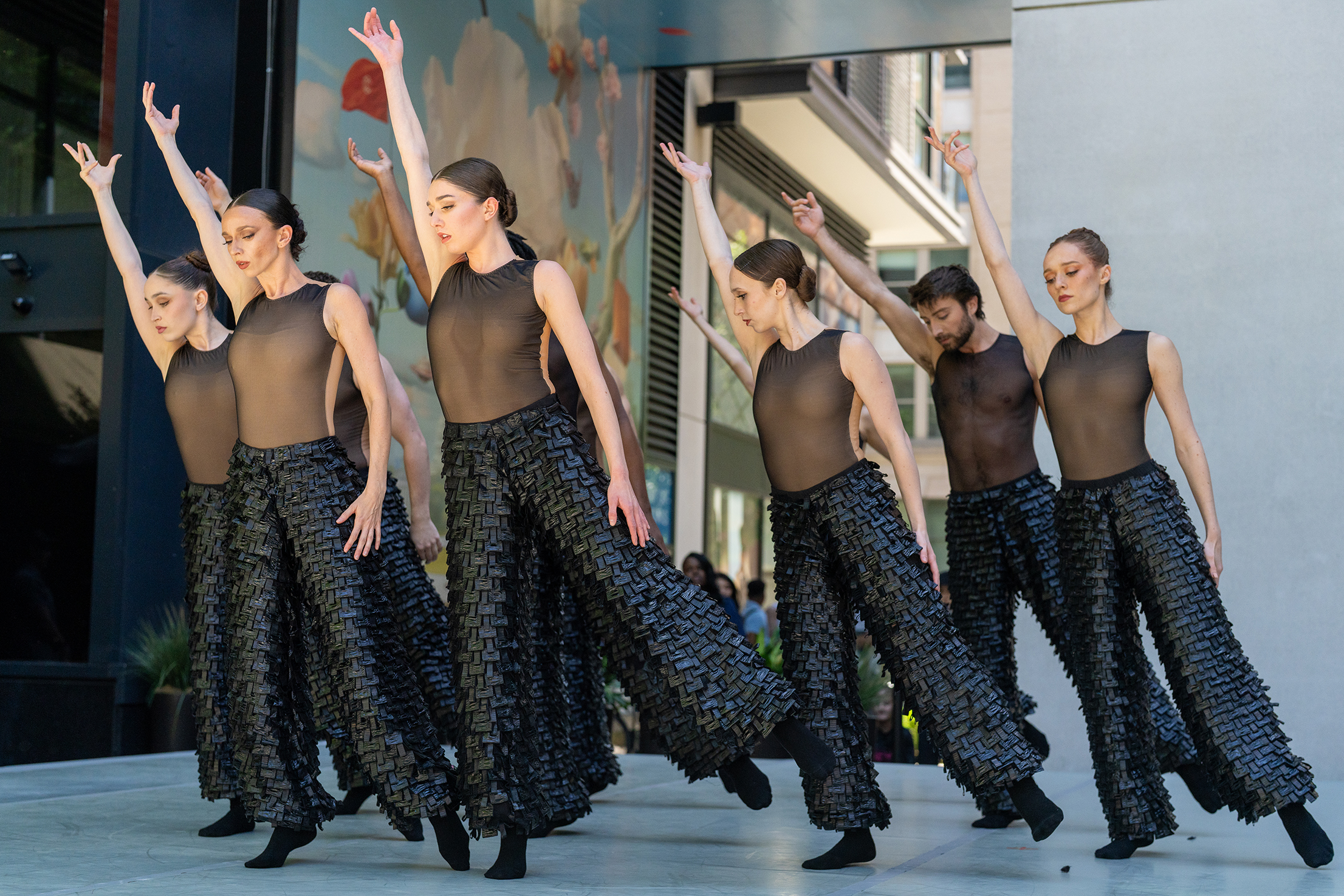
The program included The Gathering, choreographed by Artistic Director Edwaard Liang; a Pas de Quatre from Giselle; a tap excerpt from Justin Peck’s The Times Are Racing; a new work by Liang; excerpts from Ballet Classique by Rena Bernardini featuring Level 1B students from The Washington School of Ballet; a Pas de Quatre from Swan Lake featuring trainee students; and Unknown to You, choreographed by company dancer Andile Ndlovu.
That range mattered. A free outdoor performance cannot rely on the same atmosphere as a full evening inside the Kennedy Center or another formal venue. The surroundings are alive. There is movement in the audience, city noise at the edges, and the constant visual architecture of downtown behind the dancers. The program needed variety, and it had it.
The classical excerpts gave the event its elegance. The contemporary work gave it voltage. The student appearances gave it local heart. The new choreography gave the evening a sense of forward motion, reminding the audience that ballet is not only a museum of inherited steps. It is also a living language still being written.
“Ballet felt less like something behind a curtain and more like something alive in the middle of the city.”Discover DC Now
CityCenterDC as a Cultural Backdrop
CityCenterDC has increasingly positioned itself as more than a shopping and dining destination. Its polished walkways, public art moments, restaurants, and open plaza spaces make it a natural host for cultural programming. But dance brings a different kind of life to the space.
Ballet changes how people look at architecture. A plaza becomes a stage. A storefront becomes a frame. A staircase becomes a sightline. The clean lines of CityCenterDC gave the dancers a refined urban backdrop, while the openness of the setting allowed the performance to feel relaxed and democratic.
That contrast was the point. Ballet is sometimes treated as distant, expensive, or intimidating. Here, it was immediate. People could walk up, sit down, and watch world-class dancers from just a few feet away.
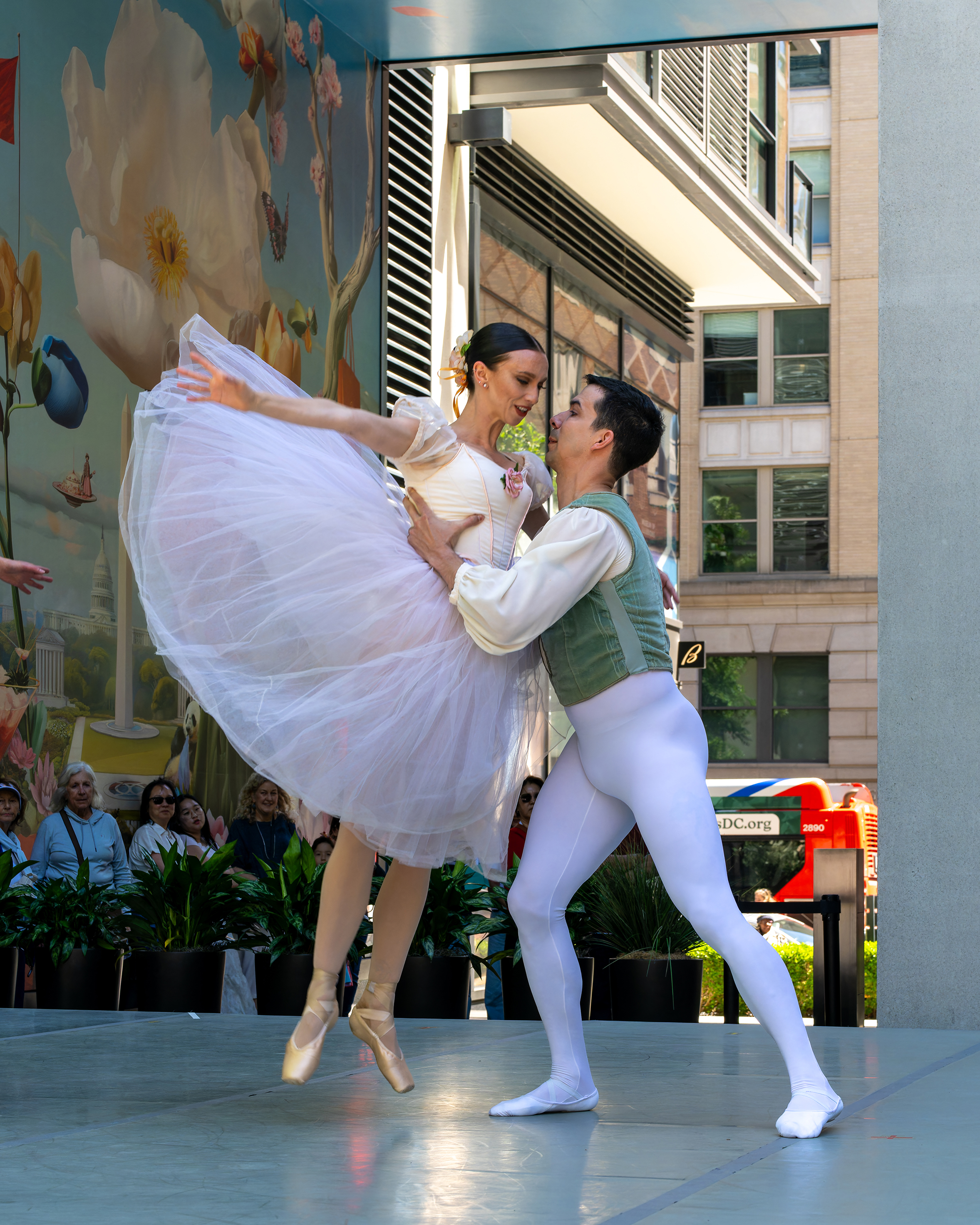
Public dance is not just about accessibility. It is about creating moments where art and life intersect in unexpected ways. When a ballet company performs in a public space, it invites people to see their city through a different lens. It reminds us that art is not confined to theaters. It can be found in the streets, plazas, and parks where we live and gather.
The Edwaard Liang Era
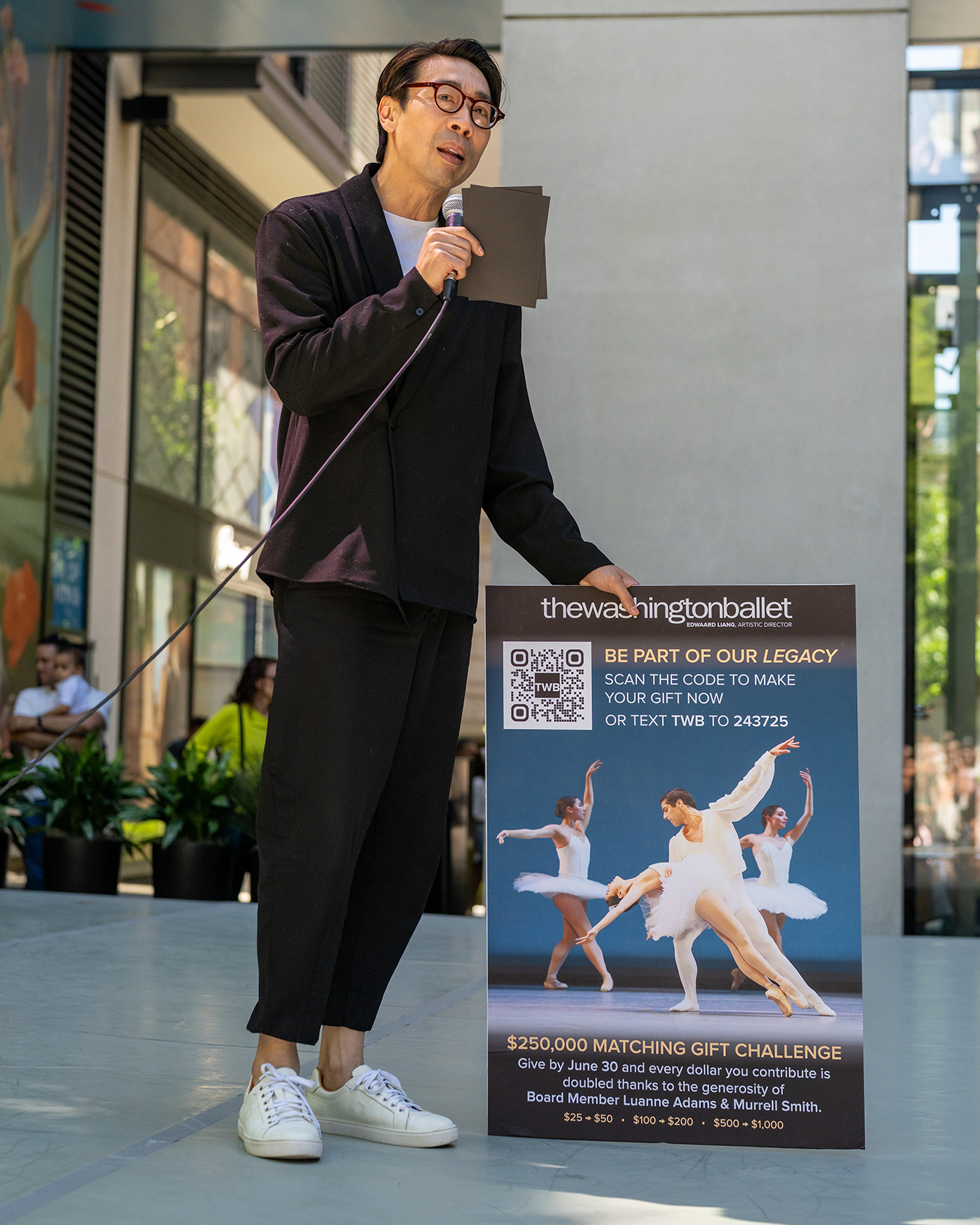
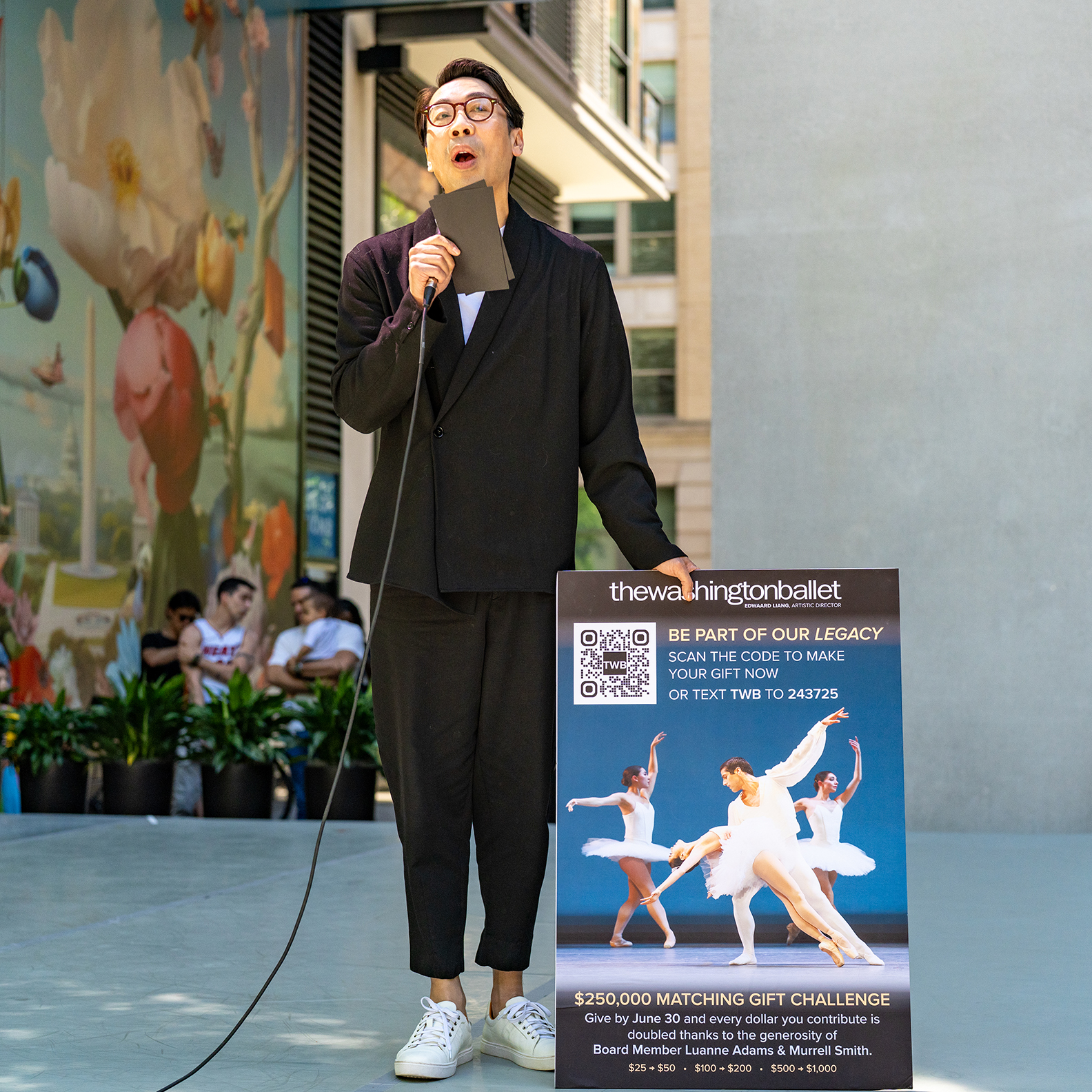
Edwaard Liang, Artistic Director
“Under Edwaard Liang, TWB appears to be leaning into a powerful balance: classical discipline, contemporary movement, and wider community access.”
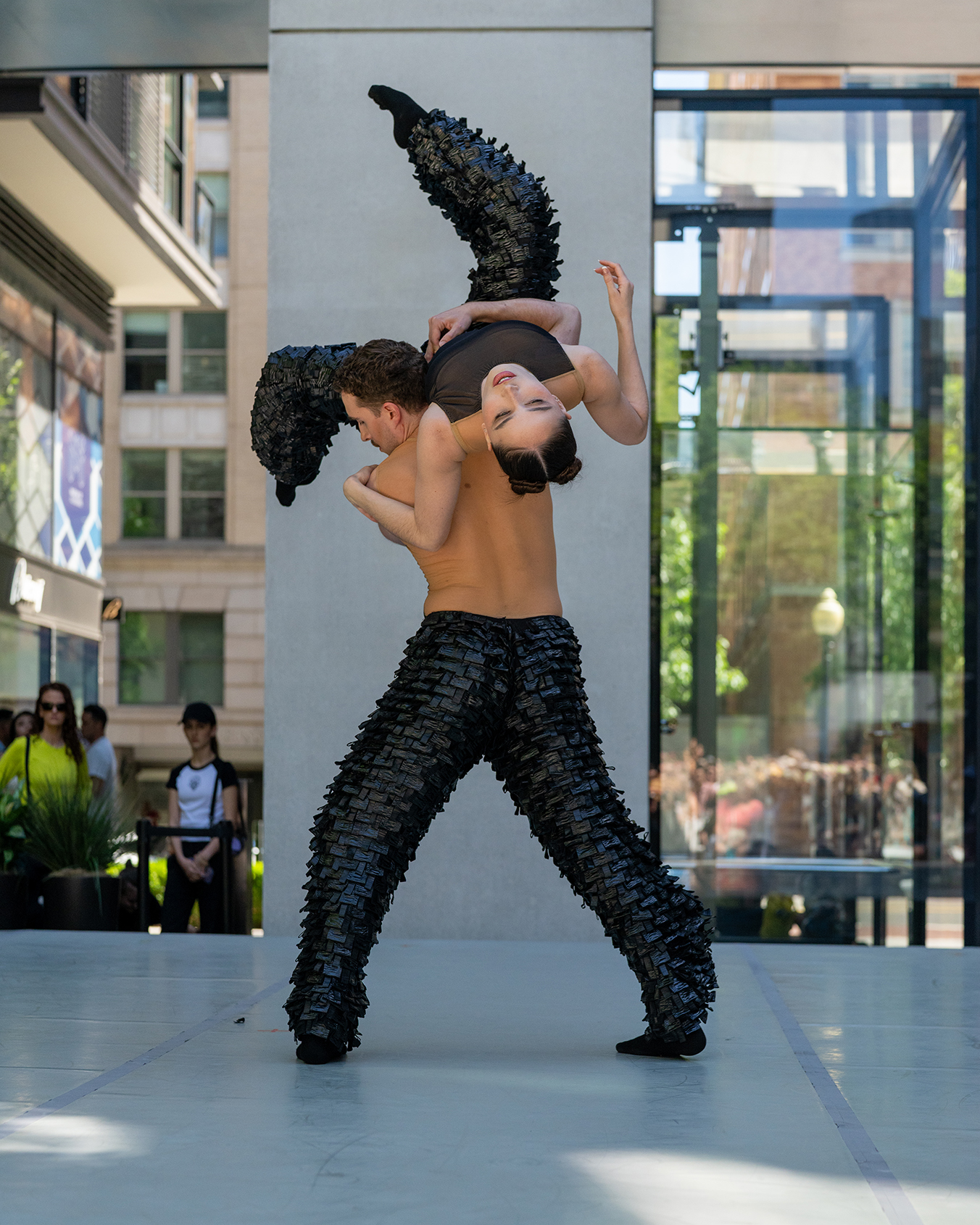
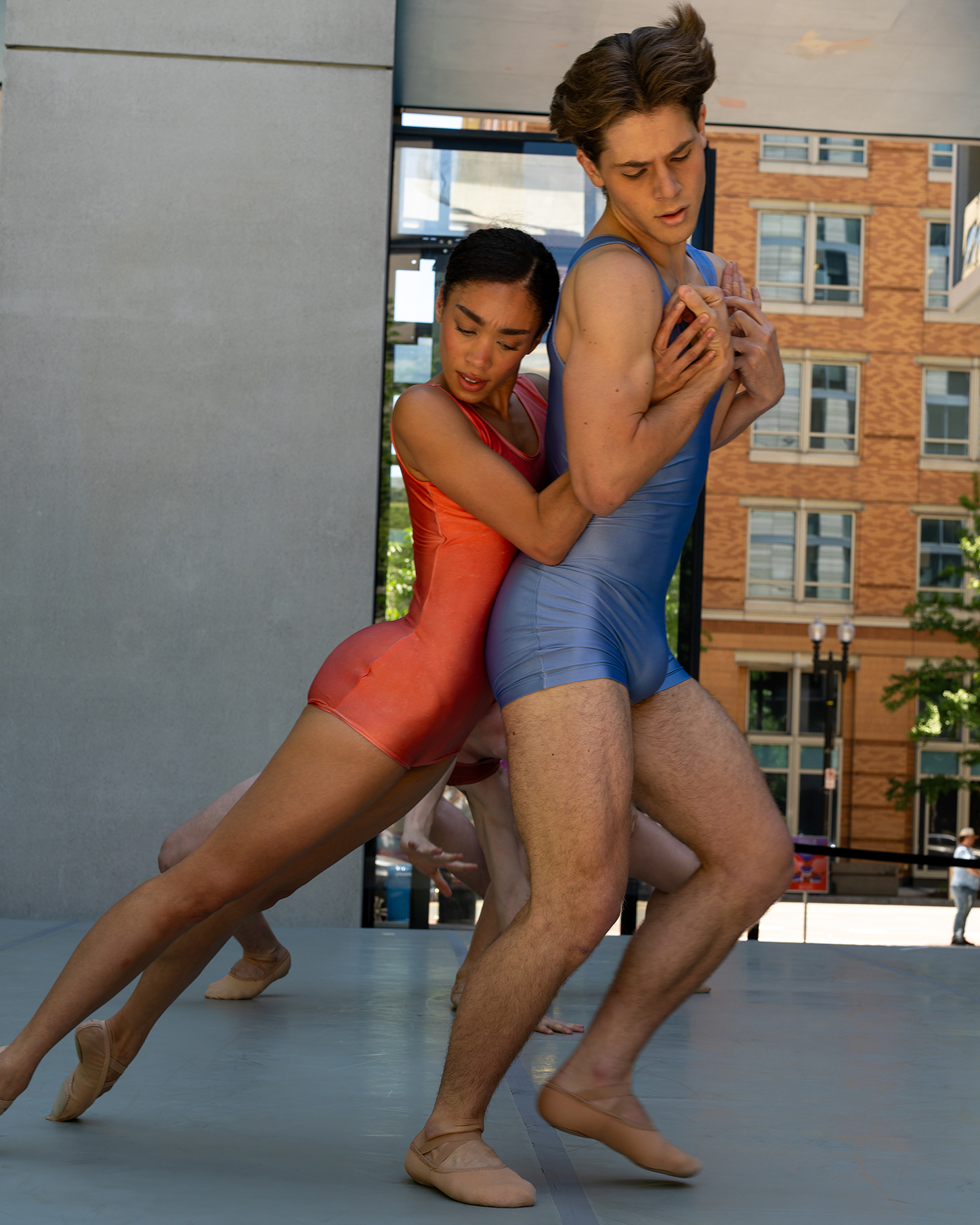
The Beauty of Giselle, the Pulse of The Times Are Racing
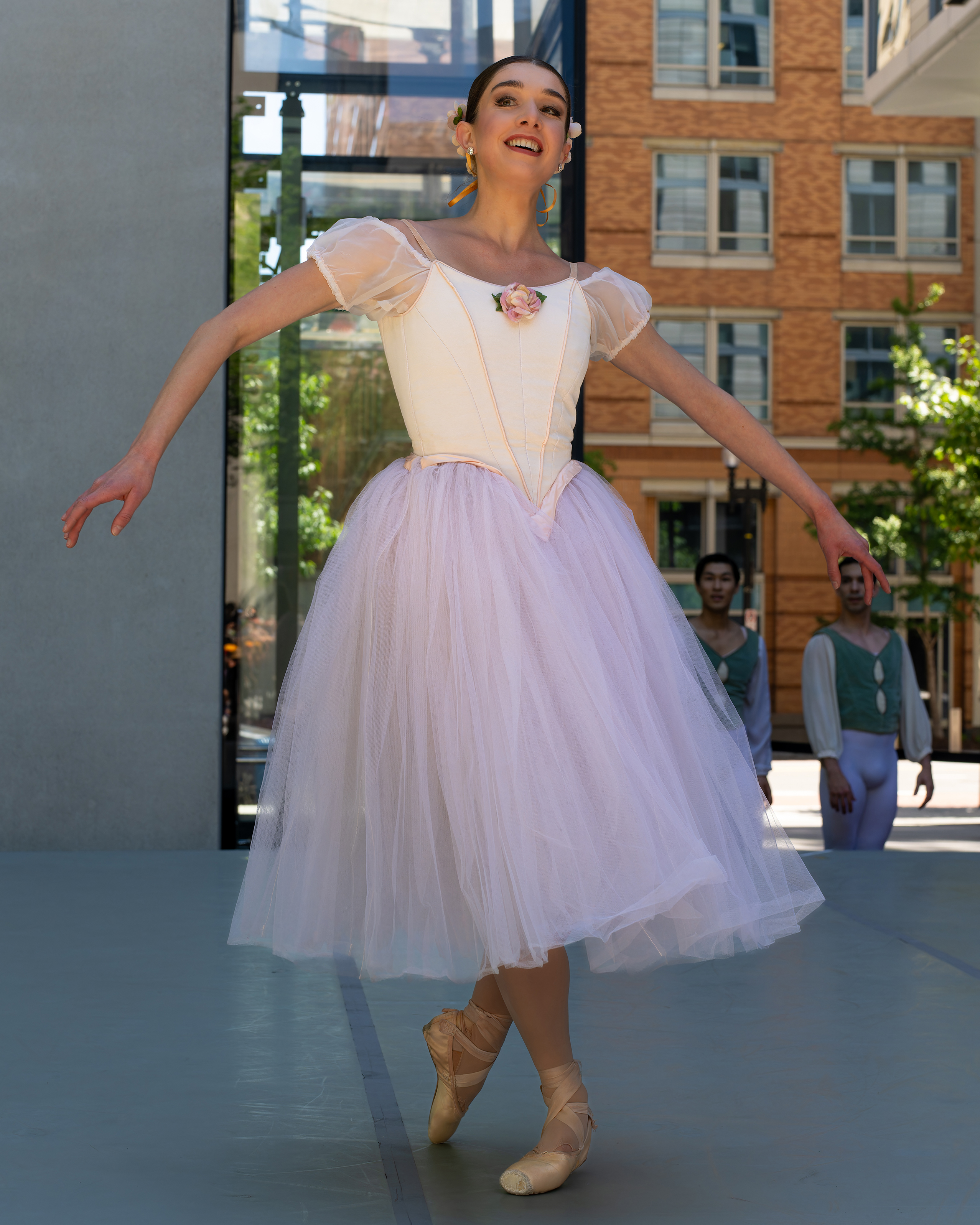
The inclusion of Giselle brought one of ballet’s great romantic works into the open air. Traditionally associated with ethereal beauty, heartbreak, and ghostly atmosphere, Giselle carries the emotional weight of classical ballet at its most delicate. Even in excerpted form, it offers audiences a window into the precision and control required to make ballet look effortless.
Then came the contemporary edge of Justin Peck’s The Times Are Racing, a work known for its modern pulse and sneaker-driven energy. Its presence in the program signaled that TWB is speaking to more than one kind of ballet audience. Classical ballet lovers could find grace and lineage. Newer audiences could find speed, rhythm, and a physical vocabulary closer to the pace of contemporary life.
That pairing is smart programming. It avoids the tired argument that ballet must choose between past and present. The best companies do both. They show audiences where the form came from and where it might go next.
Students on the Same Cultural Map
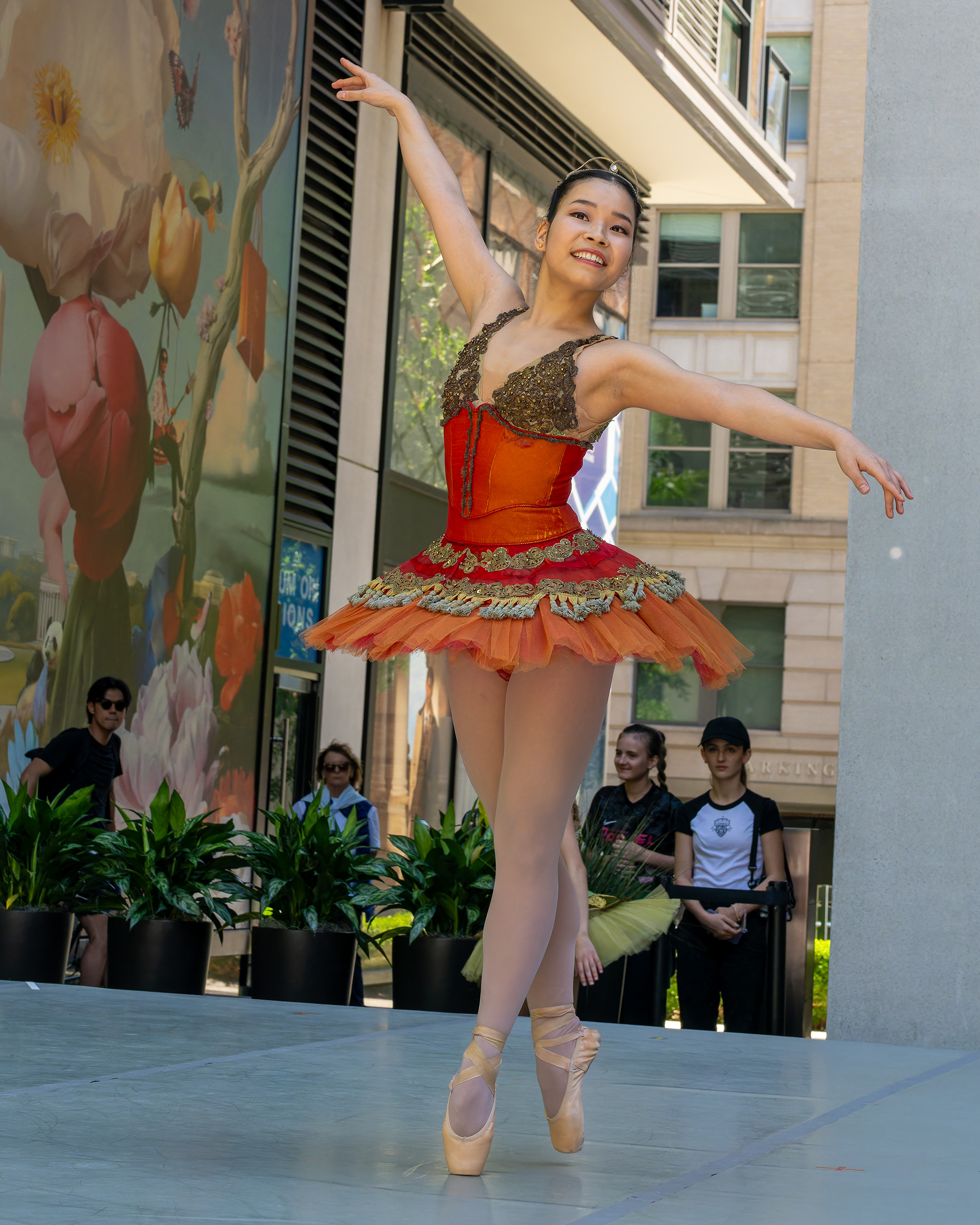
One of the most meaningful aspects of the CityCenterDC program was the inclusion of students from The Washington School of Ballet. The school is central to the organization’s identity. Its roots go back to 1944, when Mary Day and Lisa Gardiner established The Washington School of Ballet, long before the professional company became the institution DC knows today.
Seeing students perform alongside professional company programming changes the emotional texture of an event. It reminds the audience that ballet is built through years of repetition, correction, discipline, and trust. Young dancers do not simply appear fully formed. They are trained, mentored, challenged, and gradually shaped into artists.
The student excerpts also gave families in the audience a clearer sense of possibility. For a child watching from the plaza, ballet was not an abstract art form happening somewhere else. It was right there, in public, performed by professionals and students connected to the city.
That is how arts organizations build future audiences. Not by waiting for people to buy expensive tickets someday, but by meeting them where they already are.
Dance For All: More Than a Slogan
The Washington Ballet’s Dance For All initiative is one of the company’s strongest community-facing efforts. Its purpose is direct: bring dance into every quadrant of Washington DC, through free performances, demonstrations, movement classes, and public engagement.
The Washington Ballet’s city-wide Dance For All event returns every Spring with a full month of dance events and activities! Dance For All is a community engagement initiative that brings the joy and artistry of dance to every quadrant in Washington, DC through free performances, demonstrations, and dance classes.
The CityCenterDC performances were a high-visibility example of that mission, but they are part of a broader ecosystem. TWB offers free adult classes, free youth classes, children’s storytime events, community programming, and Dance for Wellness initiatives.
This is where TWB’s civic value becomes obvious. A ballet company is not only judged by what happens on its main stage. It is judged by how deeply it matters to the city around it. The Washington Ballet’s strongest argument for public attention is not simply that it performs beautiful work. It is that it treats dance as something the city should be able to access, learn from, and participate in.
Why This Performance Worked
The CityCenterDC event worked because it understood its setting. It did not try to recreate a full theater experience outdoors. Instead, it used the plaza as a public invitation.
The schedule also made sense: an evening performance on Friday, followed by afternoon and evening performances on Saturday. That allowed different audiences to attend, from after-work visitors to weekend families. Seating was limited and first-come, first-served, which encouraged early arrival and gave the event the feeling of a downtown gathering rather than a formal night out.
Most importantly, the program was built with contrast. It offered enough classical ballet to satisfy tradition, enough contemporary movement to catch new attention, and enough student involvement to remind everyone that dance education is part of the city’s future.
Final Word
The Washington Ballet’s CityCenterDC performances were more than a pleasant spring arts event. They were a statement about where ballet can live and who it can reach.
In the middle of downtown DC, surrounded by shops, restaurants, architecture, and the movement of everyday city life, TWB made ballet feel immediate. The company did not ask audiences to enter its world through formality. It brought the work directly to them.
That matters. Cities need cultural moments that feel open, intelligent, beautiful, and shared. The Washington Ballet gave DC exactly that: a public performance with professional polish, local roots, student presence, and a clear sense of artistic direction.
For longtime ballet supporters, the event was a reminder of TWB’s range. For new audiences, it was an invitation. For the city, it was proof that dance still has the power to stop people in their tracks and make an ordinary plaza feel unforgettable.