Washington DC did not ease into spring on Saturday, March 21. It announced it.
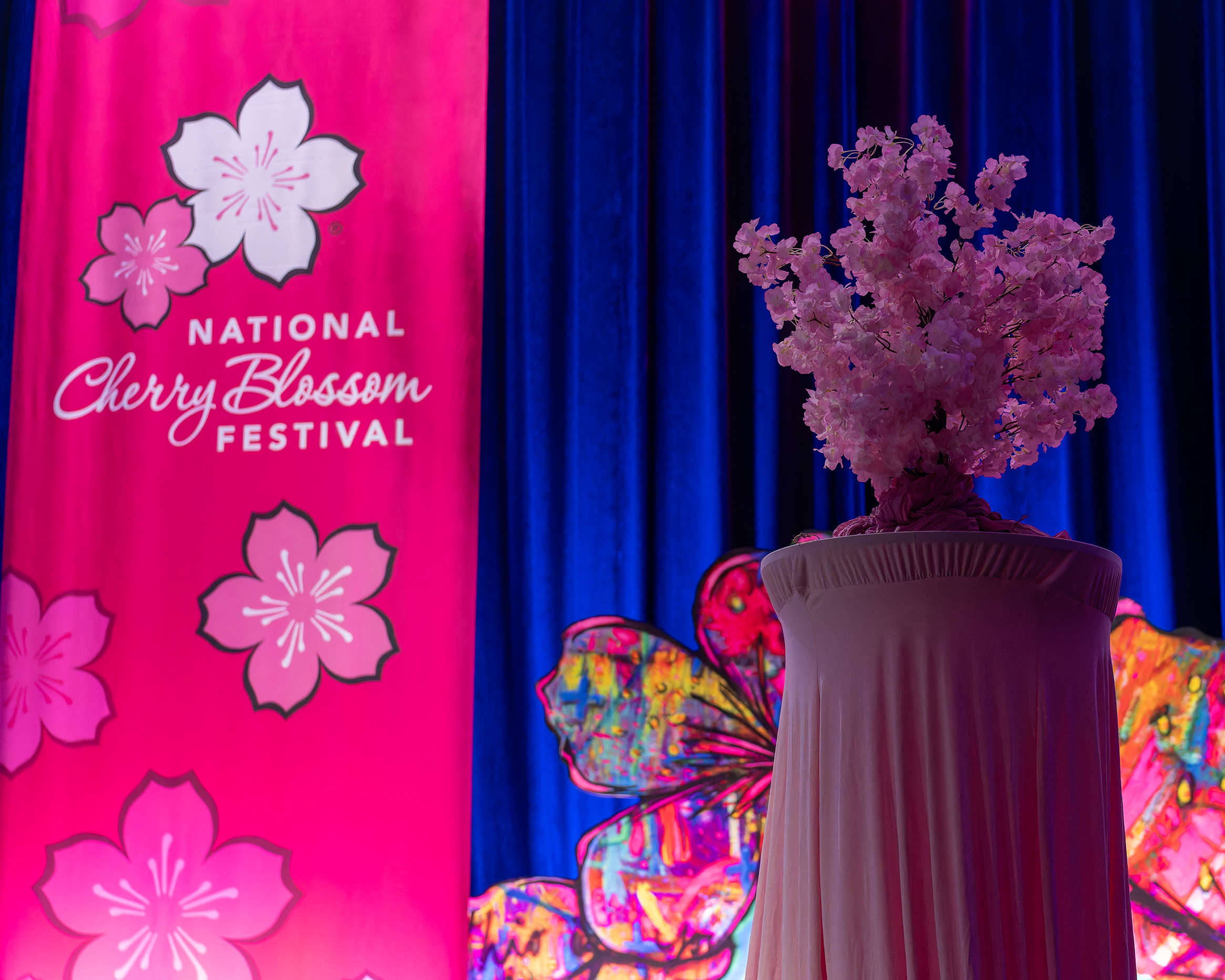
The 2026 National Cherry Blossom Festival Opening Ceremony at DAR Constitution Hall was designed as a formal kickoff, but the evening landed as something bigger: a polished cultural statement about Washington at its most ceremonial, Japan-U.S. friendship at its most visible, and the cherry blossom season as more than a photo opportunity. The program ran from 5:00 to 6:30 p.m. at DAR Constitution Hall, with the Festival billing it as a one-night-only tribute to the 1912 gift of cherry trees from Tokyo to Washington and to the enduring ties between the two nations. Tickets were sold out in advance, with limited standby admission offered on the day of the event.
That matters, because the Opening Ceremony is not just another item on the spring calendar. It is the symbolic front door of the Festival itself. The broader 2026 National Cherry Blossom Festival runs from March 20 through April 12, and Washington.org describes the Opening Ceremony as one of the signature events commemorating the 114th anniversary of the Japanese gift of trees. This year also carried an added America 250 layer, with Festival materials and greetings referencing Japan's gift of 250 new cherry trees in honor of the United States' 250th anniversary.
Why this ceremony matters every year
A lot of people flatten cherry blossom season into tourism fluff. That is lazy. The history is more substantial than that.
The Festival exists because of a diplomatic gesture that still carries weight more than a century later. According to the Festival's official history, it commemorates the 1912 gift of 3,000 cherry trees from Tokyo Mayor Yukio Ozaki to Washington, DC. The National Park Service notes that the first formal Cherry Blossom Festival was sponsored in 1935 after earlier commemorations in the late 1920s and early 1930s. What began as a symbolic planting became a recurring civic ritual and then a major international spring festival. Today, the Festival says it spans four weeks and welcomes more than 1.6 million visitors.
That context is exactly why the Opening Ceremony works when it works. It is supposed to do two jobs at once: honor the history without getting stuck in nostalgia, and stage cultural performance without turning the night into a generic concert. The 2026 program understood that assignment.
A new room, a bigger statement
One of the important shifts this year was the move to DAR Constitution Hall. Axios noted before the event that the ceremony was moving from the Warner Theatre into DAR Constitution Hall, the larger venue. The official Festival listing placed the event at 1776 D Street NW, with an expected audience of 1,000 to 5,000.
That venue change matters editorially because it changes the scale of the ceremony. Warner Theatre gives you elegance. DAR Constitution Hall gives you weight. It turns the kickoff into an occasion. That is the right move for an event that is supposed to feel civic, ceremonial and international all at once.
The architecture of the evening
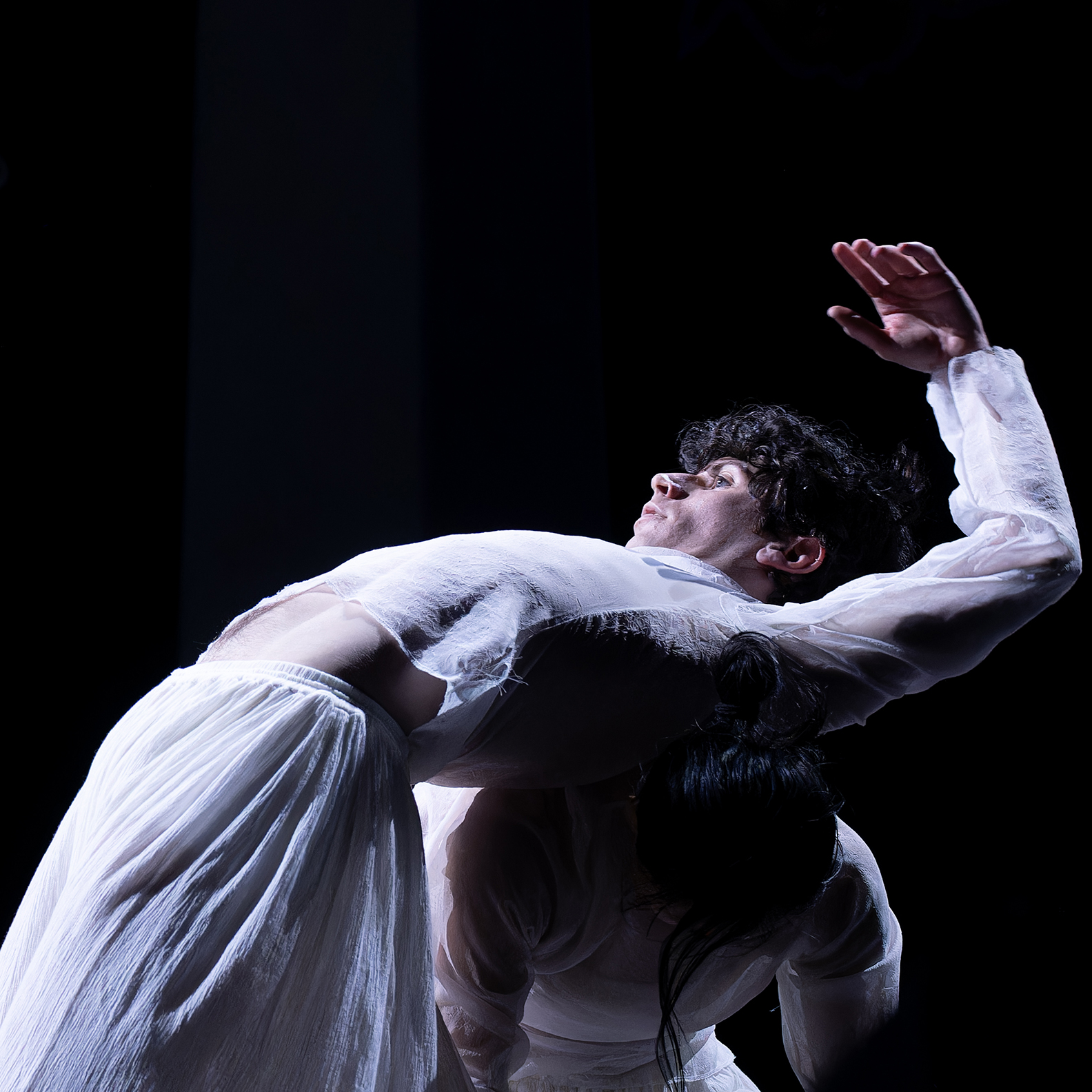
The official program laid out the night clearly. 7News anchor Eileen Whelan served as host. Daisuke Suzuki, Executive Vice President for the Americas at ANA, appeared in the program. The lineup then moved through Futago Onikenbai, remarks from Festival President and CEO Diana Mayhew, TAKE Dance in a work choreographed by Takehiro Ueyama titled Looking for Water, remarks by Mayor Muriel Bowser and Ambassador of Japan Shigeo Yamada, a Moment of Friendship, and then a closing musical set by Ayaka Hirahara. Her listed selections were Jupiter, Inochi no Namae, This is Me ~ A-ya Version, and Inori Ni Michite.
That is one of the subtler strengths of the Opening Ceremony when it is programmed well: it should feel international, but never detached from Washington. Whelan's presence helped anchor the event in the city rather than floating above it.
Futago Onikenbai: the jolt that set the tone
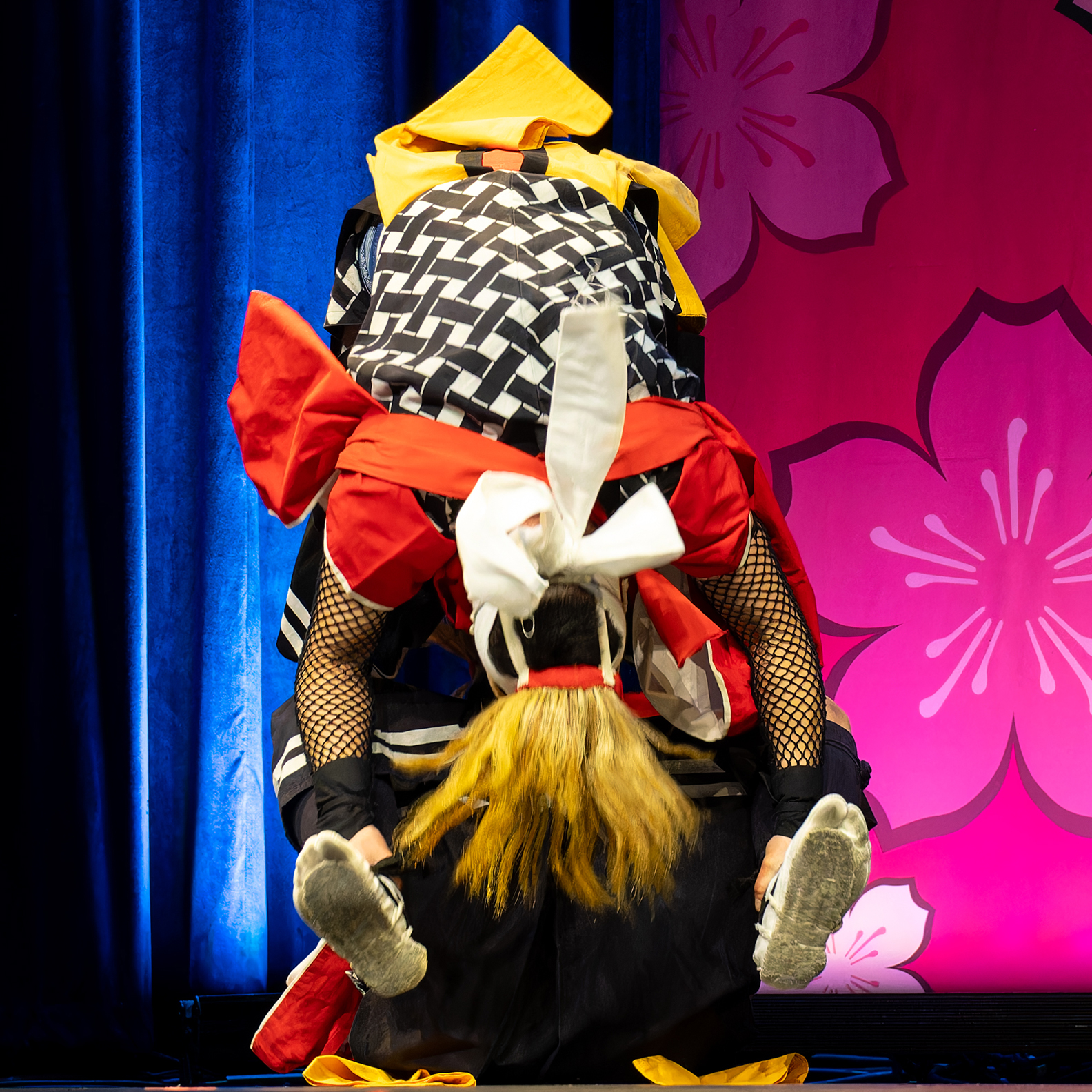
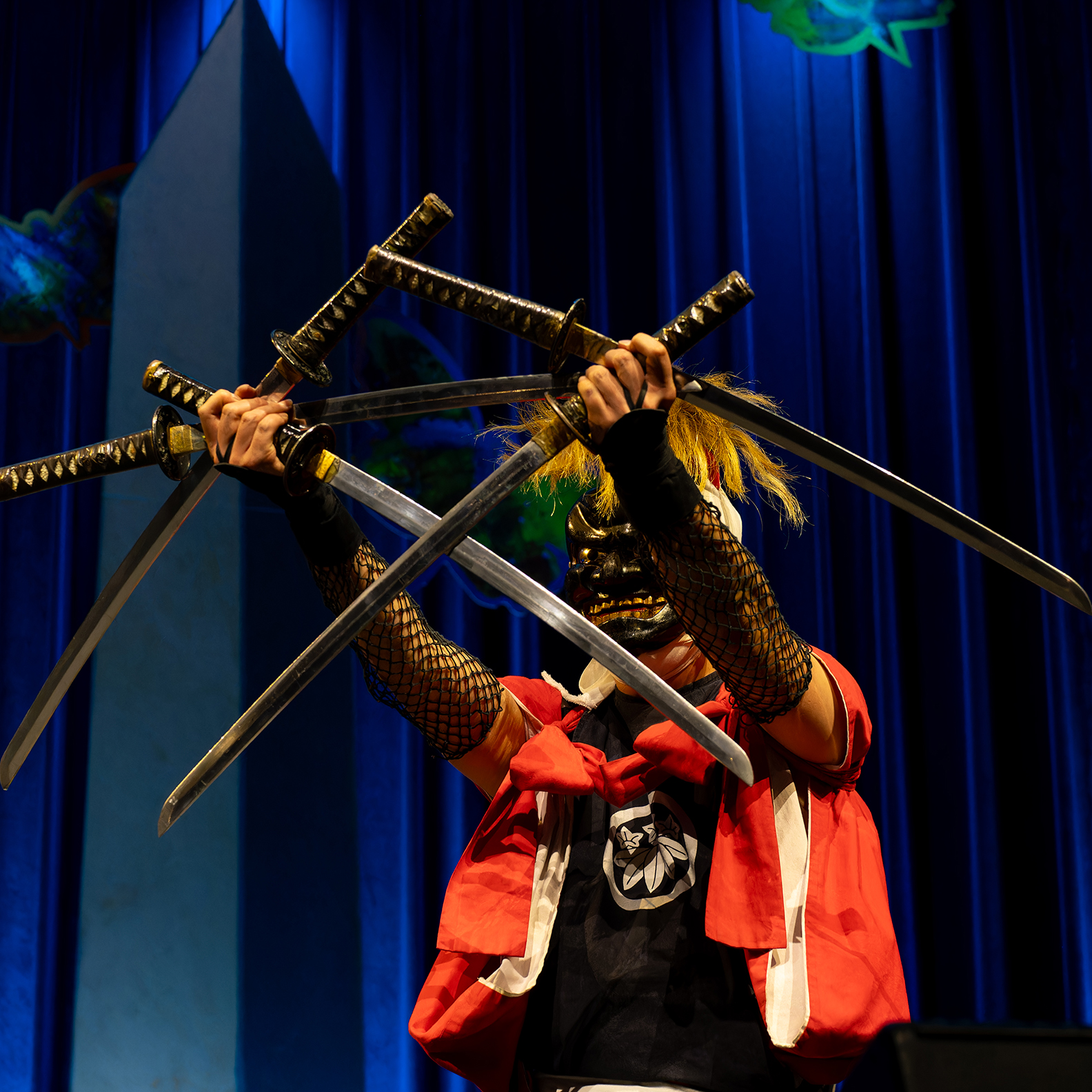
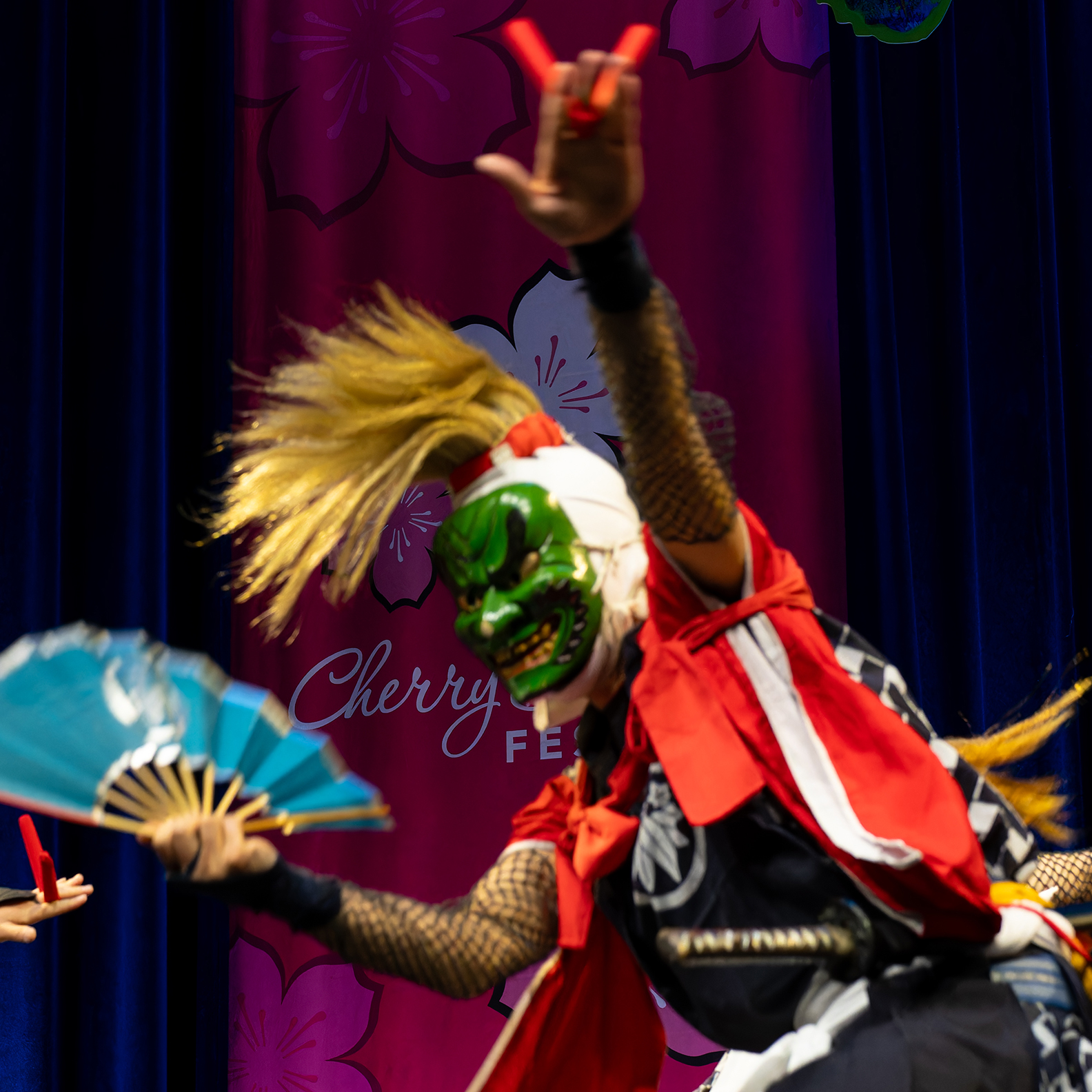
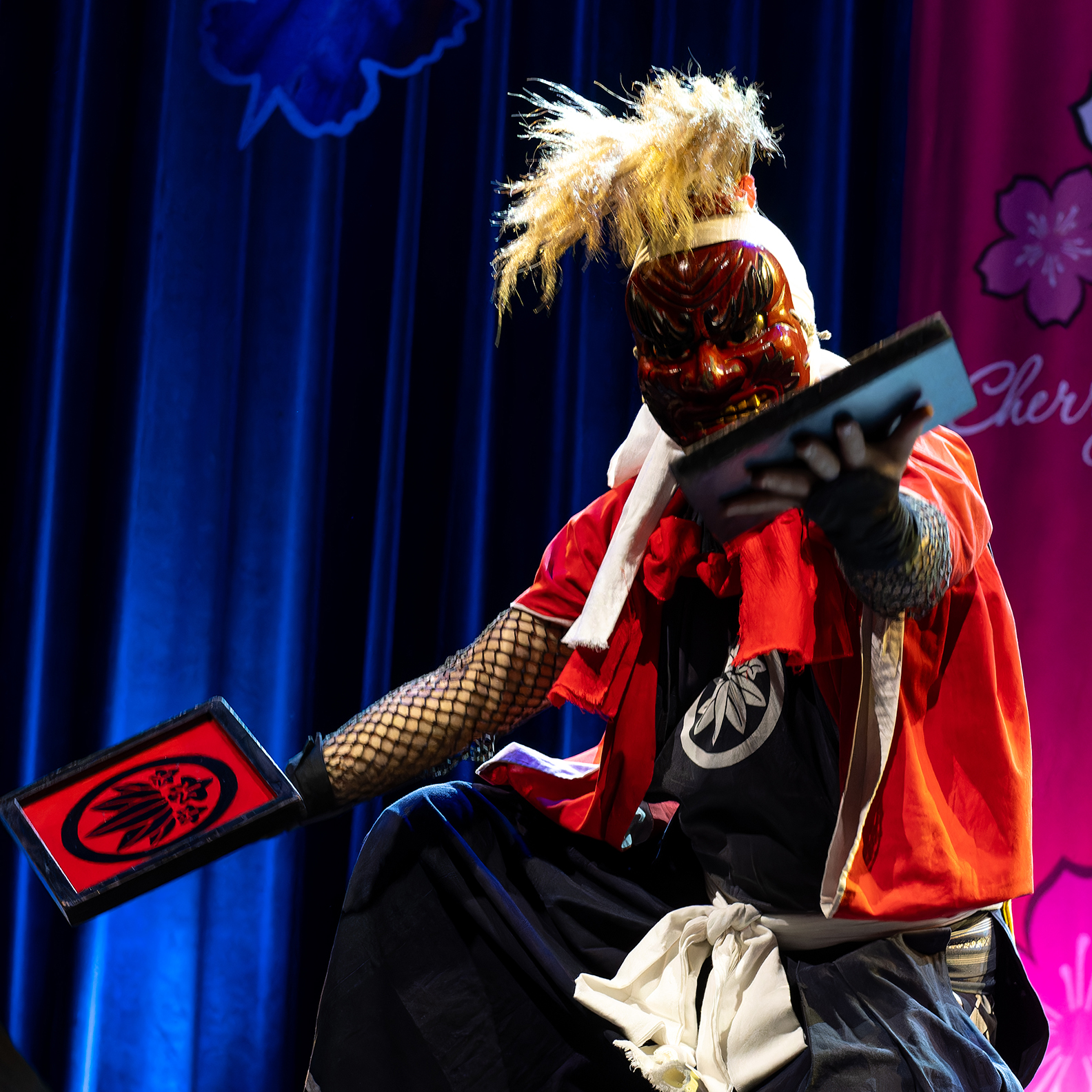
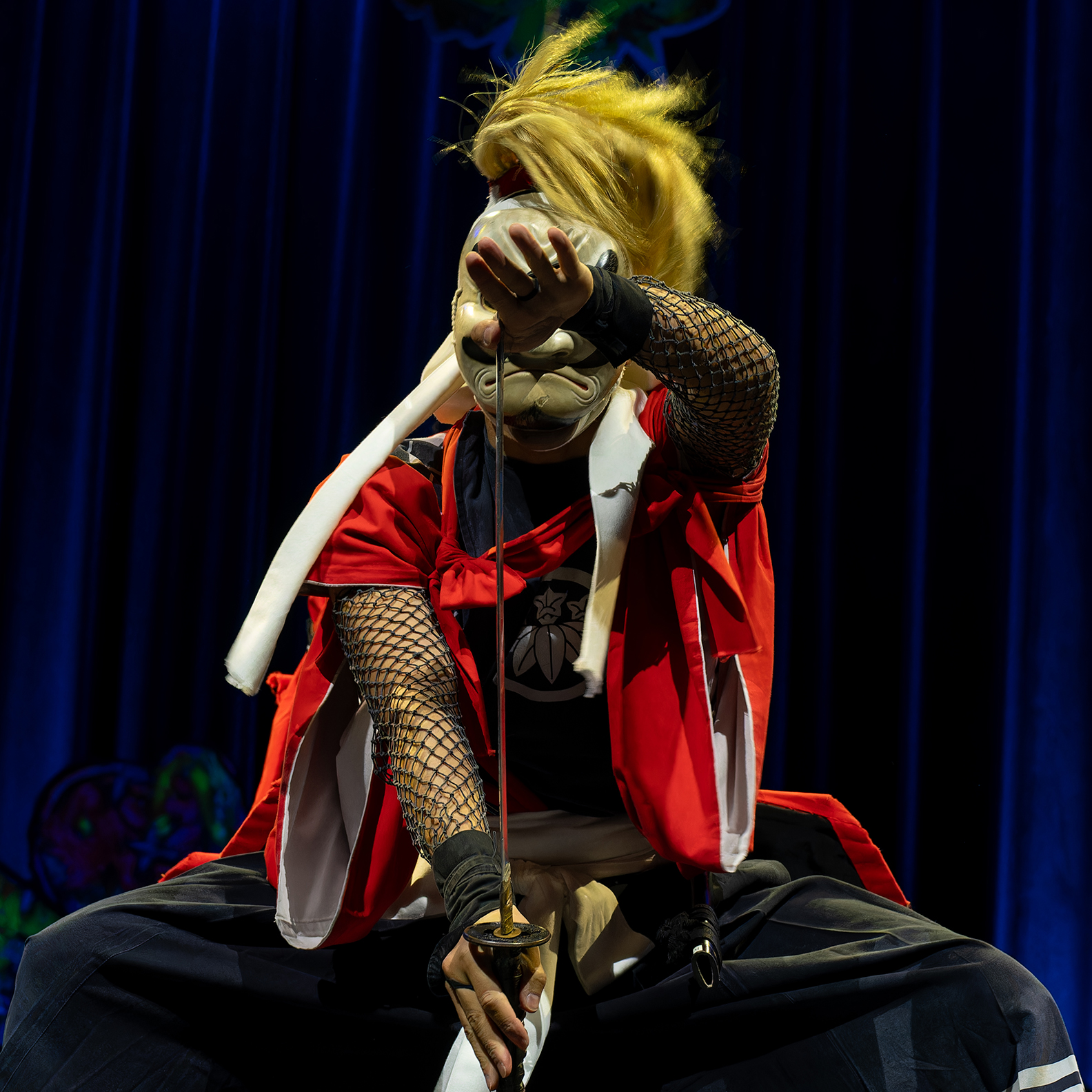
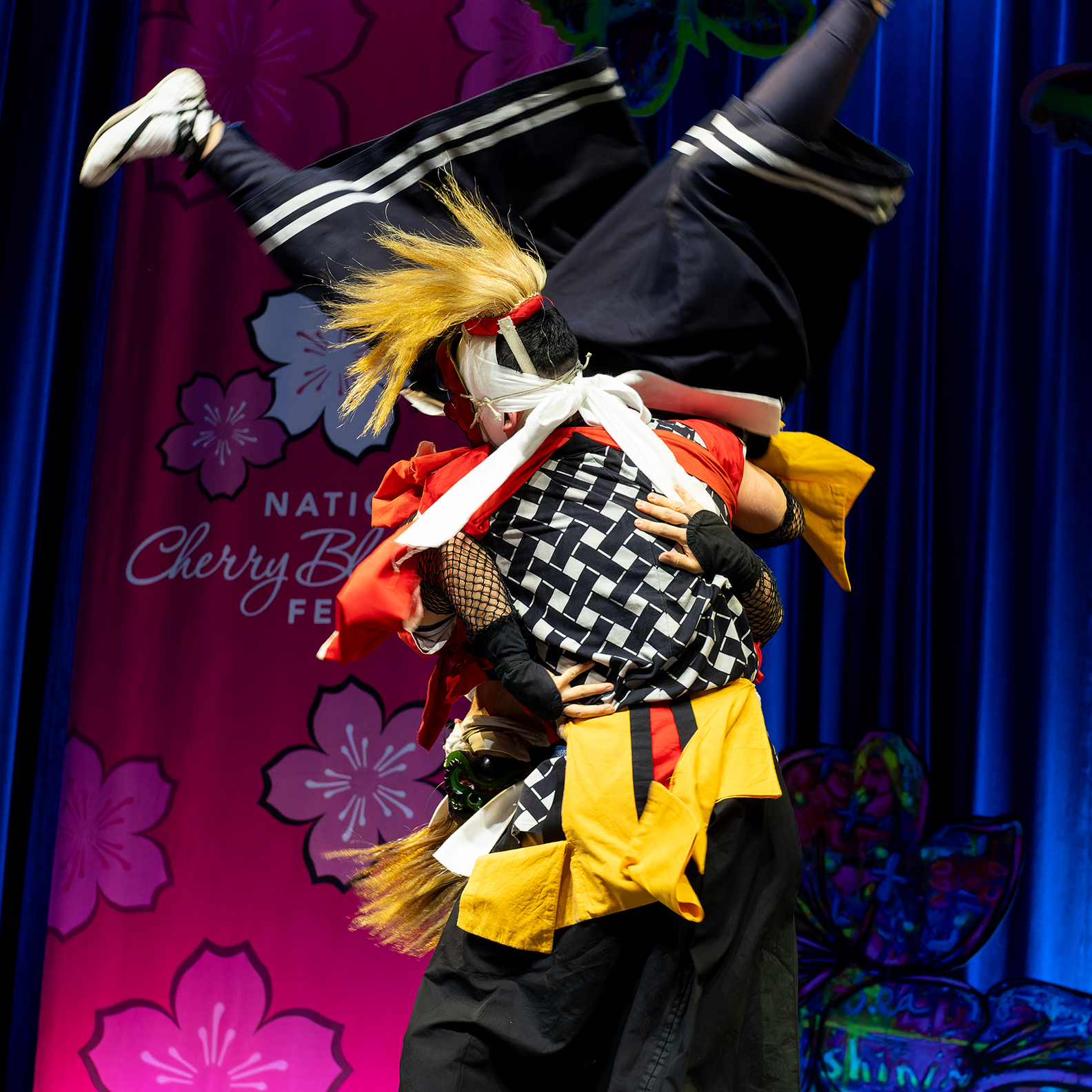
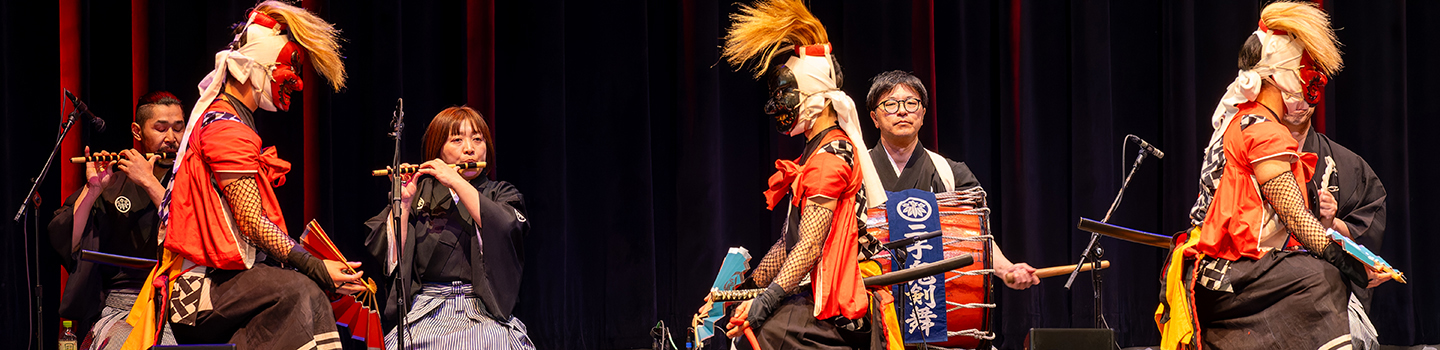
The strongest way to open a room is with conviction, not explanation, and Futago Onikenbai brought exactly that.
The Festival describes Futago Onikenbai as practitioners of a more than 1,200-year-old Buddhist performing art originally known as Nenbutsu Kenbai. The dance tradition, introduced by mountain ascetic monks and later carried on by farming communities, blends chanting, sword movement, fan work, bare-hand choreography and acrobatic sequences. The Japan Foundation notes that Oni Kenbai is recognized within UNESCO's Intangible Cultural Heritage Furyu-odori dances, while the Festival program says this particular troupe is marking its 70th anniversary.
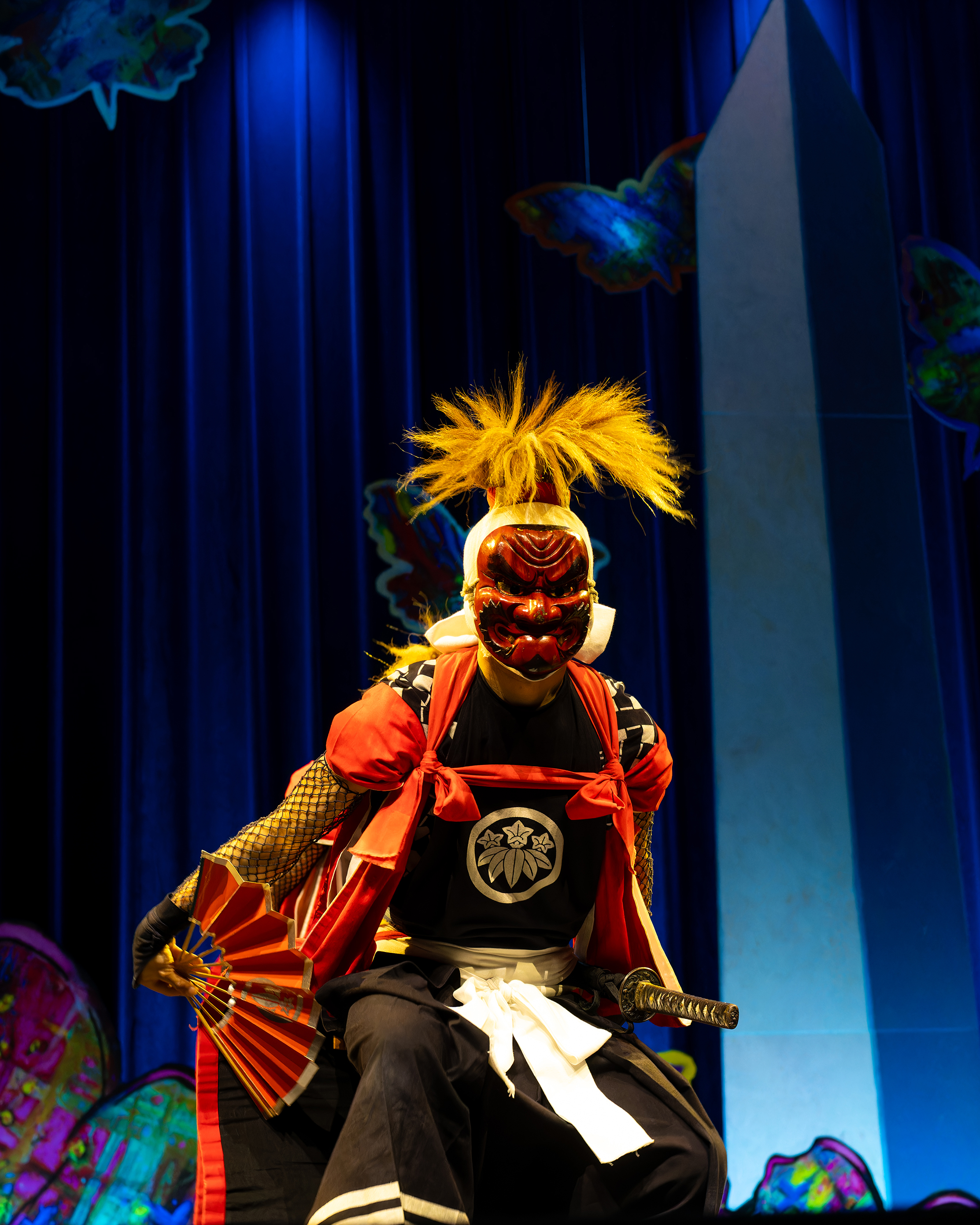
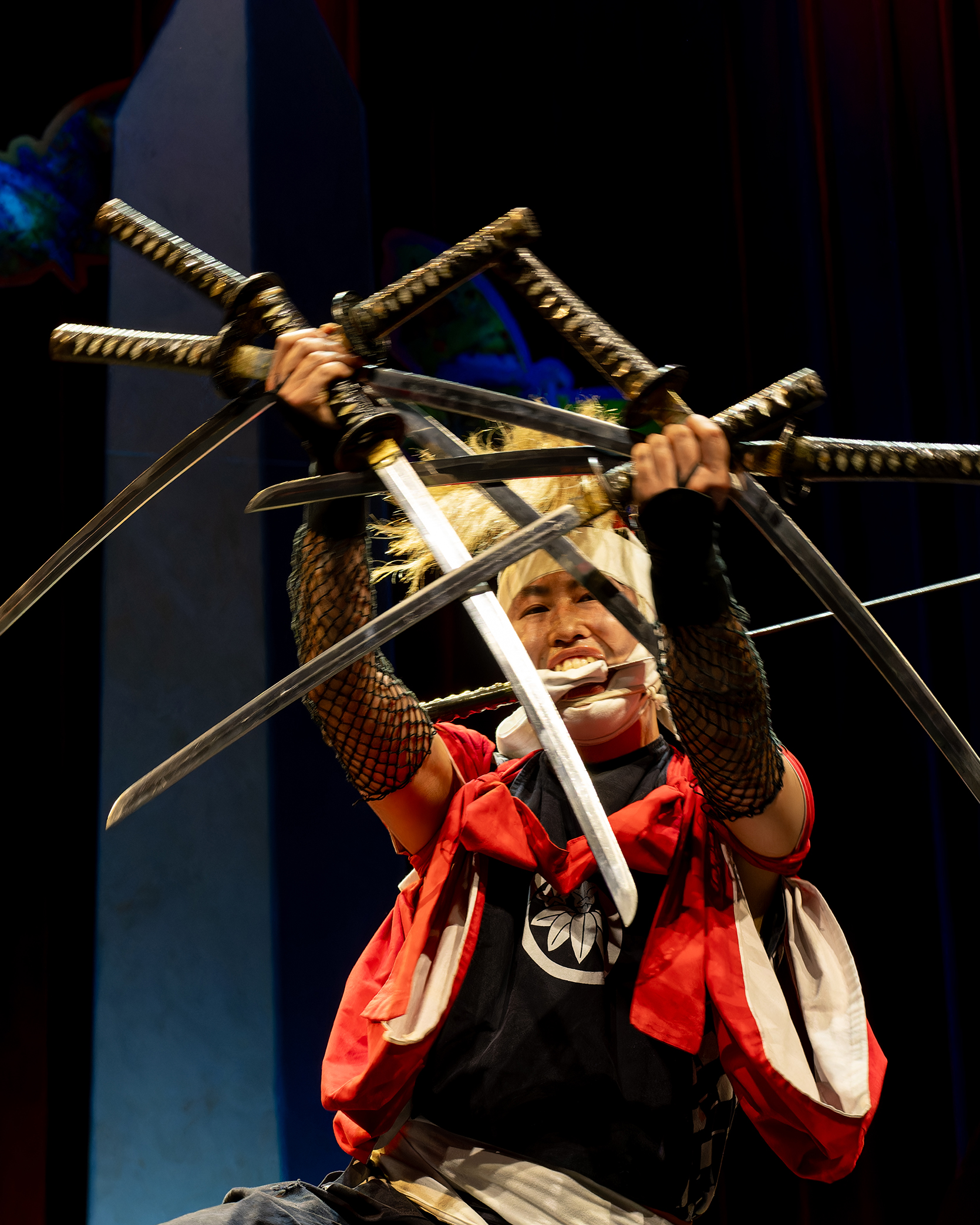
That background matters because American audiences often misread traditional Japanese forms as static, delicate or purely ceremonial. Futago Onikenbai is none of that. Even on paper, the listed sequence of pieces - Prelude, Sanbanniwa, Katanagurui, Chugaeri, Zenmai, and Kanimukuri no Mix - signals a performance meant to build rhythm and force, not just atmosphere.
This was the right opening choice because it immediately established that the evening was not going to coast on blossoms and sentiment. It had edge. It had physicality. It had ritual. And it reminded the audience that the U.S.-Japan relationship being honored here is not abstract. It is cultural, lived and transmitted through real traditions kept alive by real people.
Diana Mayhew and the Festival's central message
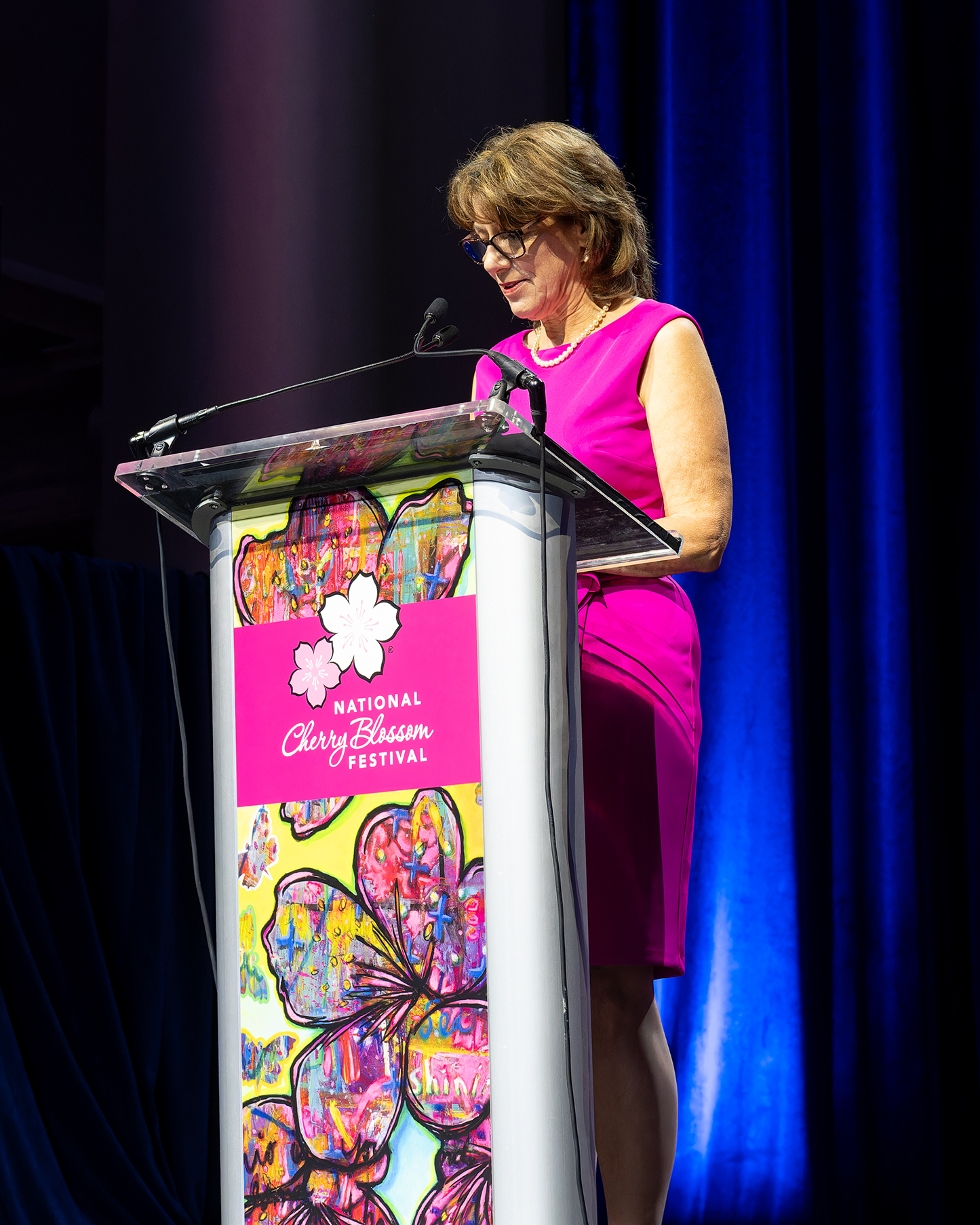
Festival President and CEO Diana Mayhew's remarks were a clear articulation of the Festival's core message: that the cherry blossoms are a symbol of enduring friendship and shared values between the United States and Japan. Mayhew emphasized the importance of cultural exchange and mutual respect, highlighting how the Festival serves as a bridge between the two nations. Her words reinforced the idea that the cherry blossoms are not just a beautiful sight, but a living symbol of international goodwill and cooperation.
Mayhew's speech was effective because it connected the historical significance of the cherry trees to the present-day relationship between the U.S. and Japan. She acknowledged the challenges of the past while expressing optimism for the future, framing the Festival as a celebration of resilience and hope. Her message was inclusive, inviting everyone in attendance to be part of this ongoing story of friendship.
Overall, Mayhew's remarks helped to ground the ceremony in its larger purpose and set the stage for the cultural performances that followed. It was a reminder that while the Festival is a time for celebration, it is also an opportunity to reflect on the values and connections that the cherry blossoms represent.
Takehiro Ueyama and TAKE Dance: the modern hinge of the program
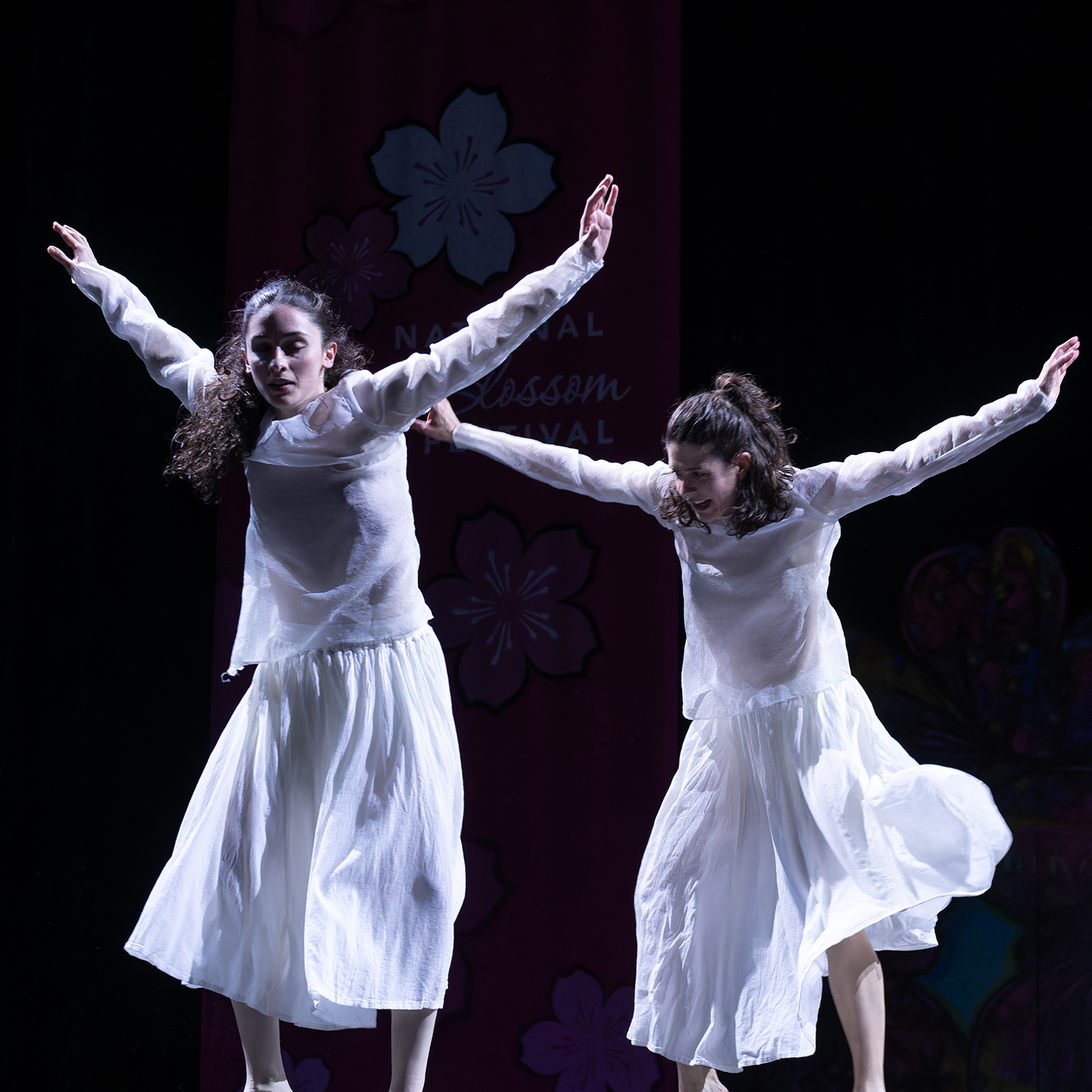
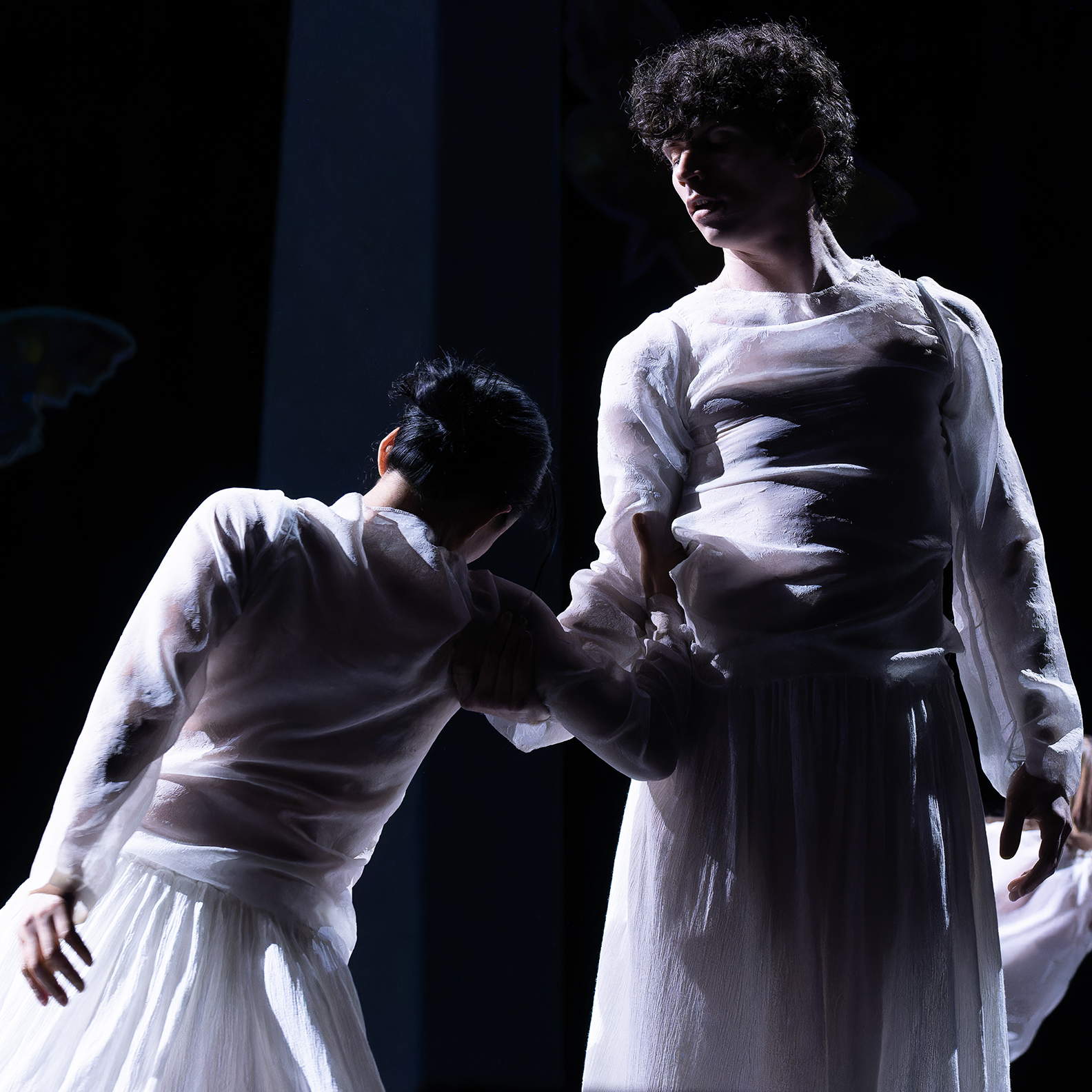
A ceremony like this dies if it becomes a museum piece. That is why Takehiro Ueyama's inclusion was essential.
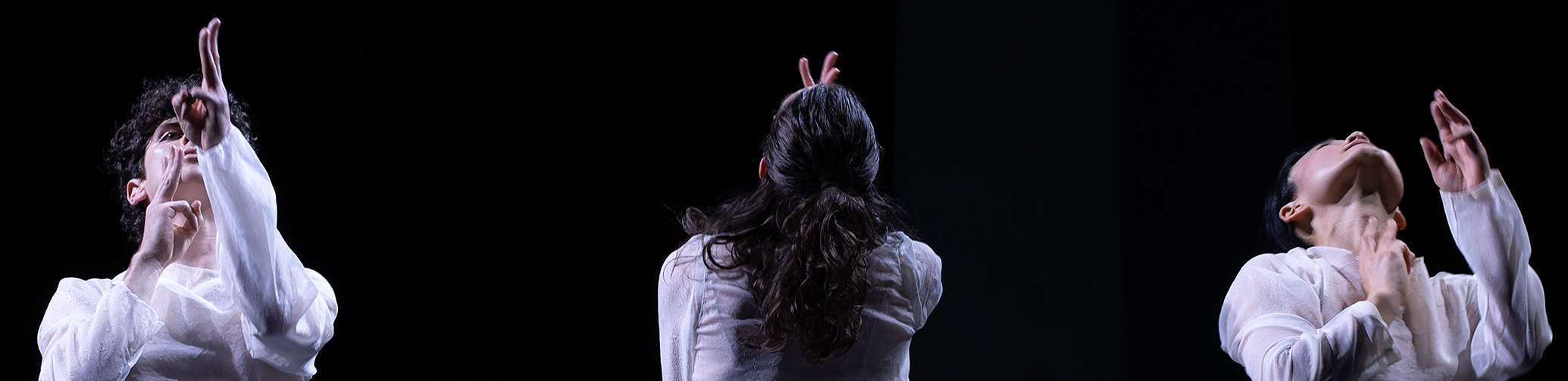
The Festival describes Ueyama as a Tokyo-born choreographer who studied at Juilliard, toured with the Paul Taylor Dance Company for eight years, and founded TAKE Dance in 2005. His work is presented as a fusion of Eastern and Western aesthetics, shaped by themes of beauty, resilience, compassion and the tension between light and darkness. The 2026 Opening Ceremony program listed the TAKE Dance piece as Looking for Water.
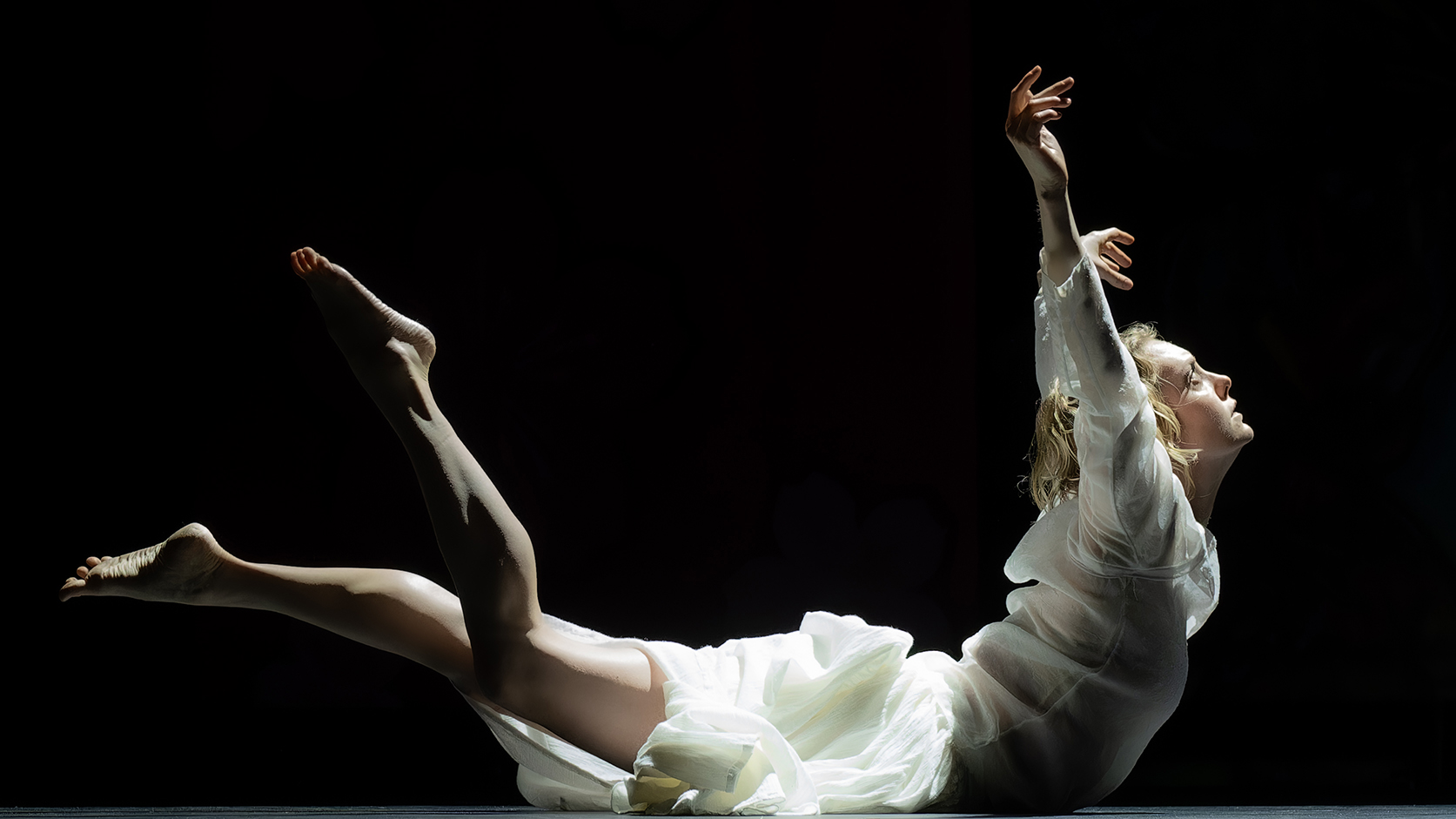
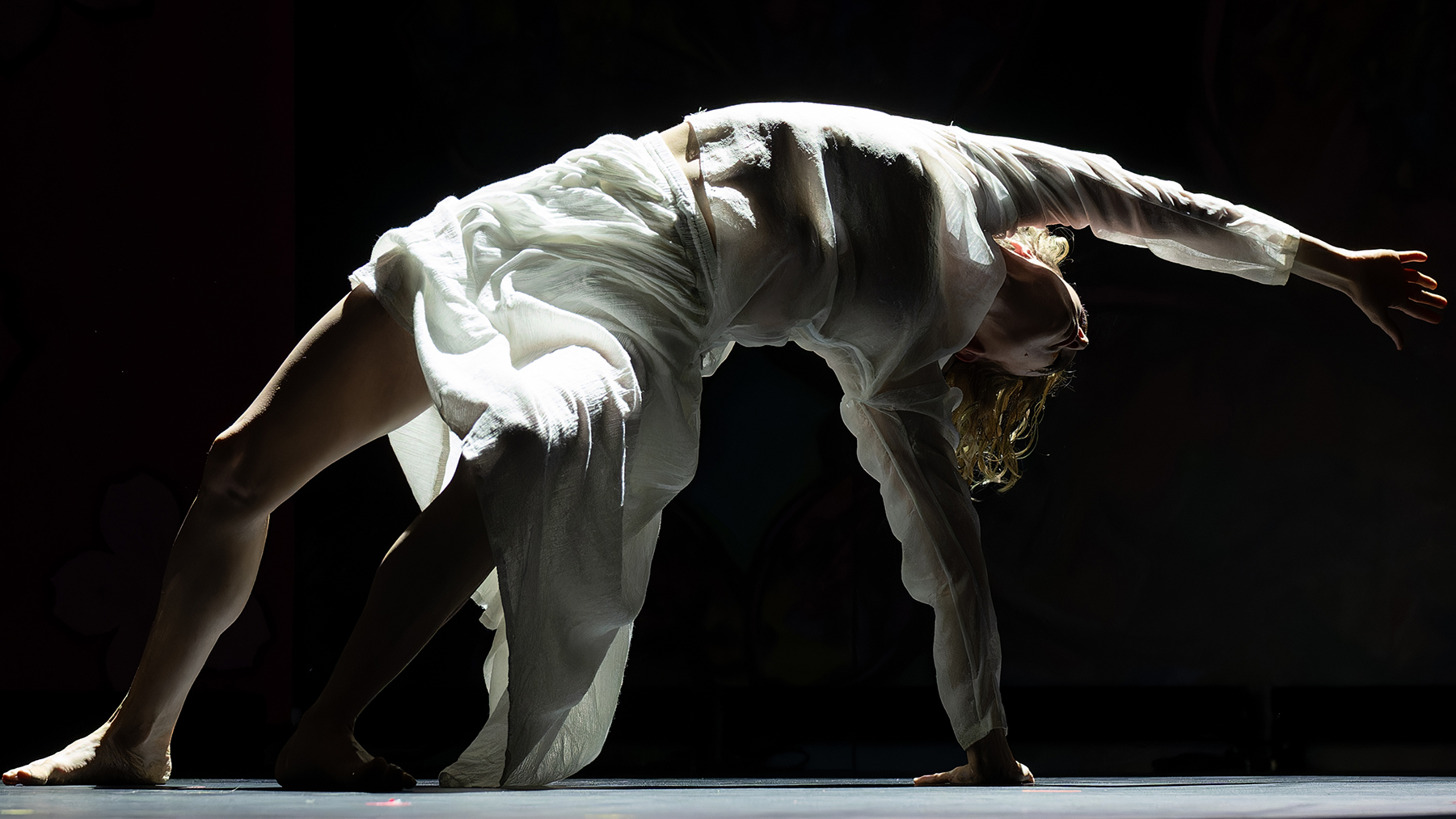
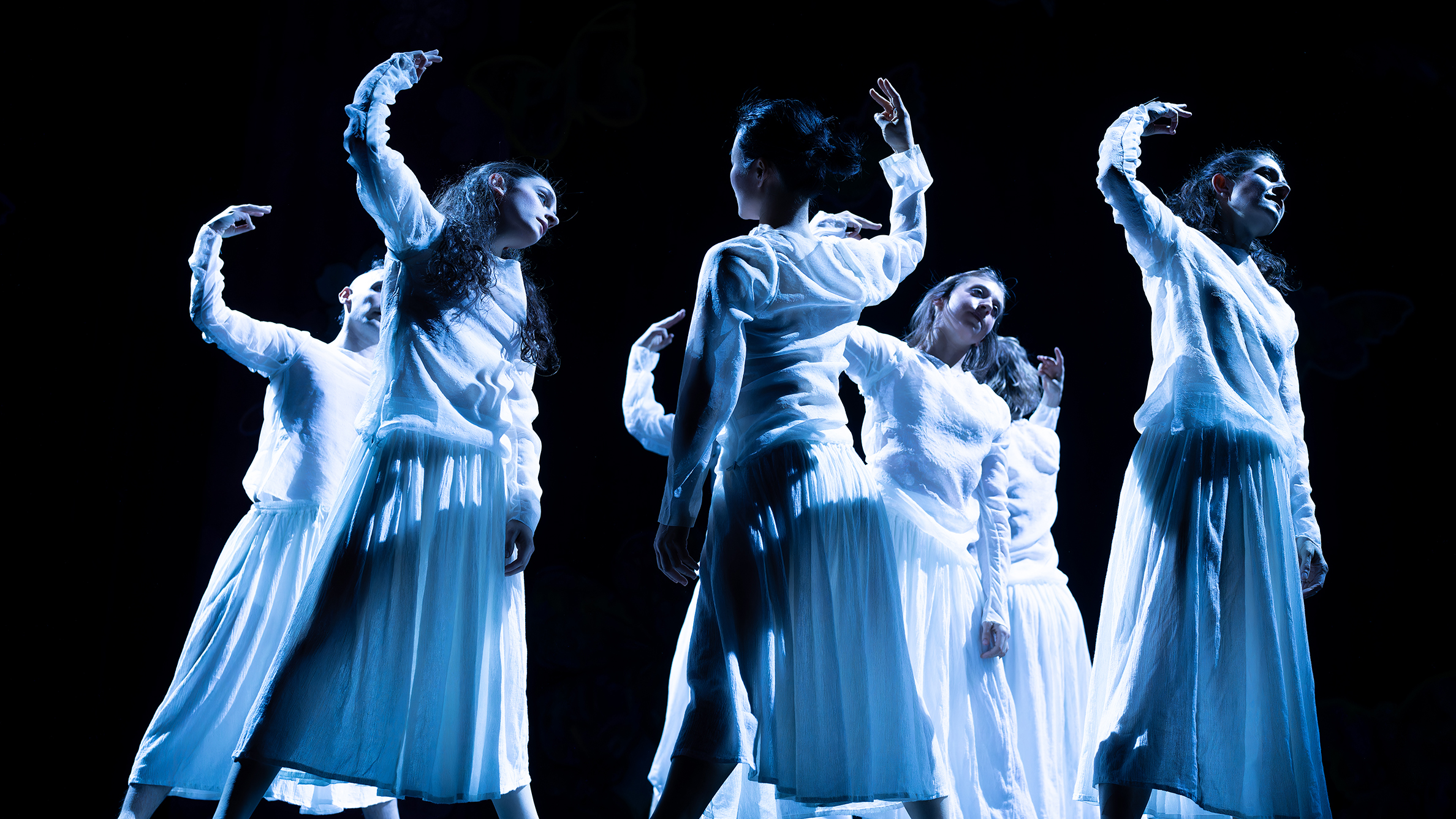
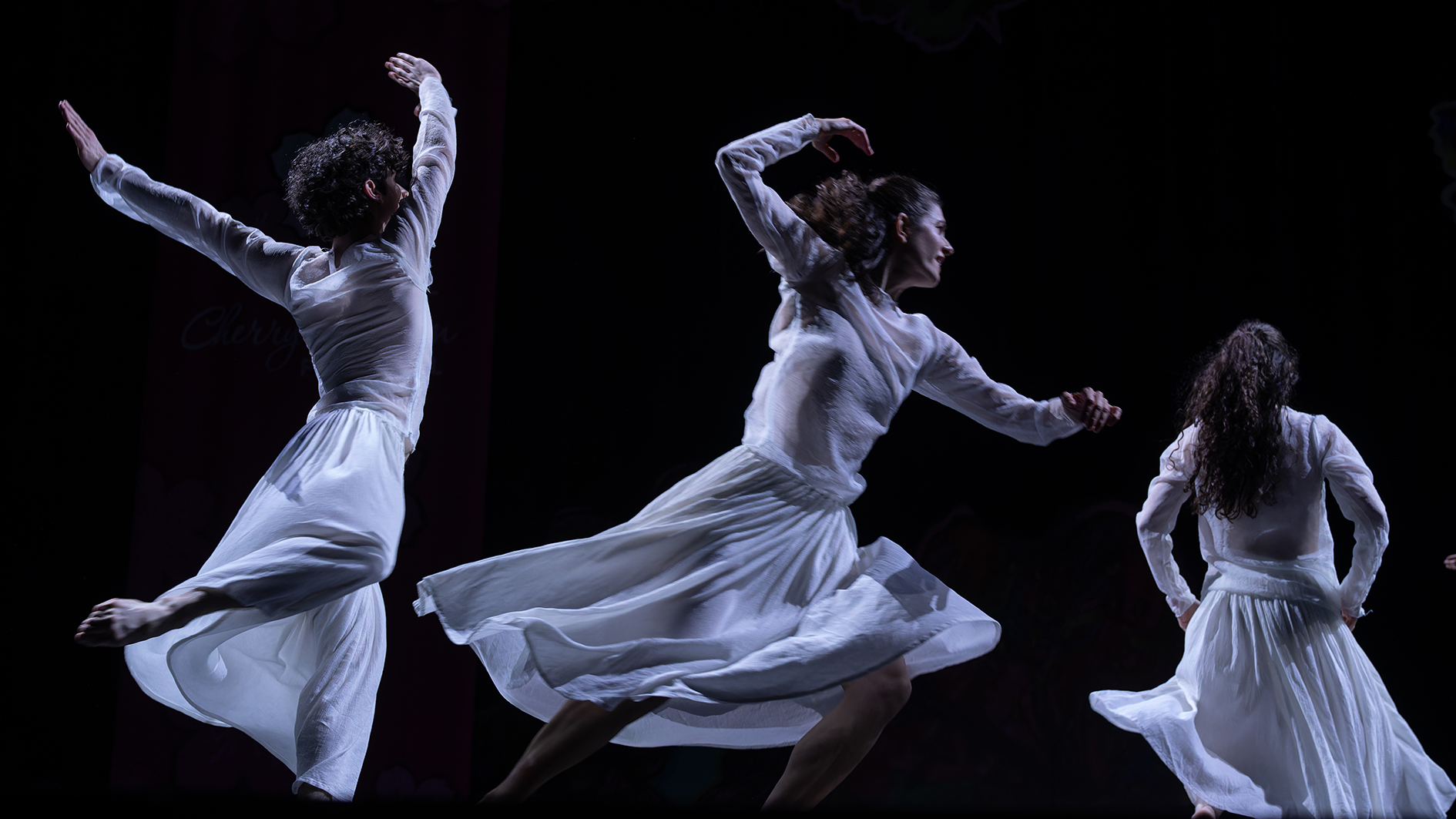
This was the pivot point of the evening. Futago Onikenbai gave the ceremony ancestral force; TAKE Dance gave it contemporary intelligence. That contrast is exactly what the Opening Ceremony should showcase. Japan's cultural reach is not limited to historical preservation, and Washington's appetite for performance should not be limited to decorative internationalism. Ueyama's work, at least in concept and placement, represented the conversation between tradition and modern expression that the whole Festival claims to embody.
Mayor Bowser's role: official Washington showing up, not phoning it in
Mayor Muriel Bowser's public calendar listed her at DAR Constitution Hall at 5:15 p.m. to deliver remarks at the Opening Ceremony, and the official program included her as a featured speaker. Her printed greeting welcomed residents and visitors while framing the Festival as one of Washington's most beloved civic traditions. She also highlighted the symbolism of the 250 new cherry tree saplings gifted in connection with the nation's 250th birthday and noted that this would be her twelfth and final Cherry Blossom season as mayor.
That last point gives her appearance added weight. This was not just routine mayoral attendance at a nice spring event. It was part civic welcome, part capstone. Her remarks, at least as prepared in the program, leaned into renewal, hospitality and the image of DC at its best. That is exactly what a mayor should do at this event. The Opening Ceremony is, among other things, one of the city's annual auditions for the world.
Ambassador Shigeo Yamada and the diplomatic backbone of the night
Ambassador of Japan Shigeo Yamada was also listed in the program and contributed a printed greeting. His message emphasized the 1912 gift of more than 3,000 trees, the continued strength of the U.S.-Japan alliance, and Japan's additional 250-tree gift to the United States in honor of America's 250th anniversary. He wrote that the blossoms remain a living symbol of shared connection and expressed confidence that the new trees, like the relationship itself, will flourish.
This matters because the Opening Ceremony loses its purpose if it becomes merely aesthetic. The blossoms are beautiful, yes. But the Festival exists because beauty was used as diplomacy. Yamada's presence kept that truth front and center. The night was not only about performance. It was about statecraft made human.
A "Moment of Friendship" that was more than branding
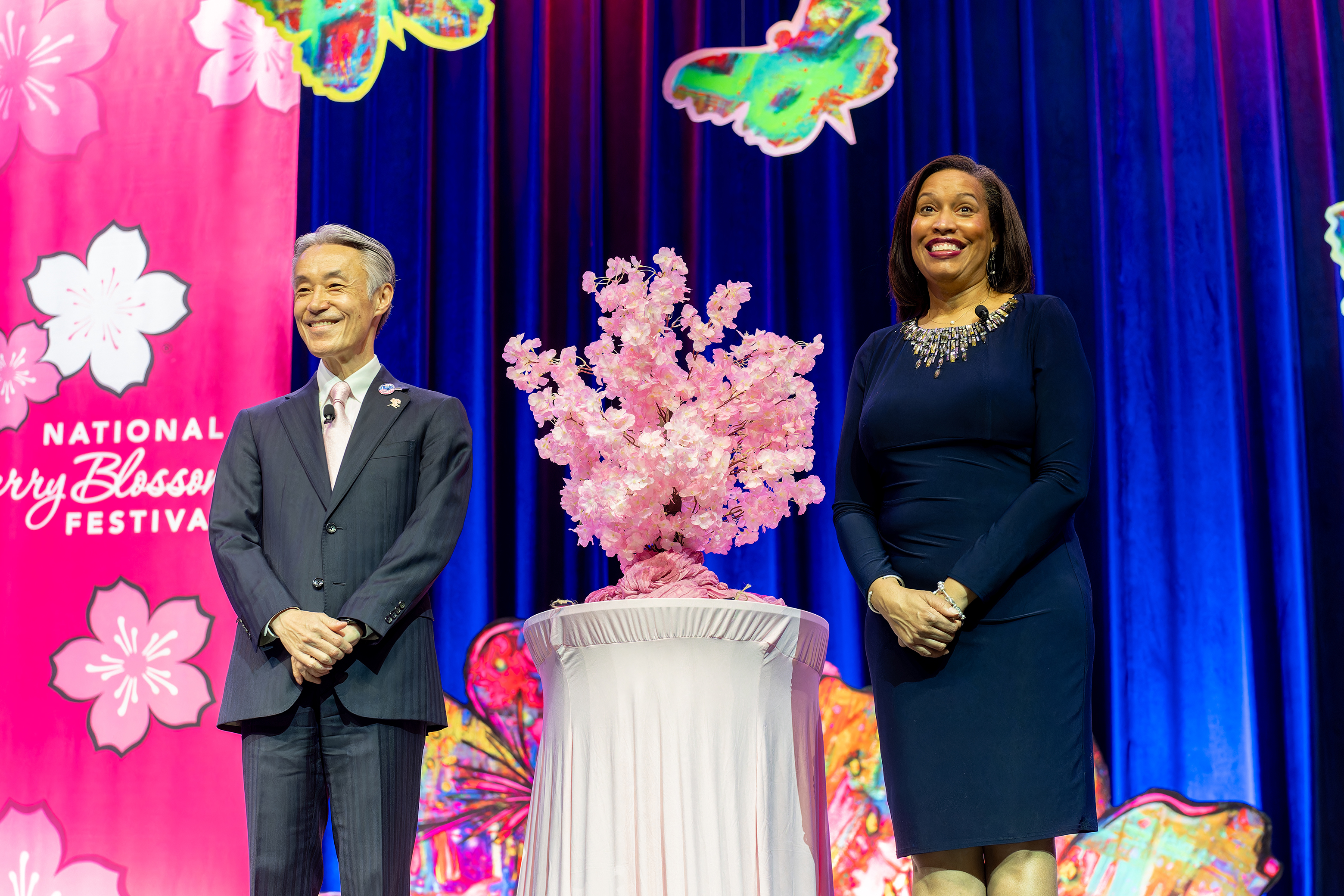
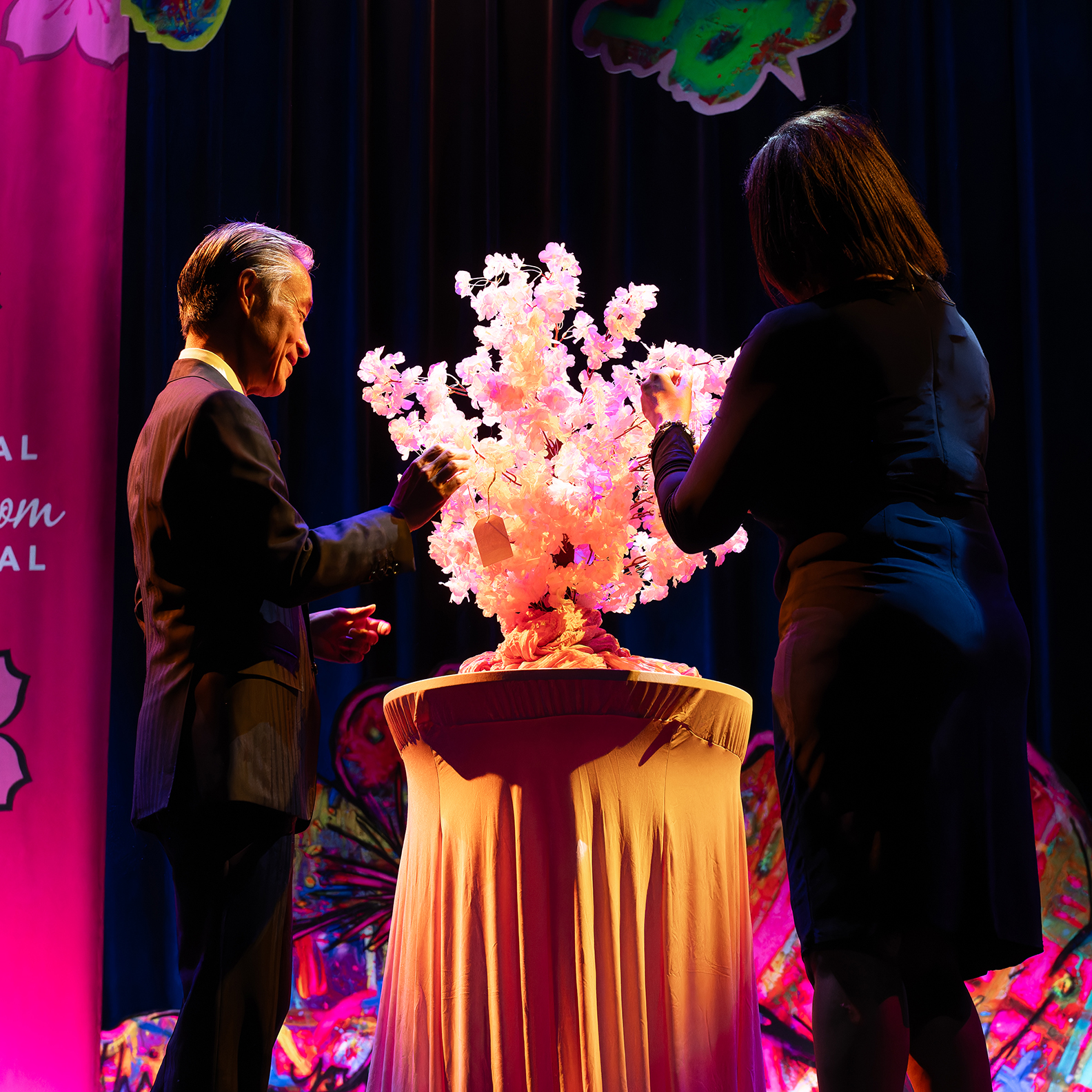
The program explicitly included a Moment of Friendship between the mayoral and ambassadorial remarks and Ayaka Hirahara's performance. That sounds like branding copy until you place it inside the real history of the event: a 1912 gift, a festival formalized in 1935, and a spring ritual that has survived wars, politics, changing administrations and shifting public attention.
So no, friendship is not just decorative language here. It is the whole point. And the 2026 ceremony seemed to understand that its job was to make that concept feel visible rather than merely stated.
Ayaka Hirahara: the broad-emotion finish the evening needed
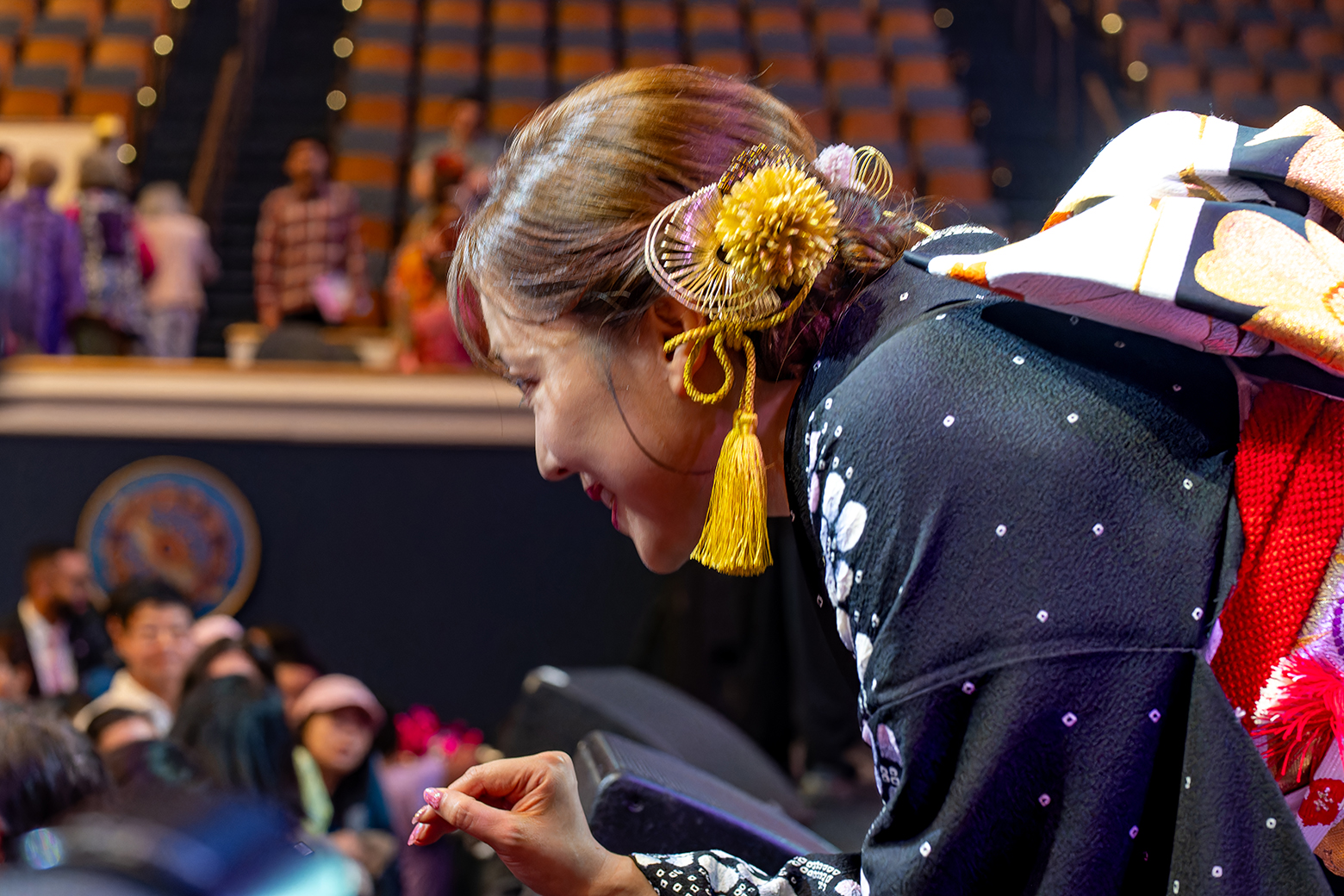
The ceremony closed its performance arc with Ayaka Hirahara, and that was another smart programming choice.
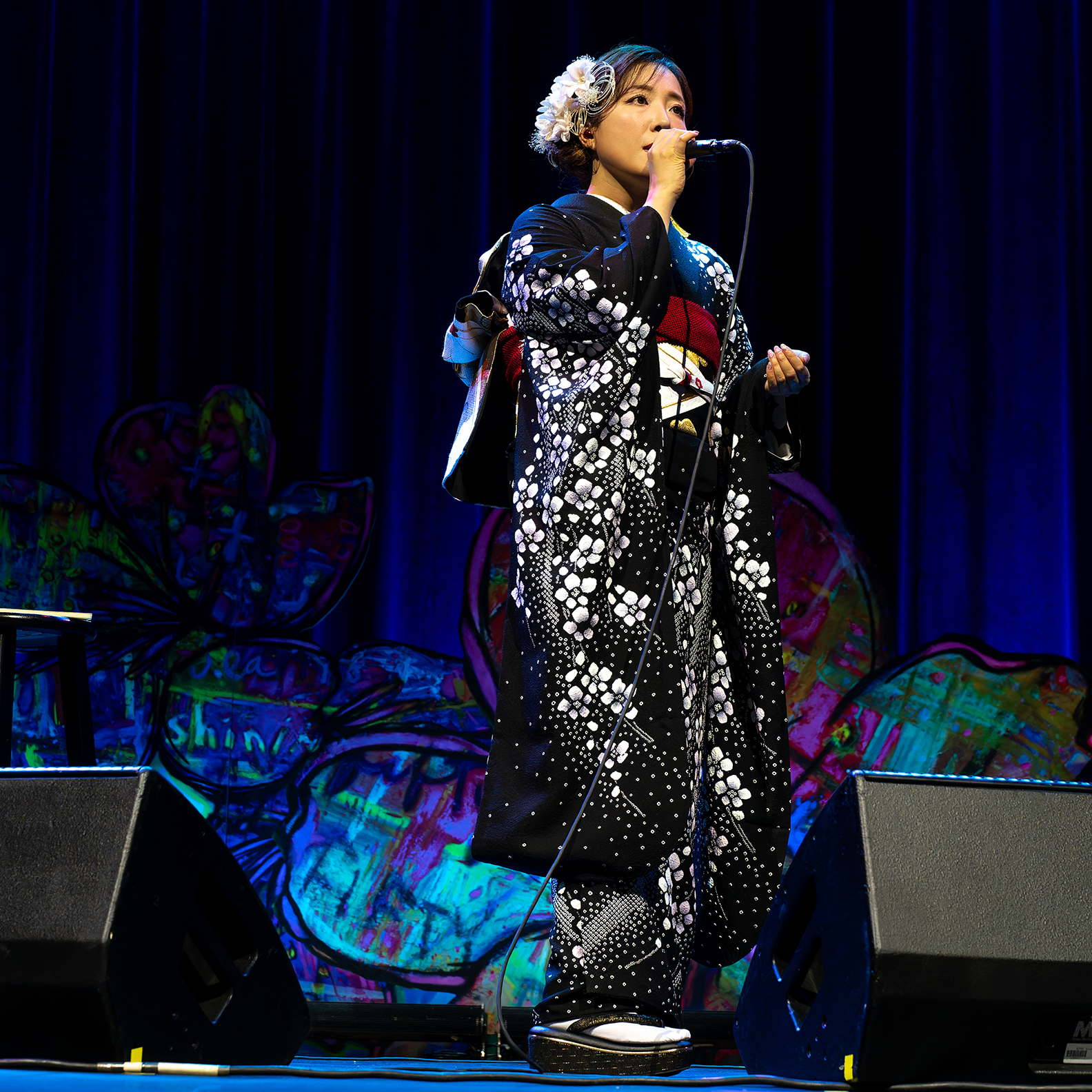
The Festival describes Hirahara as an award-winning singer who broke out in 2003 with Jupiter, later expanding into musicals, voice acting, television dramas and film dubbing. Her credits include Love Never Dies, Beautiful, Mary Poppins, Fist of the North Star: Hokuto no Ken, and Moulin Rouge! The Musical. The Festival also notes her philanthropic work through the Ayaka Hirahara Jupiter Fund and her performance of Japan's national anthem at the opening match of the 2019 Rugby World Cup.
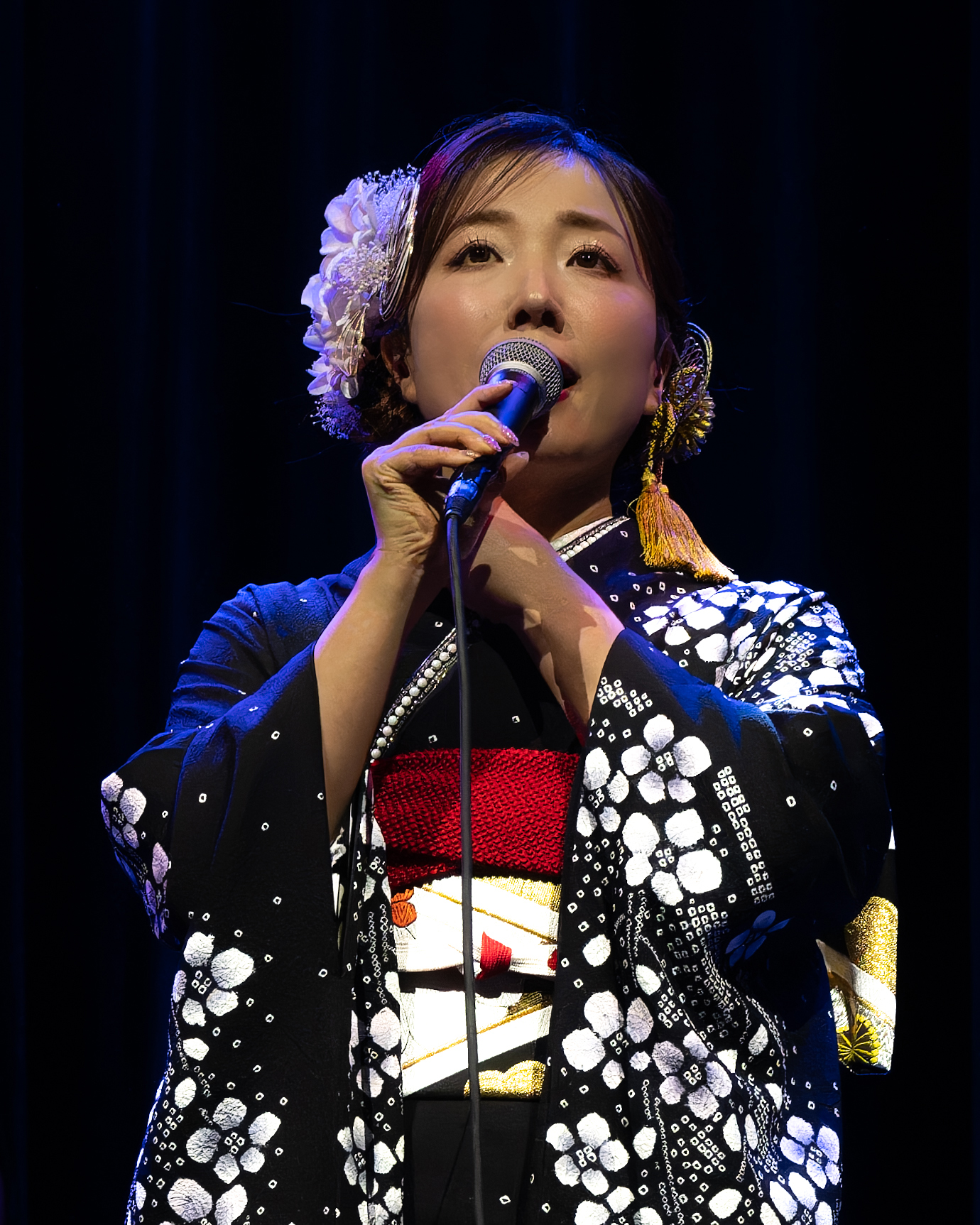
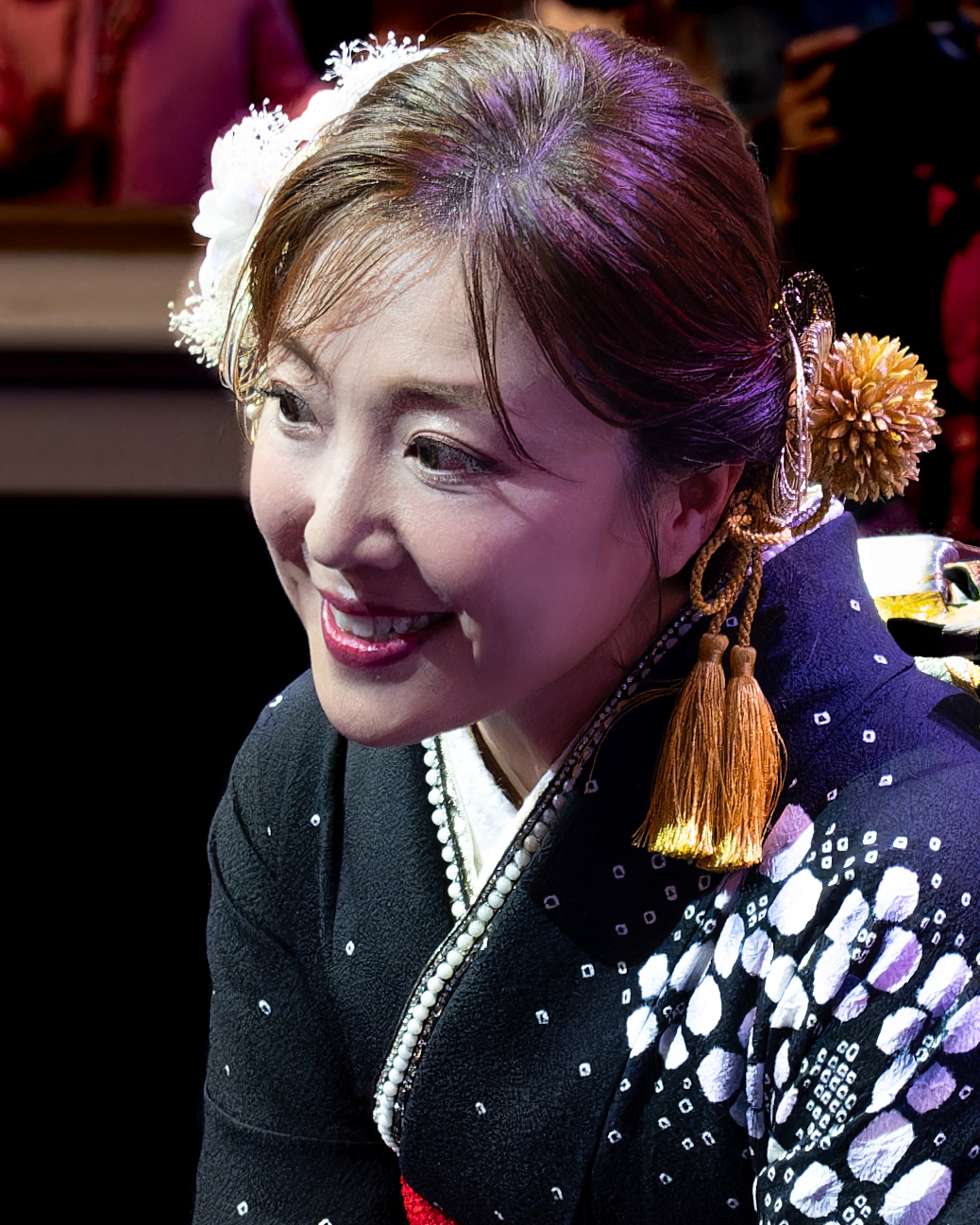
That background matters because the closing act of a ceremony like this has to be more than a nice song. It has to be a moment that can carry the emotional weight of the night and leave the audience with a sense of connection and uplift. Hirahara's blend of musical talent, stage presence and cultural significance made her an ideal choice to close the evening on a high note.
Her song list for the evening was strong and deliberate. Jupiter gave the set a signature anchor. Inochi no Namae added lyrical familiarity and emotional softness. This is Me ~ A-ya Version widened accessibility for English-speaking audiences. Inori Ni Michite closed the segment on a note of uplift and reflection.
That is how you close a ceremony like this: not with bombast, but with emotional breadth. Hirahara gave the program its most audience-embracing section, which is exactly what you want after the formal remarks and the layered cultural performances.
The bigger takeaway
The smartest thing about the 2026 Opening Ceremony is that it did not try to shrink the Festival into one mood.
- It had tradition without turning antique.
- It had diplomacy without sounding bureaucratic.
- It had local Washington credibility without becoming provincial.
- And it had performance that ranged from ritual sword dance to contemporary choreography to mainstream vocal music without feeling stitched together by committee.
That is hard to pull off. Most civic ceremonies fail because they are either too stiff or too eager to be entertaining. This one, at least on paper and in structure, aimed for substance first and spectacle second. That is why it worked.
Final Word
The National Cherry Blossom Festival Opening Ceremony is easy to underestimate if you think the blossoms are just seasonal decoration. They are not. In Washington, they are one of the city's last great public symbols: diplomatic, civic, visual and emotional all at once. This ceremony exists to remind people of that.
The 2026 program understood that assignment. It was not trying to be trendy. It was trying to be legible. That was the correct decision. The Festival's strength is not that it reinvents itself every year. Its strength is that it keeps proving that civic tradition does not have to be boring.
And on Saturday, March 21, at DAR Constitution Hall, the reminder was delivered with seriousness, elegance and enough artistic force to justify the hype. That is what a kickoff is supposed to do. It should not merely begin the season. It should make the season feel worthy of beginning.